

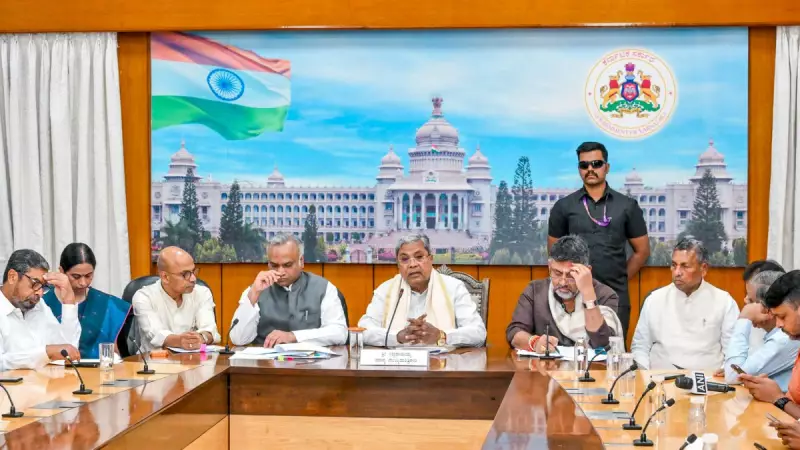
The Karnataka government, led by Chief Minister Siddaramaiah, has taken a firm and defiant stance against the central government by announcing its decision to legally challenge the recently enacted VBG and RAM-G Act. The state cabinet has formally resolved not to accept the implementation of this central legislation within its borders and will file a petition in the Supreme Court to contest its validity.
Cabinet's Firm Resolution and Legal Strategy
In a significant move that underscores the growing tensions between the state's Congress administration and the BJP-led central government, the Karnataka cabinet met and unanimously passed the resolution. The government contends that the VBG and RAM-G Act infringes upon the rights and powers guaranteed to states under the Constitution. Law and Parliamentary Affairs Minister H K Patil stated that the act is seen as an overreach by the Centre, disrupting the federal balance.
The state's legal team is now preparing to draft a comprehensive petition to be presented before the Supreme Court. The challenge will argue that the act is unconstitutional and violates the principles of federalism. This step is not just a political statement but a calculated legal maneuver to protect the state's autonomy.

Political Reactions and Accusations
The announcement has ignited a fierce political debate. Chief Minister Siddaramaiah accused the central government, particularly the BJP, of attempting to usurp the state's financial resources and undermine its authority. He framed the act as part of a larger pattern of the Centre bypassing elected state governments.
In response, the BJP's state unit has launched a counter-attack. Leaders like former Chief Minister Basavaraj Bommai have condemned the Congress government's decision, labeling it as "anti-development" and motivated purely by political vendetta. The BJP argues that the act is designed for national integration and development, and Karnataka's refusal is a disservice to its own people. This war of words is expected to intensify as the legal battle proceeds.
Implications and the Road Ahead
The decision to move the Supreme Court sets the stage for a protracted constitutional battle. This case will be closely watched as it touches upon the core issues of Centre-State relations and the interpretation of the Constitution. The outcome could have far-reaching implications for how central laws are implemented across various states, especially those governed by parties in opposition to the ruling party at the Centre.
For now, the Karnataka government has drawn a clear line in the sand. Its refusal to accept the VBG and RAM-G Act and the subsequent legal challenge signal a period of heightened confrontation between Bengaluru and New Delhi. The Supreme Court's eventual ruling will determine not just the fate of this specific act, but also potentially redefine the contours of Indian federalism.






