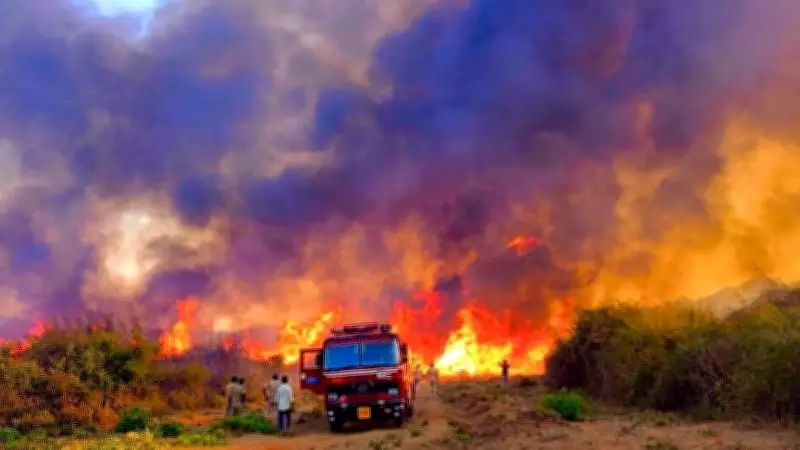
Major Wildfire Engulfs Karnataka's Chamarajanagar District, Destroying Vast Forest Areas
A devastating wildfire has swept through significant portions of forest land in Karnataka's Chamarajanagar district, resulting in extensive destruction of natural habitats and raising serious environmental concerns. The blaze, which erupted recently, has consumed vast tracts of woodland, highlighting vulnerabilities in forest management and fire prevention strategies in the region.
Extent of Damage and Immediate Impact
The fire has caused severe damage to the forest ecosystem in Chamarajanagar, with reports indicating that large areas have been reduced to ashes. This destruction not only affects the flora but also poses a grave threat to wildlife, potentially displacing numerous species and disrupting local biodiversity. The immediate aftermath has left charred landscapes, with authorities scrambling to assess the full scale of the devastation.
Response efforts are underway, with firefighting teams and forest department personnel deployed to contain the blaze and prevent further spread. The operation involves both ground crews and aerial support where feasible, aiming to extinguish hotspots and secure the perimeter of affected zones.

Ecological and Environmental Consequences
The wildfire's impact extends beyond visible damage, with long-term ecological repercussions anticipated. Forest fires of this magnitude can lead to soil degradation, loss of carbon sequestration capacity, and increased risk of landslides in hilly terrains. Additionally, the destruction of vegetation may exacerbate climate change effects by releasing stored carbon into the atmosphere.
Local communities residing near the forest edges are also at risk, as fires can threaten livelihoods dependent on forest resources and pose health hazards from smoke inhalation. The incident underscores the need for robust disaster management plans and community awareness programs to mitigate such risks in the future.
Investigations and Preventive Measures
Authorities have initiated investigations to determine the cause of the wildfire, with possibilities including human activities, natural factors like dry weather, or accidental ignitions. Preliminary assessments suggest that prolonged dry spells and high temperatures may have contributed to the fire's intensity and rapid spread.
To prevent recurrence, experts recommend:
- Enhancing forest surveillance and early warning systems.
- Implementing controlled burns and firebreaks in vulnerable areas.
- Promoting community involvement in fire prevention initiatives.
- Investing in advanced firefighting equipment and training for personnel.
This incident serves as a stark reminder of the increasing frequency and severity of wildfires in India, driven by climate change and human encroachment. It calls for coordinated efforts between government agencies, environmental organizations, and local populations to safeguard forest ecosystems and ensure sustainable management practices.