

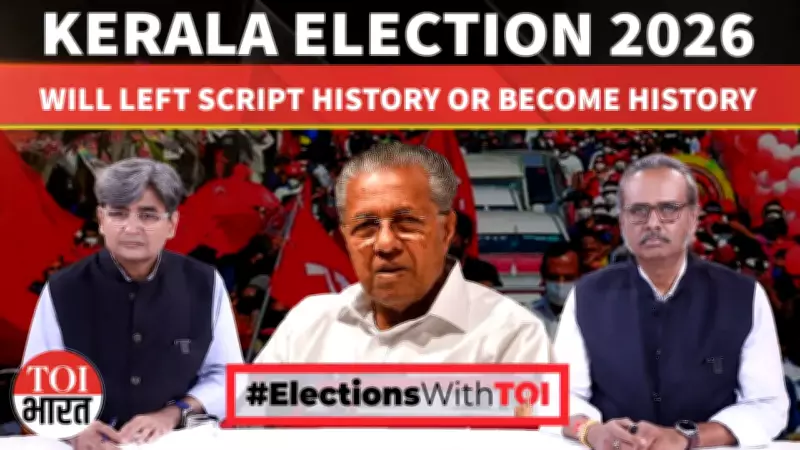
Kerala Election 2026: The Ultimate Three-Way Political Showdown
Kerala is preparing for one of its most significant electoral battles in recent history as the 2026 state assembly elections approach. The political landscape is set for a high-stakes confrontation between three major forces: the ruling Left Democratic Front (LDF), the opposition United Democratic Front (UDF), and the Bharatiya Janata Party (BJP) seeking to establish a stronger foothold.
The Contenders and Their Strategies
The Left Democratic Front, led by Chief Minister Pinarayi Vijayan, enters this election with the advantage of incumbency but also the burden of governance records from two consecutive terms. The LDF's campaign will likely focus on development projects, welfare schemes implemented during their tenure, and their distinctive political ideology that has resonated with Kerala's electorate in previous contests.
The United Democratic Front, primarily led by the Congress party, represents the principal opposition force aiming to reclaim power after being out of government since 2016. The UDF's strategy will emphasize alternative governance visions, criticism of LDF policies, and attempts to consolidate traditional voter bases that may have shifted in recent elections.

The Bharatiya Janata Party presents the third dimension in this electoral equation, working to transform what has traditionally been a bipolar contest into a genuine three-cornered fight. The BJP's efforts focus on expanding beyond their traditional support areas and capitalizing on national political trends while addressing state-specific concerns.
Key Factors Shaping the Electoral Battle
Several critical elements will determine the outcome of this crucial election:
- Incumbency Factor: The LDF faces the dual challenge of defending their governance record while combating potential anti-incumbency sentiments that often emerge after multiple terms in power.
- Opposition Unity: The UDF's effectiveness depends significantly on maintaining coalition cohesion and presenting a united front against the ruling alliance.
- BJP's Expansion: The BJP's ability to convert organizational growth into electoral gains remains a pivotal question, particularly whether they can secure decisive vote shares in key constituencies.
- Community Dynamics: Kerala's complex social fabric, with diverse religious and community groups, will play a crucial role in determining which political formation can assemble the winning coalition.
- Local Issues vs National Narrative: The balance between state-specific concerns and national political trends will significantly influence voter preferences across different regions of Kerala.
Expert Analysis and Ground Realities
Political observers note that Kerala's 2026 election represents more than just a routine power transfer possibility. It could potentially redefine the state's political alignment for years to come. The contest tests whether the LDF can achieve what no front has accomplished in decades—winning three consecutive terms—or whether Kerala will revert to its historical pattern of alternating between the two major alliances.
Ground reports indicate intense campaigning preparations across all three political formations, with each working to identify and mobilize their core supporters while attempting to attract undecided voters and those potentially disillusioned with their traditional choices.
The BJP's persistent efforts to establish itself as a viable third alternative add an unprecedented dimension to Kerala politics. While the party has made organizational inroads and improved its vote share in recent elections, converting this into substantial seat gains remains their primary challenge.
The Road to 2026
As political activities intensify across Kerala's fourteen districts, several questions dominate the pre-election discourse:

- Can the LDF overcome historical trends and secure a third consecutive term?
- Will the UDF successfully capitalize on any anti-incumbency sentiments to stage a comeback?
- Can the BJP achieve the breakthrough needed to genuinely transform Kerala's political landscape into a three-party system?
- Which issues—development, governance, ideology, or local concerns—will ultimately sway the majority of voters?
The answers to these questions will emerge only through the democratic process, but the 2026 Kerala election undoubtedly represents one of the most closely watched and analyzed political contests in contemporary Indian politics, with implications that extend beyond the state's borders.





