

Kerala's Political Storm Over Koshy Report Implementation
Kerala Chief Minister Pinarayi Vijayan finds himself in a political firestorm. With state Assembly elections just three months away, his government has revived the Justice J B Koshy Commission report. The move aims to showcase implementation efforts targeting the Christian community. However, opposition parties and sections of the Church have immediately labeled this a pre-election maneuver.
What Exactly Is the Koshy Commission?
The LDF government established the Koshy Commission in November 2020. Its mandate was clear: examine educational and economic backwardness among Kerala's Christian population. The panel's formation came ahead of the 2021 Assembly elections. At that time, Christian groups voiced concerns about minority welfare schemes. They argued Muslims were accessing a disproportionate share of benefits.
Christians constitute approximately 18.5% of Kerala's population. Muslims account for about 26.5%. The commission submitted its findings to the government in May 2023. Yet, the report remains unpublished. This secrecy fuels widespread speculation. Many believe the contents could embarrass the ruling administration.

The minority welfare department has withheld the report even under RTI requests. Officials state publication will occur only after government clearance. Before the 2024 Lok Sabha elections, Vijayan's government appointed an implementation committee. Details of this committee's work have also not reached the public domain.
Why the Sudden Spotlight Now?
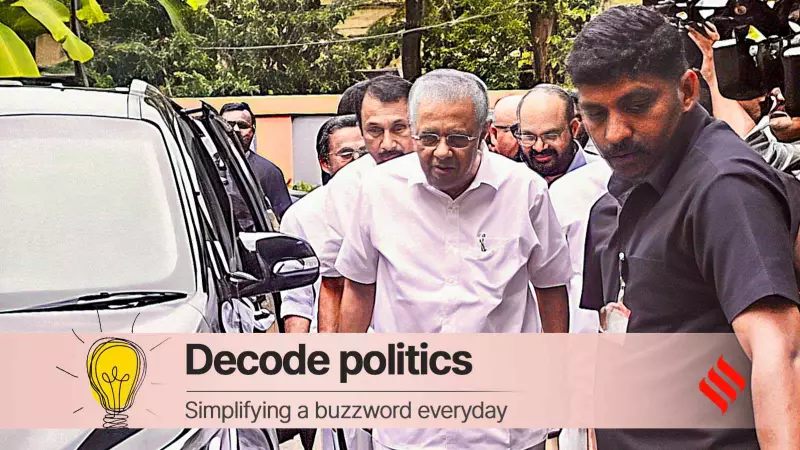
Last Thursday, Chief Minister Vijayan brought the Koshy report into sharp focus. At a press conference, he declared his government had taken all possible implementation steps. Vijayan claimed the panel made 329 recommendations. According to him, various departments have already acted on 220 of these.
"The government has reviewed the implementation of the recommendations," Vijayan stated. "Steps have been completed on 220 of them. Various departments have taken steps to bring seven recommendations before the consideration of the Cabinet."
The Chief Minister announced a high-level meeting scheduled for February 6. This meeting will deliberate on remaining recommendations. He acknowledged some proposals require changes to central or state norms. Others need consent from different departments. "There is no reason for anxiety," he assured the public.
Church Leaders Express Deep Skepticism
The Kerala Catholic Bishops Council (KCBC) responded with strong doubt. They called the government's announcement a poll time tactic. Christian organizations, particularly the Catholic Church, have consistently demanded the report's publication since its submission.
Father Michael Pulickal, secretary of the KCBC Commission for Social Harmony and Vigilance, voiced the community's frustration. "All actions claimed by the government are suspect," he said. "One has to doubt that the impending Assembly elections is behind the Chief Minister's statement. We are completely in the dark about implemented recommendations. We are forced to assume the government is making baseless claims. This is a move aimed at the elections."
BJP Intensifies the Political Pressure
The Bharatiya Janata Party has actively entered the fray. The party is working to build connections with Kerala's Christian community. State BJP vice-president Shone George highlighted a stark contrast. He noted the LDF implemented the Paloli panel report within 28 days in 2008. That panel was formed to execute the Sachar Committee recommendations on Muslim backwardness.
Yet, the Koshy panel report has languished for 32 months. "The CM should reveal what benefits Christians have actually received," George demanded. He accused the LDF government of playing hide and seek. George pointed out madrasa teachers gained various benefits from Sachar report implementation. Teachers in Christian Sunday schools did not receive similar treatment. "Secularism in Kerala demands a social audit," he asserted.

LDF's Delicate Political Balancing Act
The Left Democratic Front faces significant political challenges. Recent local body elections delivered losses to the LDF. The Congress-led UDF performed strongly in Central Kerala regions. Christian presence is significant in these areas. These same regions had backed the LDF during the 2021 Assembly elections. That support helped the front secure a historic consecutive second term.
The Koshy report controversy erupted after these local body polls. LDF ally Kerala Congress (M), a regional Christian party, now faces internal pressure. Some members advocate crossing over to the UDF. The Congress, leading the UDF, appears poised to regain Christian support. The community had drifted away in 2021.
For the Left, implementing the Koshy report represents a tightrope walk. The government must ensure actions do not upset other communities. Alleged discrimination in minority welfare scholarships caused major contention before the 2021 elections. It strained relations between Muslim and Christian groups. This strain partially contributed to the LDF's 2021 victory. Some Christians feared the Indian Union Muslim League would gain influence if the UDF returned to power.
After winning his second term, Chief Minister Vijayan took direct charge of the minority welfare department. This portfolio traditionally went to a Muslim community minister. In 2023, he allotted it to V Abdurahiman, who also handles haj, waqf, and sports.
Christian groups harbor another grievance. The LDF government sought to challenge a 2021 High Court order in the Supreme Court. The order quashed the 80:20 ratio for minority scholarships. The previous system allocated 80% to Muslim students and 20% to Christians. The High Court ruled scholarships must follow population proportions. This legal move has upset several Christian organizations in the state.
The political atmosphere in Kerala remains charged. The Koshy Commission report has become a central election issue. All major parties are maneuvering for advantage as the campaign intensifies.





