

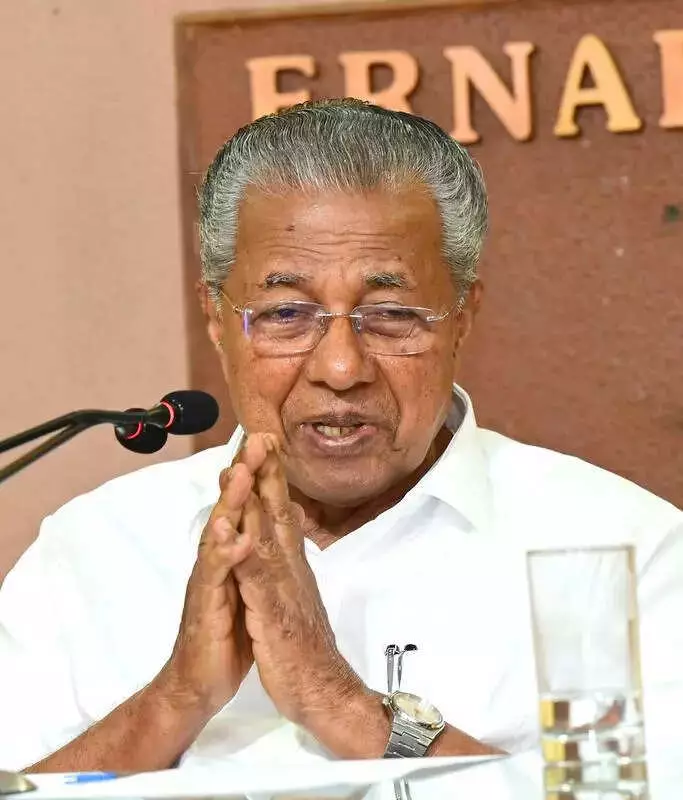
Kerala Chief Minister Pinarayi Vijayan has firmly dismissed concerns raised by his Karnataka counterpart, Siddaramaiah, regarding the proposed Malayalam Language Bill-2025. Vijayan asserted that the apprehensions about the legislation threatening linguistic freedom are "not based on facts." This sharp rebuttal comes in response to a letter from Siddaramaiah, who vowed to oppose the bill using every constitutional means, warning it could undermine linguistic rights in border areas.
The Core of the Dispute: Compulsory Language or Protection?
In his letter dated January 9, Siddaramaiah expressed specific objections. He argued that the bill seeks to make Malayalam compulsory in schools, including those in border districts like Kasaragod where Kannada is predominantly spoken. The Karnataka CM contended that this move would adversely affect linguistic minorities by imposing a language mandate.
Vijayan, in his detailed rejection of these allegations, clarified the bill's provisions. He emphasized that the legislation contains clear safeguards to prevent any imposition and to fully protect linguistic freedom. Students whose mother tongue is not Malayalam are free to choose languages available in schools as per the National Education Curriculum framework. Furthermore, he clarified that students from other Indian states or foreign countries are not compelled to appear for Malayalam examinations at the Class IX, X, or higher secondary levels.

"In notified areas, Tamil and Kannada speakers may continue to use their mother tongues for official correspondence with the secretariat, heads of departments, and local offices, with replies issued in the same languages," Vijayan wrote, underscoring the bill's inclusive approach.
What Does the Malayalam Language Bill-2025 Propose?
The Malayalam Language Bill-2025 was tabled in the Kerala Legislative Assembly in October last year. Its primary objectives are to declare Malayalam as the official language of the state, ensure its use for official purposes, and actively promote and protect the language. The bill also proposes the formation of a dedicated commission for this purpose. It is noteworthy that a similar bill passed in 2015 was returned by the President in May 2024.
The key mandates of the 2025 bill include the use of Malayalam in communications by all Kerala government departments. It also makes teaching Malayalam compulsory in government-aided schools from Classes 1 to 10. Crucially, the bill balances this with protections: it states that official communication in areas with linguistic minorities should be in the language of that region and affirms the right of students whose mother tongue is not Malayalam to receive education in their preferred language.
A History of Recent Tensions Between the Neighbouring States
This renewed linguistic exchange occurs just weeks after Kerala and Karnataka were locked in another conflict. The states clashed over a demolition drive in Kogilu that displaced approximately 167 families. While the Karnataka government stated the action was on land earmarked for a solid waste management project, CM Vijayan condemned it as "bulldozer justice" against minorities.
A delegation from Kerala's ruling CPI(M) later visited the site, and the Left Democratic Front (LDF) raised the issue against the Congress-led government in Karnataka. Following the outcry, the Karnataka government announced a rehabilitation plan for the affected families. These back-to-back disputes highlight the sensitive and often tense dynamic between the two states, with Kerala heading for assembly polls later this year.
The debate over the Malayalam Language Bill-2025 thus extends beyond linguistic policy, touching upon deeper issues of regional identity, minority rights, and interstate relations in a diverse federal structure.






