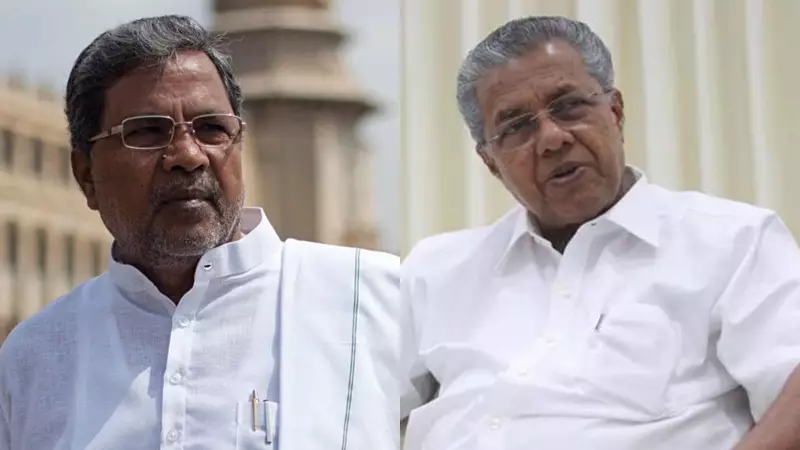
A fresh political and linguistic controversy has erupted between the neighboring states of Kerala and Karnataka, with their Chief Ministers taking opposing stands on a proposed language law. The dispute centers on the Malayalam Language Bill, 2025, passed by the Kerala Legislative Assembly in October last year.
The Core of the Controversy
Karnataka Chief Minister Siddaramaiah has strongly criticized the bill, labeling it an assault on the constitutional freedom of language. His primary concern is for the Kannada-speaking population in Kerala's border district of Kasaragod. In a post on social media platform X, Siddaramaiah argued that making Malayalam mandatory as the first language in schools, including Kannada-medium institutions, would deprive these residents of the opportunity to learn their mother tongue. He has urged the Kerala government to withdraw the legislation.
The bill, which is currently awaiting the assent of Kerala Governor Rajendra Vishwanath Arlekar, designates Malayalam as the official language of the state. It mandates its use in government services, the judiciary, and other official domains. A key provision requires Malayalam to be the compulsory first language in all schools following the Kerala syllabus. Furthermore, all products sold or manufactured in the state must carry labels in Malayalam. The bill also proposes the establishment of a Malayalam language development authority.

Kerala's Clarification and Defense
Responding to the criticism, Kerala Chief Minister Pinarayi Vijayan took to X on Saturday to clarify that the apprehensions are unfounded. He emphasized the bill's inclusive spirit and its safeguards for linguistic minorities.
Vijayan specifically pointed to Clause 7, a non-obstante clause, designed to protect the rights of linguistic minorities, particularly the Kannada- and Tamil-speaking communities. He stated that the bill's provisions ensure no language is imposed and that linguistic freedom is fully protected.
Detailing the safeguards, Vijayan explained that in notified areas, Tamil and Kannada speakers can continue official correspondence with the Secretariat and other offices in their mother tongue, receiving replies in the same language. For education, students whose mother tongue is not Malayalam are free to choose from languages available under the National Education Curriculum. Additionally, students from other states or countries are not compelled to take Malayalam examinations at the Class IX, X, or higher secondary levels.
Broader Implications and Stakes
The issue has drawn institutional attention, with the Karnataka Border Areas Development Authority (KBADA) appealing to the Kerala Governor to reconsider the bill. The debate touches on sensitive issues of federalism, linguistic identity, and the rights of minority communities within a state.
Vijayan framed Kerala's position within the constitutional framework, stating that the state's language policy aligns with the Official Languages Act, 1963, and Articles 346 and 347 of the Indian Constitution. He reiterated Kerala's commitment to secularism, pluralism, and protecting every citizen's linguistic identity, resisting any erosion of federal rights.
This confrontation highlights the delicate balance states must maintain while promoting a regional language and upholding the constitutional rights of linguistic minorities. The outcome, pending the Governor's decision, is being closely watched as it will set a significant precedent for language policy in India's diverse federal structure.