

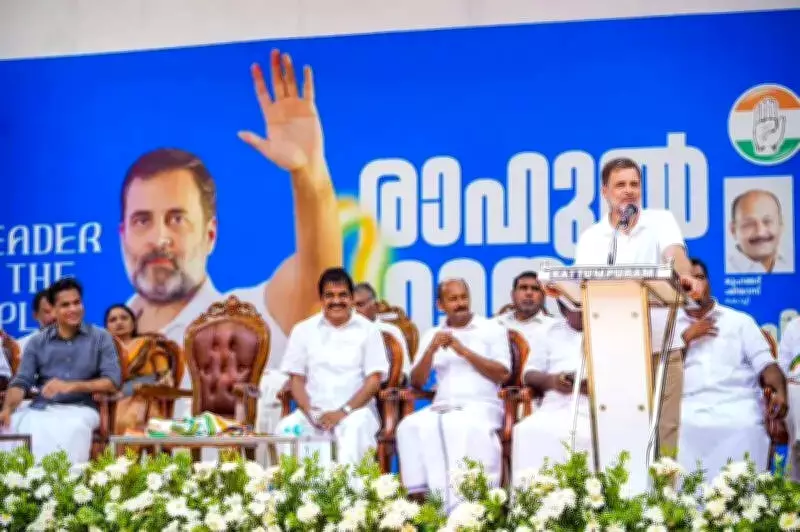
Kerala Election Manifestos Unveil Parallel Welfare Visions
In a significant pre-election development, the United Democratic Front (UDF) and the Left Democratic Front (LDF) in Kerala have released their manifestos exactly one week before the polls, revealing striking similarities in their focus on welfare and development. Both political fronts have centered their promises around a wide array of assurances, including healthcare enhancements, employment generation, educational reforms, and infrastructure upgrades.
Common Pledges Highlight Shared Priorities
The manifestos from both the UDF and LDF contain overlapping commitments that underscore a consensus on key social issues. Notably, both fronts have pledged to increase welfare pensions to ₹3,000, aiming to provide better financial security for vulnerable groups. Major infrastructure proposals, such as the expansion of metro rail services in Thiruvananthapuram and Kozhikode, feature prominently in both documents. Additionally, common promises include initiatives for high-speed rail connectivity, measures to address human-animal conflicts, increases in the minimum support price for crops, and interest-free loans targeted at the youth.
Elderly Care Takes Center Stage Amid Demographic Shifts
With Kerala grappling with an ageing population, elderly care has emerged as a critical focus in both manifestos. The UDF has gone a step further by promising to establish a separate ministry dedicated to elderly welfare, while the LDF has outlined comprehensive services for senior citizens. Demographer S Irudaya Rajan, chair of the International Institute of Migration and Development, explained the strategic emphasis on this demographic. "Only about 5% of voters change their minds, which can significantly impact assembly elections in Kerala. In 2021, Non-Resident Keralites (NRKs) returned due to Covid-19, and the elderly population largely voted for the LDF. This time, without a large-scale return of migrants, the elderly will play a pivotal role, as one out of every five votes comes from an older person. This has prompted both fronts to announce targeted benefits for the elderly in their manifestos," Rajan stated.

Distinctive Approaches Within Shared Frameworks
Despite the similarities, each manifesto introduces unique elements that reflect their respective political ideologies. The LDF's manifesto is structured around a 60-point programme, emphasizing continuity in governance and the people's planning campaign under the banner Nava Keralam. Key pledges include making the state poverty-free, providing job opportunities to 50% of women, offering skill training for educated youth, and increasing support for Micro, Small, and Medium Enterprises (MSMEs).
In contrast, the UDF's manifesto draws inspiration from welfare schemes implemented in Congress-ruled states like Karnataka and Telangana, under the Indira Guarantee framework. Specific promises include free bus travel for women and financial aid of ₹1,000 for female college students. The UDF also proposes establishing a Tribal University in Wayanad, increasing the daily wage of ASHAs to ₹700, and implementing healthcare reforms such as bill-less hospitals. Furthermore, it advocates for legislation like the Rohith Vemula Act to combat caste-based discrimination in higher education and the creation of a Job Watch Tower to monitor global employment trends and align academic curricula accordingly.
Additionally, the UDF manifesto introduces innovative initiatives, such as a Peace and Harmony department, modeled after Rajasthan's approach to curb political violence, and a Ministry of Tolerance aimed at promoting communal harmony.
Expert Skepticism Over Fiscal Viability and Implementation
Economists and social scientists have expressed skepticism regarding the feasibility of many assurances, describing them as "old wine in a new bottle" due to a lack of clear roadmaps for implementation. Experts note that one week is insufficient for voters to thoroughly examine the proposals in detail.

Economist B A Prakash raised concerns about how a new government would fulfill these promises amidst Kerala's serious fiscal challenges. "Kerala has faced a continuous deficit since 2001, and there is not enough money in the treasury even for ongoing development projects," Prakash remarked. He criticized the LDF for not prioritizing financial management, highlighting that continuous borrowing has pushed the state into a debt trap, as evidenced by fiscal data published by the Comptroller and Auditor General (CAG), which reveals a precarious financial situation.
Rajan added another layer of analysis, pointing out that while employment is a highlighted issue in both manifestos, the real challenge in Kerala is not a lack of jobs but the need for better wages. "The focus should shift from merely creating jobs to ensuring fair compensation that meets living standards," he suggested.
As the election approaches, voters are left to weigh these promises against the backdrop of fiscal constraints and implementation uncertainties, making the manifestos a critical point of discussion in Kerala's political landscape.





