Kerala's Political Landscape: A Clash of Records and Rhetoric
As Kerala gears up for its next electoral showdown, the political arena is witnessing a profound and intense battle that transcends traditional party lines. This contest is not merely about ideologies or personalities but revolves around a fundamental dichotomy: the ruling Left Democratic Front's (LDF) emphasis on tangible performance versus the opposition United Democratic Front's (UDF) focus on shaping public perception. The outcome of this struggle could redefine the state's governance trajectory for years to come.
The LDF's Performance-Based Campaign Strategy
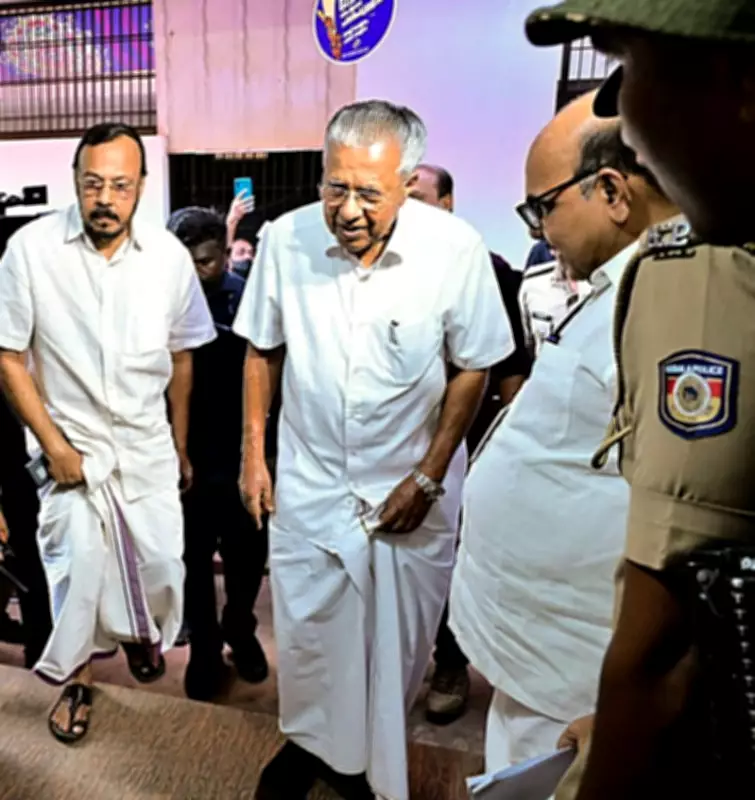
The incumbent LDF government, led by Chief Minister Pinarayi Vijayan, is aggressively campaigning on its record of administrative achievements and policy implementations. Key highlights include significant strides in public healthcare, exemplified by the robust response during the COVID-19 pandemic, and advancements in infrastructure development such as road expansions and digital initiatives. The government also points to social welfare schemes that have allegedly improved living standards for marginalized communities, bolstering its claim of inclusive growth.
However, critics argue that these accomplishments are often overshadowed by controversies, including allegations of corruption in certain projects and bureaucratic inefficiencies. Despite this, the LDF remains steadfast, leveraging data and official reports to validate its performance narrative, aiming to convince voters that continuity is essential for sustained progress.

The UDF's Perception-Driven Approach
In contrast, the opposition UDF, spearheaded by the Congress party, is crafting a campaign centered on perception management. By highlighting issues like rising living costs, unemployment rates, and governance lapses, the UDF seeks to create a narrative of administrative failure. Their strategy involves extensive use of media outreach and public rallies to amplify concerns, effectively framing the election as a referendum on the LDF's alleged shortcomings.
This perception-based approach is not without its challenges. The UDF must overcome internal cohesion issues and present a unified front to capitalize on anti-incumbency sentiments. Yet, by focusing on emotional appeals and voter dissatisfaction, they aim to shift the discourse away from performance metrics toward broader societal grievances.
Voter Sentiment and Electoral Implications
The electorate in Kerala, known for its political awareness and high voter turnout, is now at a crossroads. Many voters are weighing the LDF's documented achievements against the UDF's critiques of governance flaws. Factors such as economic stability, social justice, and regional development will play pivotal roles in influencing decisions.
This battle between performance and perception is not unique to Kerala but reflects a larger trend in Indian politics, where incumbents often rely on track records while challengers leverage public discontent. The results will not only determine the state's leadership but also set a precedent for how performance-based governance is valued versus perception-driven politics in a democratic framework.
As the campaign intensifies, both fronts are expected to ramp up their efforts, with the LDF doubling down on its development agenda and the UDF sharpening its critique. Ultimately, the voters' verdict will reveal whether concrete performance or crafted perception holds greater sway in shaping Kerala's future.