Prashant Kishor Levels Serious Allegations Against Bihar Government
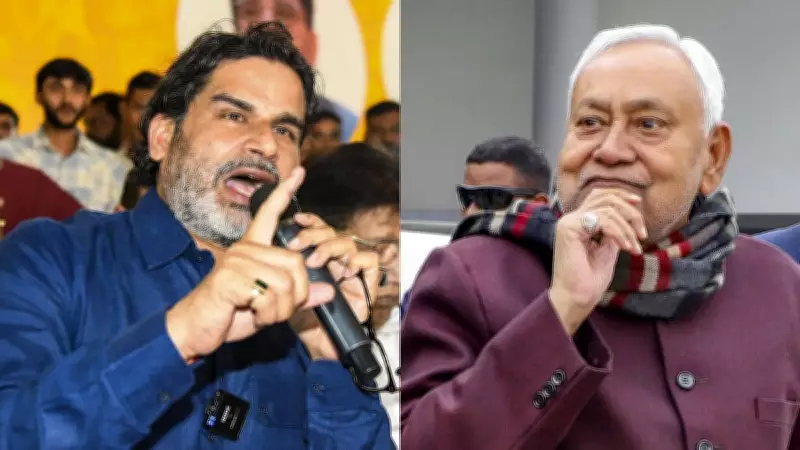
In a significant political development, strategist Prashant Kishor has launched a scathing attack on the Nitish Kumar-led administration in Bihar. Kishor has publicly accused the state government of attempting to dismantle the much-publicized liquor prohibition policy through covert means. This dramatic allegation was made on February 26, 2026, and has since stirred considerable controversy in political circles.
Alleged Motive: Repaying Pre-Poll Loans
The core of Kishor's accusation centers on financial mismanagement linked to the recent assembly elections. He claims that the Bihar government's treasury is currently depleted because it secured substantial loans in the period leading up to the polls. According to Kishor, these funds were not allocated for public welfare or development projects but were instead utilized as a "financial instrument for securing electoral victories."
Kishor elaborated that the borrowed money was allegedly distributed to influence voters, a practice colloquially referred to as vote-buying. With the elections concluded, the government now faces the pressing burden of repaying these debts. Kishor asserts that to generate the necessary revenue, the administration is quietly working to relax or reverse the liquor ban, which would open a significant new stream of excise income for the state.
The Context of Bihar's Liquor Prohibition
The liquor ban in Bihar, implemented in 2016, has been a flagship policy of Chief Minister Nitish Kumar. It was introduced with the stated objectives of promoting public health, reducing domestic violence, and improving societal welfare. The policy has received both praise and criticism over the years, with debates about its effectiveness and economic impact.
Kishor's allegations suggest a potential major policy shift driven by fiscal desperation rather than public interest. He implies that the government is prioritizing financial recovery over its proclaimed commitment to social reform. This has raised questions about the sustainability of the prohibition law and the transparency of the government's fiscal decisions.
Political Repercussions and Public Discourse
The accusations have ignited a fierce political debate in Bihar. Opposition parties are likely to seize upon Kishor's statements to challenge the government's integrity and policy consistency. Meanwhile, supporters of the administration may dismiss the claims as politically motivated, given Kishor's history as a critic and political analyst.
Key points from Kishor's allegation include:
- The state government took substantial loans before the assembly elections.
- These loans were allegedly used to distribute money to influence voting patterns.
- Post-election, the government coffers are reportedly empty, creating a repayment crisis.
- The proposed solution, according to Kishor, is a clandestine rollback of the liquor ban to boost state revenue through alcohol sales.
This development places the Nitish Kumar government under intense scrutiny regarding its financial management and policy priorities. The coming days may see official responses, clarifications, or further revelations as the story develops. The issue touches on broader themes of governance, electoral ethics, and the economic realities of policy implementation in Indian states.