

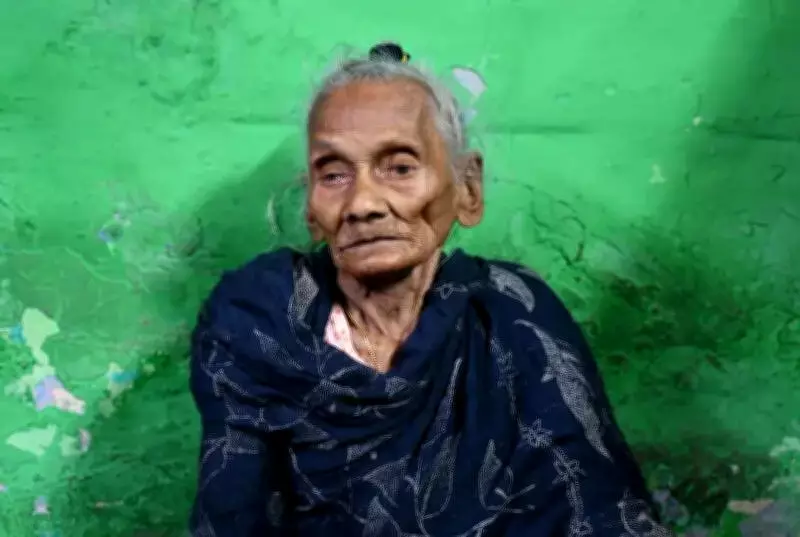
97-Year-Old Kolkata Refugee's Voter Name Erased in Special Revision, Family in Despair
In a distressing turn of events, Subarna Bala Poddar, a resilient 97-year-old refugee residing in Kolkata, has found her name inexplicably deleted from the voter list following the Special Intensive Revision (SIR). This deletion marks a stark contrast to her lifelong commitment to democracy, as she has cast her vote in every single election since becoming eligible, never missing an opportunity to exercise her fundamental right.
A Life of Struggle and Resilience
Born in Abdullahpur, in what was then undivided Bengal, Subarna Bala was married at a very young age. Her life took a dramatic turn during the tumultuous 1947 Partition, when her family was forced to flee their home with nothing but the clothes on their backs. They eventually settled in Kolkata, where they have been living on Narkeldanga North Road for decades, building a new life from scratch.
Remarkably, Subarna Bala remains unaware that her name has been removed from the electoral rolls. When questioned about her voting plans for the upcoming election, she responded in Bengali, "Shorir dile vote debo" ("If my health permits, I will vote"). In broken words, she passionately explained that the right to vote is a top priority for her, emphasizing her perfect voting record since eligibility. Expressing confusion, she added, "I have a voter's card, so why can't I vote?" highlighting the bureaucratic disconnect she faces.

Family's Frustration and Failed Appeals
Her daughter, Sandhya Poddar, shared the family's anguish. "In 2024, the Election Commission had arranged a home voting facility for her as she was unable to visit the polling booth on her own," Sandhya recalled. "Earlier, she used to get ready early in the morning and go to the polling booth with me and other neighbours to cast her vote. However, this time she will not be able to vote as her name has been deleted despite submitting all documents."
The issue traces back to a spelling error in the 2002 SIR roll, where her name appeared as Swarna Bala. She was called for a hearing where she submitted multiple documents, including her voter ID, Aadhaar card, bank passbook, and the widow pension she receives from the state government. Shockingly, all these documents were rejected. The family then filled out Form 6 for fresh inclusion of her name, but that too was turned down, leaving them bewildered.
"She receives a widow pension, and we submitted that document as well. But nothing was considered, and everything was rejected," Sandhya lamented. "My mother did not have a birth certificate, which was not available those days. We are in the dark about how to restore her name, or whether she will remain a deleted voter for the rest of her life."
Broader Impact on the Family
The deletion has not only affected Subarna Bala but also three other voters in her family. Her two grandsons, who attempted to link their applications through her, also lost their voting rights. As a result, only four out of eight family members will be able to cast their votes this year. "We will cast our votes even if half of the family has lost their rights," Sandhya stated defiantly. "My mother looks very happy whenever she gets her index finger inked, but I don't know if she will be able to get her voting rights back in her lifetime. But we will keep trying."
Political Intervention and Systemic Issues
Mala Bhattacharya, the Booth Level Agent (BLA) of the Trinamool Congress (TMC), visited Subarna Bala's house on Thursday morning after Kunal Ghosh, the TMC candidate from Beleghata, met her family during his campaign and expressed concern. "I questioned the Booth Level Officer (BLO) of this part, but she too was confused about the reason for the deletion of the name and said she needed to submit 'solid' documents before the Election Commission," Bhattacharya explained. "Our question is from where a 97-year-old woman will get solid or fool-proof documents other than these. The number of voters in this part has come down to 1,092 from 1,326 after the special intensive revision of electoral rolls."

This case underscores broader systemic challenges in the electoral process, particularly for elderly citizens and refugees who may lack formal documentation from earlier eras. It raises critical questions about the implementation of voter list revisions and the need for more compassionate, flexible policies to safeguard democratic participation for all, especially those who have witnessed and contributed to India's democratic journey from its inception.





