

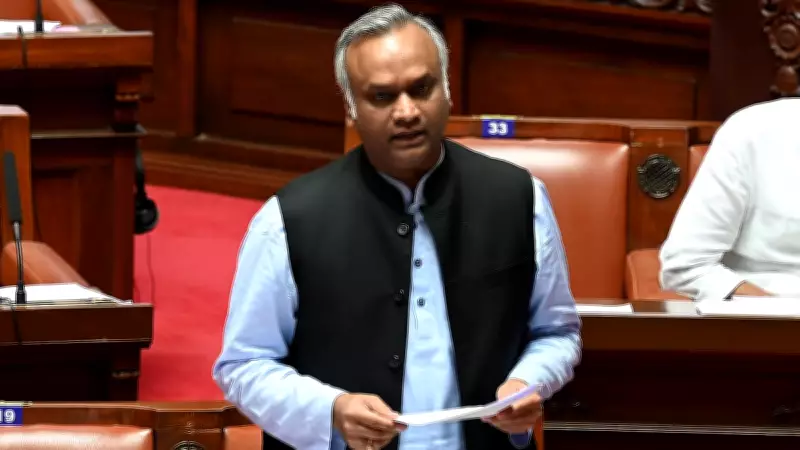
KPSC Controversy Sparks Fiery Debate in Karnataka Assembly
The Karnataka Legislative Assembly was plunged into turmoil as a major controversy surrounding the Karnataka Public Service Commission (KPSC) took center stage, leading to intense political clashes and demands for radical reform. The debate, which highlighted deep-seated concerns about the commission's functioning, saw significant contributions from key political figures across party lines.
Priyank Kharge's Call for Drastic Action
Congress leader and prominent MLA Priyank Kharge made a forceful intervention during the proceedings, advocating for the outright abolition of the KPSC. In his address to the Assembly, Kharge articulated a position that the commission has become irreparably dysfunctional and is failing in its constitutional mandate to ensure fair and transparent recruitment for state government services. His demand represents a significant escalation in the ongoing criticism of the body, which has faced numerous allegations of irregularities and inefficiency over recent years.
BJP's V Sunil Kumar Urges Government Intervention
Initiating the debate, BJP member V Sunil Kumar presented a detailed critique of the KPSC's operations, calling on the state government to take immediate and decisive action. Kumar emphasized that despite the KPSC being an autonomous constitutional body established under Article 315 of the Indian Constitution, the state administration has a moral and administrative responsibility to intervene when public trust is eroded. He argued that the government cannot remain a passive observer while the commission's credibility continues to deteriorate, affecting thousands of aspirants and the overall governance framework.

The core of Kumar's argument rested on the premise that autonomy should not equate to unaccountability. He pressed for mechanisms through which the government could oversee and rectify the alleged malpractices within the KPSC without undermining its independent status. This stance reflects a broader political consensus that the commission's issues require urgent attention, though opinions differ on the extent and method of intervention.
Broader Implications and Political Reactions
The debate has reignited long-standing grievances about the KPSC, with many legislators pointing to delayed examinations, question paper leaks, and allegations of favoritism in appointments. The Assembly session saw members from various parties expressing solidarity with the concerns raised, indicating that the issue transcends typical political divides. The discussion also touched upon the potential impact on youth employment and administrative efficiency in Karnataka, making it a matter of significant public interest.
As the controversy unfolds, it underscores the challenges in balancing the autonomy of constitutional bodies with the need for accountability in public administration. The calls for abolition or intervention highlight a critical juncture in Karnataka's governance, with potential reforms on the horizon that could reshape the state's recruitment processes. The Assembly's engagement with this issue signals a proactive legislative approach to addressing institutional failures, setting a precedent for future debates on similar matters.






