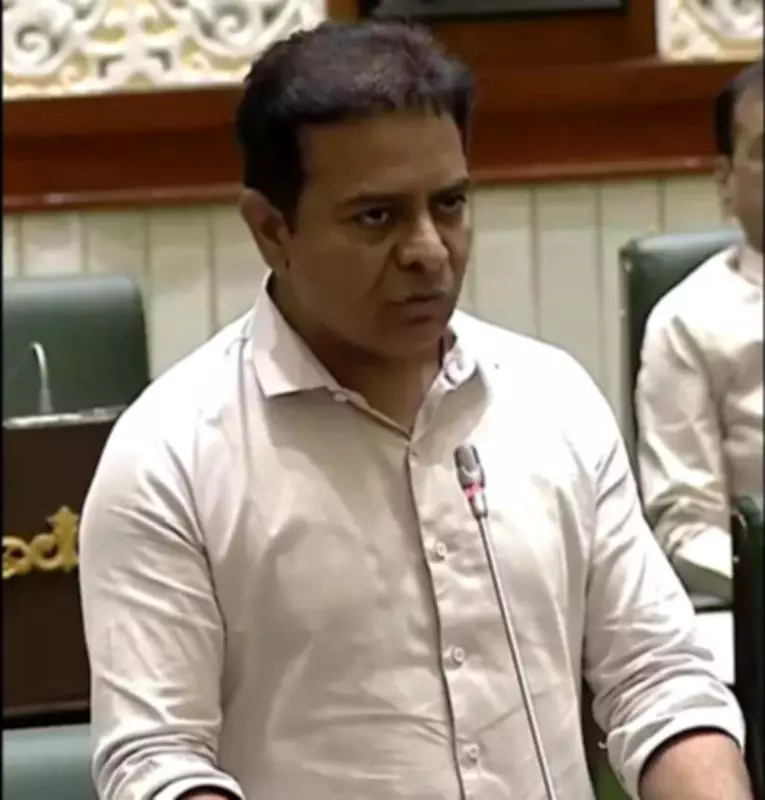
KTR Condemns Telangana Hate Speech Bill as Draconian Measure
In a strong statement from Hyderabad, BRS working president KT Rama Rao has vehemently opposed the Telangana Hate Speech and Hate Crimes (Prevention) Bill introduced by the Congress government, labeling it a draconian tool designed to suppress free speech. He expressed deep concerns over the constitutional, democratic, and civil liberties implications if the bill is enacted into law.
Broad and Vague Definitions Raise Alarms
KTR emphasized that while preventing genuine hate speech and maintaining social harmony are crucial governmental responsibilities, the current framework of the bill appears dangerously broad, vague, and susceptible to misuse. He stated, "The bill defines hate speech using sweeping expressions such as ‘promoting ill-will,' ‘distorting harmony,' and ‘spreading false information.' These phrases are subjective and lack clear legal boundaries."
He warned that without precise definitions, enforcement could rely on interpretation rather than evidence, creating a significant risk that criticism of government decisions might be mislabeled as "disharmony" or "fake news," effectively criminalizing democratic expression.

Contradiction with Supreme Court Rulings
KTR highlighted that the bill contradicts established Supreme Court judgments. He referenced the landmark case of Shreya Singhal vs Union of India, where the court ruled that only speech directly inciting violence or public disorder can be restricted. He argued, "Mere criticism, advocacy, satire, or disagreement cannot be punished under this precedent, making the bill's provisions overly restrictive."
Executive Authority Over 'Fake News'
One of the most concerning aspects, according to KTR, is the provision allowing executive authorities to determine what constitutes ‘fake news.' He cautioned, "Allowing the government to decide the truth about matters concerning itself undermines democratic accountability. This creates a scenario where the government acts as both a participant in public debate and the arbiter of permissible speech."
Stringent Penalties and Chilling Effects
KTR also raised serious objections to the bill's proposed penalties, which include imprisonment of up to seven years for first-time offences and up to ten years for repeat offences. He warned that these harsh punishments could have a chilling effect, discouraging journalists from reporting on sensitive issues, students from expressing opinions, citizens from criticizing policies, and opposition parties from questioning the government.
He concluded by urging a reevaluation of the bill to ensure it aligns with constitutional safeguards and democratic principles, rather than becoming an instrument for selective targeting of dissenters.