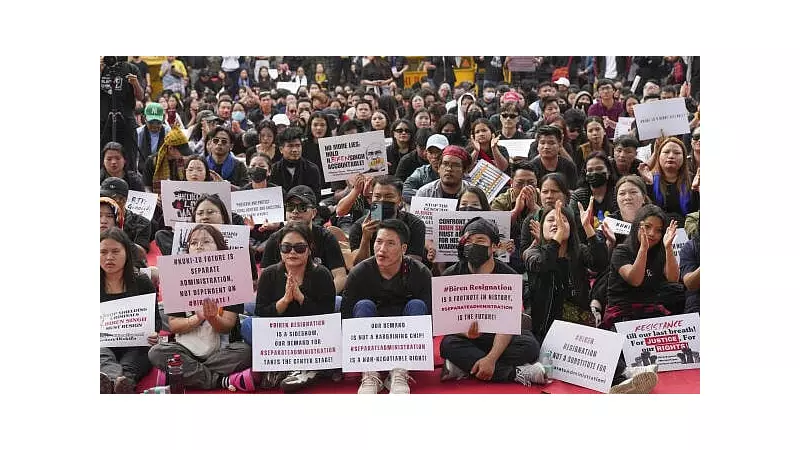
In a significant political development, Kuki legislators in Manipur have firmly refused to take part in the formation of a new government. They demand a written commitment from potential allies regarding their long-standing call for a separate Union Territory.
MLAs Stand Firm on UT Demand
The Kuki lawmakers made their position clear in recent statements. They will not engage in any coalition talks or support government formation without a concrete, written assurance. This demand centers on the creation of a Union Territory for the Kuki community within Manipur.
Background of the Political Stalemate
Manipur has faced ongoing ethnic tensions, particularly between the Kuki and Meitei communities. The Kuki MLAs argue that a separate Union Territory is essential for their security and administrative autonomy. Previous verbal promises from political parties have not satisfied them, leading to this ultimatum.

Political analysts note that this move could complicate efforts to establish a stable government in the state. Without the support of Kuki legislators, forming a majority in the assembly becomes more challenging. The refusal highlights deep-seated issues that require immediate attention.
Implications for Manipur's Governance
The standoff raises concerns about governance and law and order in Manipur. A prolonged political crisis might affect development projects and public services. Residents express worry over potential delays in decision-making and policy implementation.
Other political groups in Manipur are now assessing their options. Some may attempt to negotiate with the Kuki MLAs, while others could seek alternative alliances. The situation remains fluid, with no immediate resolution in sight.
What Happens Next?
Observers predict several possible outcomes. The Kuki MLAs might hold firm, forcing other parties to meet their demand or risk a minority government. Alternatively, there could be behind-the-scenes discussions to find a compromise. The central government might also intervene to mediate the dispute.
For now, the Kuki legislators maintain their stance. They emphasize that only a written commitment will suffice. This condition sets a new precedent in Manipur's political landscape, where trust in verbal agreements has eroded.
The coming days will be crucial. All eyes are on how political leaders respond to this demand. The outcome could reshape alliances and influence future elections in the state.