A long-dormant property disagreement between a Hindu temple and a Muslim dargah in Madurai has violently resurfaced, centering on a ritual lamp-lighting ceremony and igniting a major political confrontation in Tamil Nadu. The dispute, which dates back over a century, has seen court orders, police action, and stone-pelting, drawing sharp reactions from the ruling DMK and the opposition BJP and AIADMK just months before the state assembly elections.
The Flashpoint: A Court-Ordered Ritual and Ensuing Violence
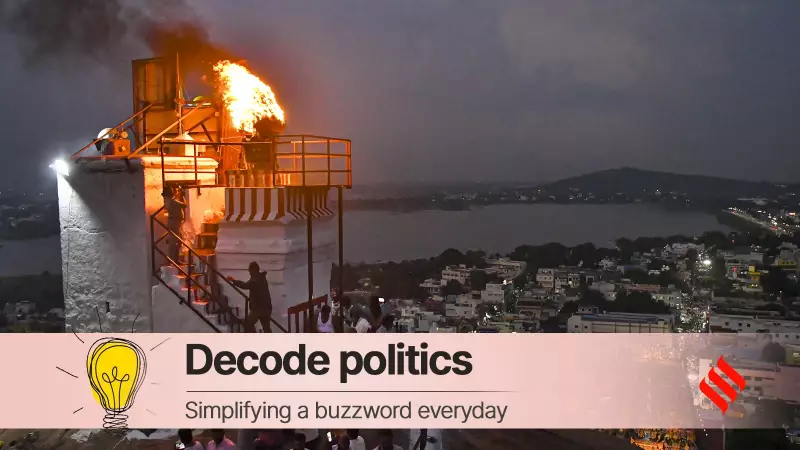
The immediate trigger was a Madras High Court order dated December 1, 2025, directing authorities to facilitate the lighting of the 'Karthigai Deepam' lamp at a specific pillar known as the Deepathoon on Thirupparankundram Hill. The site is shared by the revered Subramanya Swamy Temple and the Sulthan Sikkandar Avulia Dargah, located just meters apart.
When state officials failed to execute the order, the court's Madurai Bench issued a contempt ruling. On Wednesday, December 3, the petitioner and supporters, escorted by the Central Industrial Security Force (CISF), ascended the hill to complete the ritual. The judge termed the act "symbolic but necessary," warning that failure to enforce the order would "sound the death knell of democracy."
Following this, supporters of the Hindu Munnani outfit gathered and pelted stones, injuring at least six police officers. In response, the Madurai District Magistrate imposed prohibitory orders under the Bharatiya Nagarik Suraksha Sanhita, citing an emergent law-and-order situation.
A Century-Old Dispute with Colonial-Era Roots
The current conflict over rituals masks a deeper, older battle for control of parts of the hill. Historical records show the dispute first erupted between 1915 and 1916 when caretakers of the dargah attempted to construct a mandapam using stones from the hill, which temple authorities claimed was entirely their property.
The legal journey saw the case move from a Madurai subordinate judge in 1923 to the Madras High Court in 1926, and finally to the Judicial Committee of the Privy Council in London in 1931. The Privy Council upheld that the hill belonged to the temple, except for the specific dargah site, its flagstaff, and steps. For decades thereafter, the matter was managed locally without significant political interference.
Political Parties Seize the Moment
The DMK government has squarely blamed the BJP and Sangh-aligned groups for attempting to create a communal flashpoint. Hindu Religious and Charitable Endowments Minister P K Sekarbabu accused the BJP of aiming to "create law-and-order problems and bring down the DMK government by dividing people." He emphasized the state's commitment to following court orders while ensuring harmony.
The BJP, seeking to mobilize sentiment ahead of polls, made a direct political entry into the issue. Late on Thursday, December 4, state BJP president Nainar Nagendran and senior leader H Raja were detained when they tried to visit the disputed site. Their ally, the AIADMK, condemned the detention, with party chief Edappadi K Palaniswami questioning if the government considered itself above the court.
The state government's appeal against the contempt order was dismissed on Thursday by a Division Bench of Justices G Jayachandran and K K Ramakrishnan. The Bench stated the appeal was procedurally untenable and a "pre-emptive step" to avoid contempt. It reinforced that lighting the lamp was a judicially settled right linked to constitutional articles, and the state cannot use prohibitory orders to override court rulings.
What Lies Ahead?
The legal position is now clear: the December 1 order to light the lamp stands, as does the contempt order allowing the petitioner to do so with protection if the state fails. The dispute has transformed from a local administrative issue into a high-stakes political and legal test case.
It now balances religious identity, legal precedent, state authority, and judicial assertiveness. On a hill where two faiths have coexisted for centuries, the resolution is no longer in the hands of local worshippers or colonial administrators, but is being shaped by petitions, organized mobilizations, and the charged grammar of contemporary Tamil Nadu politics.