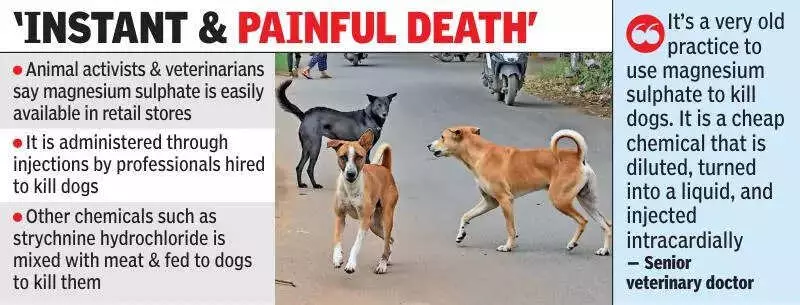
Animal rights activists and veterinarians in Telangana have made a shocking revelation. They say the recent mass killing of stray dogs across multiple districts likely involved magnesium sulphate injections. This multipurpose chemical is easily available in retail stores, according to their reports.
Professionals Hired for Deadly Injections
Activists claim professionals were hired to administer these injections. A senior veterinarian confirmed this practice has been common for a long time. The chemical is diluted into liquid form and injected directly into the dog's heart.
"It results in instant and painful death," the veterinarian stated. "Since the injection targets the heart, it requires professional handling and cannot be done by ordinary people."

Other Chemicals Also in Use
The veterinarian mentioned another dangerous substance. Strychnine hydrochloride is frequently mixed with meat and fed to dogs. This method kills them without needing special expertise.
"A 5 gm bottle can kill hundreds of dogs," the doctor explained. This chemical approach contrasts sharply with legal euthanasia methods.
Legal Euthanasia Rules Being Ignored
Official regulations permit only specific drugs for euthanasia. Pentanol sodium and sodium thiopentone are the approved substances. These should be used only for terminally ill or fatally injured animals.
More importantly, these legal drugs require prescriptions. They are not freely available like magnesium sulphate or strychnine hydrochloride.
Traditional Medicines and Cyanide Allegations
Activists report additional concerning methods. Some rural areas use traditional medicines called 'konga mandu' for mass dog killings. The composition of these medicines remains largely unknown.
Animal rights activist Pridhvi Panneru shared troubling information. "When mass killings occurred before, locals said they used country medicine. This caused hundreds of dog deaths, but we don't know what's in it."
Some activists make even more serious allegations. They suspect cyanide is also being used, particularly by professionals hired from neighboring Andhra Pradesh.
Easy Availability Raises Serious Questions
The widespread availability of these chemicals troubles activists deeply. Magnesium sulphate has legitimate uses in agriculture, industry, and medicine. However, its easy procurement in large quantities enables misuse.
Activists are demanding answers. They question how such dangerous chemicals remain so accessible without proper controls. The situation highlights significant gaps in chemical regulation and animal protection enforcement.