Maharashtra Cabinet Approves One-Year Extension for Atal Setu Toll Concession
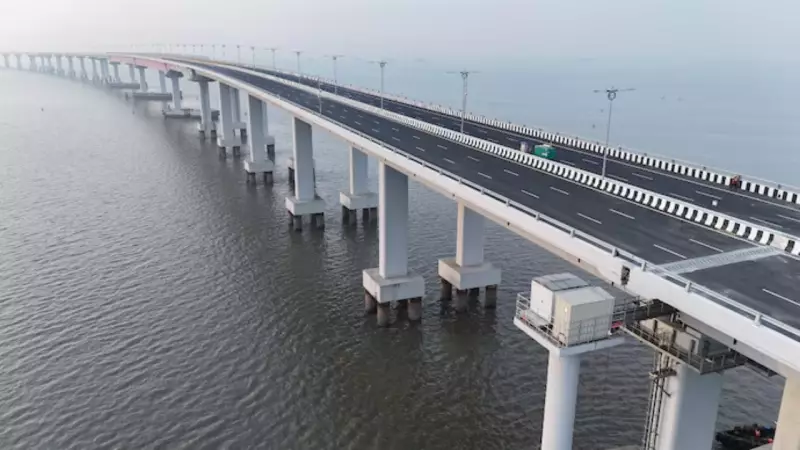
The Maharashtra government has decided to continue providing financial relief to commuters using the Atal Setu sea bridge. The state cabinet approved a one-year extension for the fifty percent toll concession on this crucial Mumbai-Navi Mumbai connector.
Commuters Get Continued Financial Relief
Regular users of the Atal Setu will benefit from reduced toll charges for another twelve months. This decision directly helps thousands of office workers, logistics companies, and frequent travelers who depend on this bridge daily. Officials stated the extension aims to lessen the economic burden on these commuters while ensuring smooth traffic movement across the harbor.
Electric Vehicles Receive Complete Toll Waiver
In a significant push for sustainable transportation, the cabinet granted full toll exemption for electric cars and electric buses on the Atal Setu. This move supports the state government's broader strategy to encourage electric mobility and cut carbon emissions on busy transport corridors.

Addressing Previous Implementation Issues
The toll-free access for electric vehicles became a prominent issue recently. The state government acknowledged in December that toll operators were still charging EVs despite an earlier decision in May 2025. That decision had exempted electric vehicles from tolls on the Atal Setu, Mumbai-Pune Expressway, and Samruddhi Highway.
Assembly Speaker Rahul Narwekar intervened to resolve this discrepancy. He directed the government to ensure toll-free access for all electric vehicles within eight days. Narwekar also ordered refunds for EV owners who paid tolls incorrectly after the May 2025 exemption announcement.
Technical Challenges Delayed Implementation
Shiv Sena minister Dada Bhuse explained the delay in implementing the EV toll exemption. He cited technical hurdles during a recent Assembly session. Coordination problems with FASTag agencies and the National Informatics Center slowed the process of updating toll collection systems across these major highways.
Broader Mumbai Transport Infrastructure Investments
Beyond toll concessions, the cabinet approved a revised financial plan for the Mumbai Urban Transport Project Phase-2. This project now has a budget of ₹8,087.11 crore. It focuses on strengthening suburban rail infrastructure and improving daily commutes for lakhs of Mumbai residents.
New Agency for International Job Opportunities
The cabinet also cleared the formation of the Maharashtra Agency for Holistic International Mobility & Advancements. Known as MAHIMA, this agency will coordinate overseas employment schemes. It aims to help skilled workers from Maharashtra access job opportunities in various countries worldwide.
Atal Setu's Impact on Mumbai-Navi Mumbai Connectivity
Since its opening, the Atal Bihari Vajpayee Sewri–Nhava Sheva Atal Setu has dramatically reduced travel times between Mumbai and Navi Mumbai. Journeys that previously took over an hour now take under twenty-five minutes during non-peak hours. Officials report the bridge has eased congestion on older routes like Vashi and Airoli. It provides commuters with a faster, signal-free alternative across the harbor while improving access to the upcoming Navi Mumbai International Airport.
Strategic Importance for Regional Development
The Atal Setu serves as more than just a commuter bridge. It has become a critical infrastructure link for freight movement and regional economic growth. The sea bridge connects seamlessly to key roads leading to JNPT port, industrial zones in Navi Mumbai, and the under-construction international airport. Authorities view this corridor as a long-term economic enabler that will support logistics, trade, and development across the entire Mumbai Metropolitan Region.