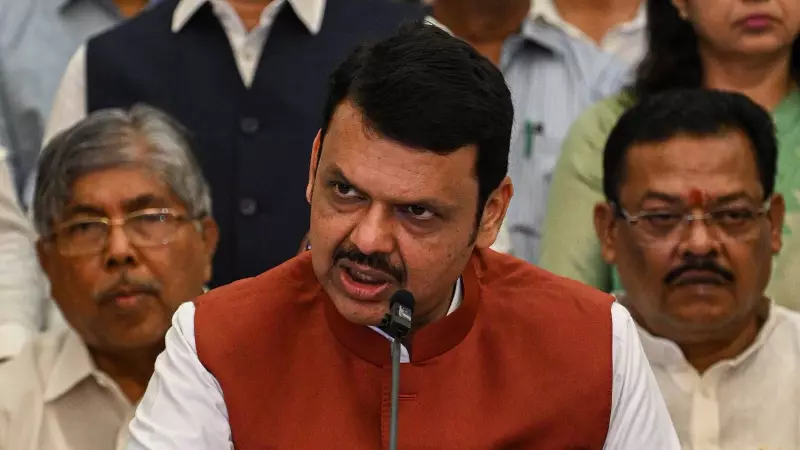
Maharashtra has achieved a significant milestone by securing investment commitments worth Rs 30 lakh crore during the World Economic Forum summit held in Davos, Switzerland. Chief Minister Devendra Fadnavis made this announcement on Thursday, highlighting the state's leadership in attracting substantial capital inflows across multiple sectors.
Breakdown of Investment Commitments
During his media address in Switzerland, Fadnavis detailed that these commitments span diverse areas including industries, agriculture, services, technology, health, education, and energy. He further revealed that an additional Rs 7 to 10 lakh crore in investments are expected to be finalized in the coming days, following preliminary discussions.
Foreign Direct Investment Dominance
Notably, approximately 83 percent of the investment component pledged through Memorandums of Understanding and bilateral partnerships constitutes foreign direct investment. This underscores Maharashtra's appeal to international investors and its integration into the global economy.

Employment Generation and Regional Distribution
The Chief Minister emphasized that these investments are projected to create employment opportunities for three lakh people across the state. The benefits are distributed regionally, with the backward Vidarbha region accounting for 13 percent of the total investment. Other areas set to gain include North Maharashtra, with projects in Nashik, Ahilyanagar, Dhule, Malegaon, and Nandurbar.
Furthermore, the drought-prone Marathwada region is slated to receive Rs 55,000 crore, while the Konkan division will benefit from Rs 3.5 lakh crore and the Nagpur division from Rs 2.5 lakh crore in investments.
Tracking Previous Commitments
Addressing concerns about the realization of such pledges, Fadnavis referenced the Rs 16 lakh crore investments from Davos 2025, noting that 75 percent of those projects have been fructified and are in various stages of implementation. He attributed delays in the remaining 25 percent to geopolitical developments causing conflicts or tensions, but confirmed that none have been withdrawn.
"From the time of signing the project to its implementation, the process period is three to seven years. We have to take these norms into account," he added, setting realistic expectations for project timelines.
International Partnerships and Strategic Focus
Clarifying the scope of international involvement, Fadnavis stated that the state has signed MoUs and bilateral partnerships with over 18 countries, including the US, UK, UAE, Denmark, Netherlands, Singapore, Austria, Belgium, Germany, Italy, Japan, France, Canada, Norway, Spain, Switzerland, and Sweden.
During his Davos tour from January 17 to 22, Fadnavis engaged in talks with 20 top global CEOs, focusing on expanding strategic partnerships in key areas such as infrastructure, Artificial Intelligence, and innovation and technology. He highlighted the importance of participation in frontier digital governance.
Healthcare Innovation Collaboration
In a notable development, Fadnavis termed his conversation with Professor Josh Makower, co-founder and director of Stanford Biodesign, at the Global MedTech Leadership Interaction as insightful. Stanford Biodesign submitted an Expression of Interest to partner with the Maharashtra government, marking the beginning of the Stanford-Maharashtra Biodesign Centre. This collaboration aims to build the future of healthcare by leveraging world-class engineering talent and enhancing manufacturing capabilities to drive health tech innovation and global impact.
This announcement positions Maharashtra as a frontrunner in attracting global investments, fostering economic growth, and creating job opportunities while addressing regional disparities through targeted development initiatives.