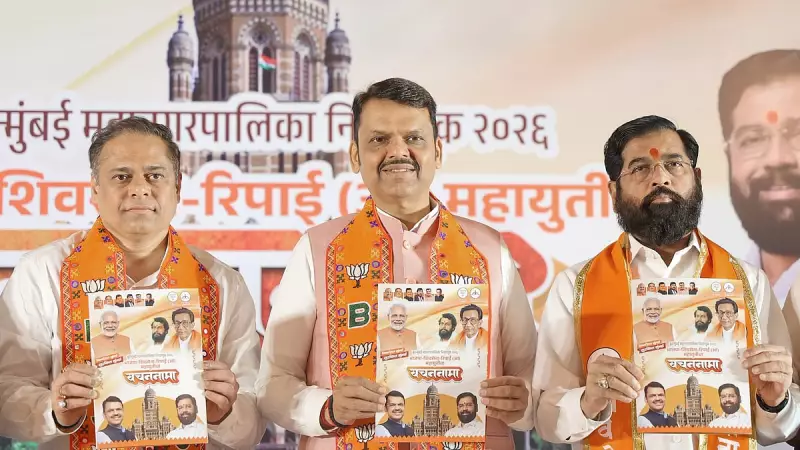
The ruling Mahayuti alliance in Maharashtra has officially launched its election manifesto for the crucial Mumbai constituencies, placing a strong emphasis on technology-driven administration and a firm stance on national security issues, including action against illegal Bangladeshi immigrants. The manifesto was unveiled by a trio of senior leaders from the coalition's constituent parties.
Key Promises and Pledges for Mumbai's Future
The document, presented by Deputy Chief Minister Devendra Fadnavis of the BJP, Chief Minister Eknath Shinde of the Shiv Sena, and Deputy Chief Minister Ajit Pawar of the NCP, outlines a comprehensive vision for the city. A central pillar of their plan is the implementation of a "tech-led governance" model aimed at enhancing transparency and efficiency in civic administration. The alliance has committed to leveraging digital tools to streamline public service delivery and make government processes more accessible to Mumbai's citizens.
On the contentious issue of immigration, the manifesto takes a hardline position. It explicitly promises "strict action against illegal Bangladeshi immigrants" residing in the city. This pledge is expected to resonate with a section of the electorate concerned about demographic changes and security. The coalition has framed this as a matter of upholding law and order and protecting local resources.

Focus on Infrastructure and Civic Amenities
Beyond governance and security, the manifesto addresses several pressing civic concerns. The Mahayuti alliance has made significant commitments to improve Mumbai's infrastructure and quality of life. Key promises in this domain include:
- Accelerating ongoing and planned infrastructure projects to decongest the city.
- Enhancing water supply and sewage systems to meet the needs of the growing population.
- Focusing on better waste management and cleaner public spaces.
- Improving public health facilities and access to affordable healthcare.
The leaders expressed confidence that their collective track record and this forward-looking manifesto would secure the trust of Mumbaikars. They positioned the document as a pragmatic and actionable plan, contrasting it with what they termed as the "empty promises" of the opposition Maha Vikas Aghadi (MVA).
Political Context and Electoral Battleground
The release of this manifesto sets the stage for a high-stakes electoral battle in Mumbai, which is a critical hub of political and economic power in Maharashtra. The Mahayuti, comprising the BJP, Shiv Sena (Shinde faction), and NCP (Ajit Pawar faction), is seeking to consolidate its position and win a decisive mandate. The promises of tech-enabled governance and a tough stance on illegal immigration are seen as strategic moves to appeal to both urban, aspirational voters and those with nationalist leanings.
The opposition MVA, which includes the Congress, Shiv Sena (UBT), and NCP (Sharadchandra Pawar), is yet to release its counter-manifesto. The political discourse in the coming days will likely revolve around the feasibility and implementation of these promises, with debates intensifying on issues of development, identity, and security. The Mahayuti's manifesto has clearly drawn the battle lines for the upcoming polls in India's financial capital.