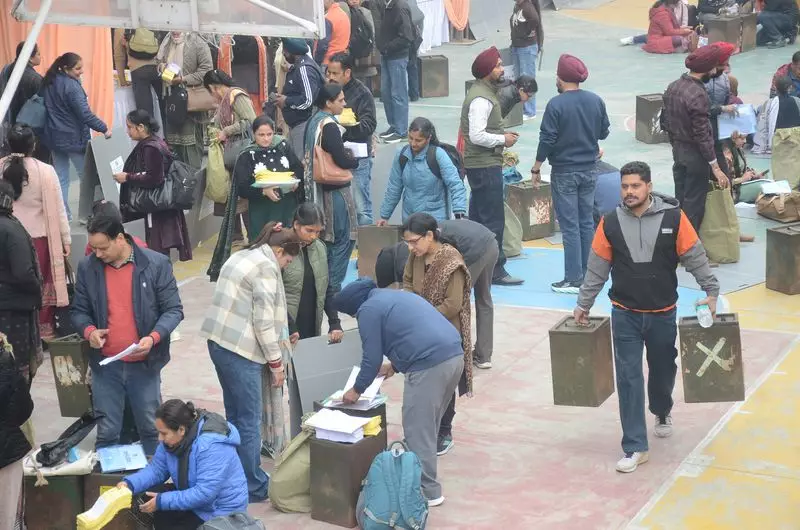
A unique protest dubbed the 'Sir' struggle has been initiated by residents originally from Malerkotla in Punjab, who are now settled in various states across India. Their core demand is access to old voter lists to establish their ancestral lineage, a crucial document for resolving property disputes and inheritance claims back in their hometown.
The Genesis of the 'Sir' Struggle
The movement gained formal momentum on May 15, 2024, when a delegation led by social activist Jaswinder Singh Happy met with Malerkotla's Sub-Divisional Magistrate (SDM), Dr. Shenu Sharma. The delegation presented a memorandum outlining their grievances. The term 'Sir' in their struggle is a respectful appeal to the administration, symbolizing their plea for justice and access to official records.
These individuals, now living in states like Uttarakhand, Haryana, Delhi, and Maharashtra, face significant challenges in managing property and legal matters in Malerkotla. The old voter lists, which contain names of their ancestors, serve as vital proof of residence and lineage. Without these documents, they are unable to proceed with mutation of property, sale deeds, or other legal processes, leaving their ancestral assets in limbo.

Administrative Hurdles and Legal Complexities
During the meeting, SDM Dr. Shenu Sharma acknowledged the complexity of the issue. She explained that providing copies of old voter lists is not a straightforward process due to legal restrictions and the potential for misuse. The administration fears that these lists could be used for fraudulent claims or to create fake documents.
However, Dr. Sharma assured the delegation of the administration's willingness to find a solution. She proposed that affected individuals could apply through a formal channel. The administration would then verify the details internally against the old records and issue a certified document confirming the ancestry, without handing over the actual voter list. This process aims to balance transparency with security and prevent fraud.
Broader Implications for the Diaspora
This struggle highlights a wider issue faced by the Punjabi diaspora within India. As families migrate for work and settle in other states, maintaining legal and tangible connections to their ancestral homeland becomes increasingly difficult. The bureaucratic maze surrounding land records and proof of ancestry often disenfranchises legitimate heirs.
Activist Jaswinder Singh Happy emphasized that this is not just about property but about preserving historical and emotional ties to Malerkotla. The group has warned that if their reasonable demand is not met through dialogue, they may be forced to escalate their protest. The next steps could include larger demonstrations or legal petitions to compel the authorities to make these historical records accessible for genuine claimants.
The outcome of this 'Sir' struggle could set a precedent for how state governments handle the documentary needs of their internal diaspora, particularly concerning ancestral property rights. It underscores the need for administrative systems to evolve and create secure, transparent methods for citizens to access historical data essential for their legal rights.