

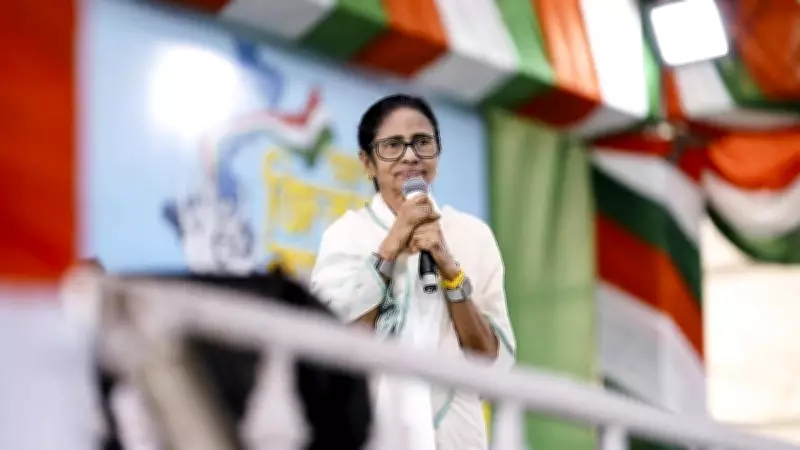
Mamata Banerjee Levels Serious Allegations Against BJP Over Assam Elections
West Bengal Chief Minister Mamata Banerjee has made a startling accusation against the Bharatiya Janata Party (BJP), claiming that the party orchestrated the transportation of approximately 50,000 individuals from Uttar Pradesh to Assam in an effort to sway the outcomes of the recent state assembly elections. This allegation, reported by PTI on April 10, 2026, has ignited a political firestorm, raising concerns about electoral integrity and the use of external voters in regional polls.
Details of the Allegation and Its Implications
According to Banerjee, the BJP employed this strategy as a deliberate ploy to manipulate voter demographics in Assam, a state where political contests are often closely fought. She emphasized that such tactics undermine the democratic process by introducing non-local elements that could distort the genuine will of the electorate. The Chief Minister did not provide specific evidence to support her claim, but her statement has prompted calls for investigations into potential violations of election laws and codes of conduct.
Banerjee further warned that the BJP might attempt to replicate this approach in West Bengal, where she leads the Trinamool Congress (TMC) party. She expressed fears that bringing in people from outside the state could disrupt the upcoming West Bengal Assembly Elections in 2026, potentially influencing results in key constituencies. This warning underscores the heightened political tensions in Bengal, where the BJP and TMC have been engaged in a fierce rivalry for control.

Political Reactions and Broader Context
The allegation comes at a critical juncture in Indian politics, with state elections often serving as battlegrounds for national parties. Banerjee's comments have drawn mixed reactions: supporters view them as a necessary expose of unethical practices, while critics accuse her of making baseless claims to galvanize her voter base ahead of the Bengal polls. The BJP has yet to issue an official response to these specific allegations, but party representatives have previously denied any involvement in voter manipulation schemes.
This incident highlights ongoing debates about electoral fairness and the role of migration in politics. In recent years, issues such as voter ID fraud and the inclusion of non-residents in electoral rolls have been contentious topics across various Indian states. Banerjee's accusation adds fuel to these discussions, potentially prompting election authorities to scrutinize voter registration processes more closely in Assam and West Bengal.
As the situation develops, political analysts suggest that such allegations could impact voter sentiment and campaign strategies in the lead-up to the 2026 elections. The focus now shifts to whether formal complaints will be filed with the Election Commission of India and how this controversy might shape the political landscape in both Assam and West Bengal in the coming months.






