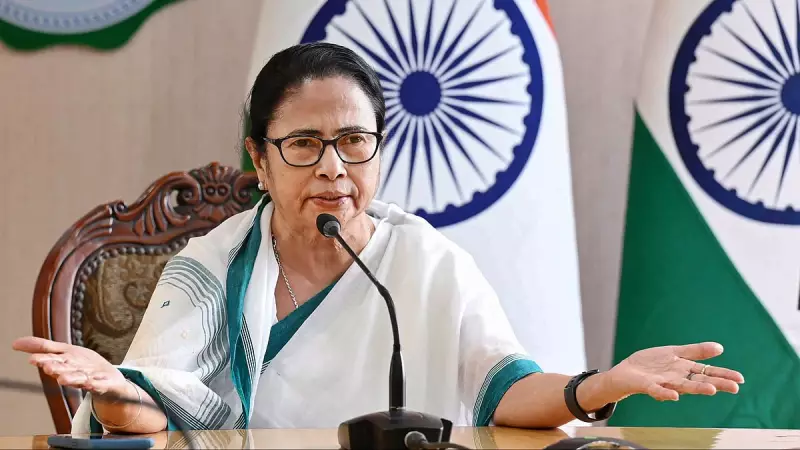
West Bengal Chief Minister Mamata Banerjee has launched a sharp accusation against the Election Commission of India (ECI), alleging it is illegally using mobile applications developed by the Bharatiya Janata Party's (BJP) IT cell to conduct a survey. The fiery allegation was made during a public meeting in the state's Purba Medinipur district on Friday, May 17, 2024.
Serious Allegations Against the Poll Body
Addressing a rally, the Trinamool Congress (TMC) supremo claimed that the Election Commission's officials are using two specific apps for their survey work. She identified these applications as 'Namo' and 'Modi'. According to Banerjee, these apps were created by the BJP's IT department, and their use by a constitutional body like the ECI constitutes a serious breach of protocol and the Model Code of Conduct (MCC).
"The Election Commission is illegally using two apps developed by the BJP's IT cell to conduct a survey," Banerjee stated emphatically. She questioned the neutrality of the Commission, asking how it could employ software tools directly linked to a political party it is supposed to regulate during the elections. This, she argued, undermines the very foundation of free and fair elections.
Demand for Investigation and EC's Response
The Chief Minister did not stop at making the allegation. She formally demanded that the Election Commission must initiate an immediate investigation into this matter. Banerjee insisted that the use of these partisan apps is a clear violation of the MCC, which is designed to ensure a level playing field for all political contestants.
"This is a violation of the Model Code of Conduct. I demand that the Election Commission investigate this," she declared from the campaign stage. The timing of the accusation is critical, as it comes amid the ongoing final phases of the Lok Sabha elections in West Bengal. The state, known for its fiercely competitive politics, has witnessed heated exchanges between the ruling TMC and the opposition BJP.
As of now, the Election Commission of India has not issued an official public response to these specific allegations made by the West Bengal Chief Minister. The ball is now in the EC's court to either refute the claims or take action, which will be closely watched by all political stakeholders.
Context and Political Implications
This incident adds another layer of controversy to the already charged electoral atmosphere in West Bengal. Accusations of bias and partiality against central agencies and constitutional bodies are frequent flashpoints in the state's political discourse. Banerjee's direct attack on the Election Commission's methods is a significant escalation.
If proven true, the allegations could spark a major political storm and raise serious questions about the integrity of the electoral process. The use of a political party's digital tools by the election monitoring body would be an unprecedented conflict of interest. Conversely, if the EC provides a satisfactory explanation or disproves the claim, it could impact the narrative surrounding the TMC's campaign.
The outcome of this controversy holds weight not just for the immediate election results in West Bengal but also for the perceived impartiality of India's premier election institution. It underscores the intense scrutiny under which the Election Commission operates during high-stakes national polls.