

West Bengal Chief Minister Mamata Banerjee launched a sharp attack on the Election Commission of India (ECI) on Saturday, questioning its "audacity" in summoning the state's eminent personalities for Special Summary Revision (SIR) hearings and alleging a deliberate pattern of voter exclusion. In a strongly-worded letter, her fifth since the SIR process began in Bengal on November 4, she claimed the exercise's objective appeared to be "solely of deletion and exclusion" rather than correction or inclusion.
A Pattern of Political Bias and Harassment
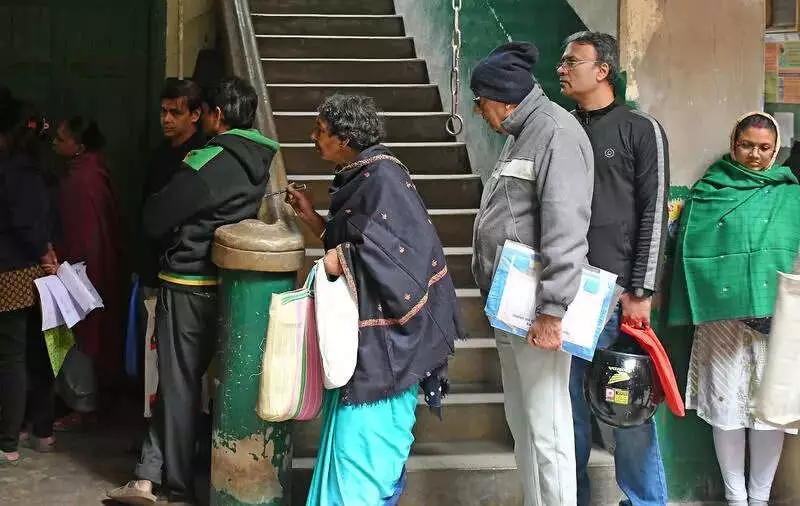
Banerjee, in her letter addressed to Chief Election Commissioner Gyanesh Kumar, stated that the EC's actions reflected "a disturbing pattern of political bias and autocratic high-handedness." She expressed alarm that the constitutional authority had "descended to a level that is difficult to comprehend and deeply alarming for any democratic society." The timing of her letter coincided with the reported death of a 75-year-old retired school teacher from Birbhum, who collapsed and died while standing in a queue for the SIR hearing.
The Chief Minister highlighted a grim toll, writing, "It is shocking that an exercise which should have been constructive and productive has already seen 77 deaths with four attempts to suicide and 17 persons falling sick and necessitating hospitalisation." She also raised serious concerns about the conduct of some EC-appointed micro-observers, citing reports where they were allegedly intimidating common voters by branding them as "desh drohi" (anti-national) without any provocation.

Questioning the Process: Icons, AI, and Portal Discrepancies
Banerjee specifically questioned the logic behind issuing hearing notices to some of Bengal's most respected figures, including Nobel laureate Amartya Sen, poet Joy Goswami, a maharaj from Bharat Sevashram Sangha, cricketer Mohammed Shami, and actor-MP Dev. She argued that this move exemplified the exercise's irrational and overreaching nature.
The CM heavily criticized the reliance on AI-driven checks, which she said were causing unnecessary harassment over minor discrepancies. "A name may appear as ‘Mamta' in one document and ‘Mamata' in another; a middle name ‘Kumar' may inadvertently be recorded as ‘Komar' or ‘Kumer'," she explained. Banerjee asked whether such trivial spelling variations or minor age differences justified coercive action that led to loss of daily wages and immense inconvenience for citizens.
Further alleging procedural irregularities, Banerjee pointed out that the EC portal used to track logical discrepancies in Bengal was different from the one used in the other 11 states where the SIR is being conducted. She dubbed these "logical discrepancies" as "entirely illogical" and claimed they were being selectively applied in certain constituencies with political bias. She accused the EC of altering disposal options from the back end erratically, calling it a "deliberate and clandestine attempt to disenfranchise eligible voters."
An Appeal for Corrective Action
In her three-page letter, Banerjee also noted the strain on state resources, mentioning that the EC expected security for its observers while the state police were heavily deployed for the Gangasagar Mela. She asserted that the police's primary duty was to protect ordinary citizens, not to shield observers.
Concluding with an appeal, the Chief Minister urged the Election Commission to let good sense prevail and take appropriate corrective measures to minimize the harassment and agony of common citizens. She added a handwritten note stating, "Though I know you won't reply or clarify. But my duty is to inform you the details." The letter underscores the escalating tension between the West Bengal government and the Election Commission over the ongoing voter list revision process.






