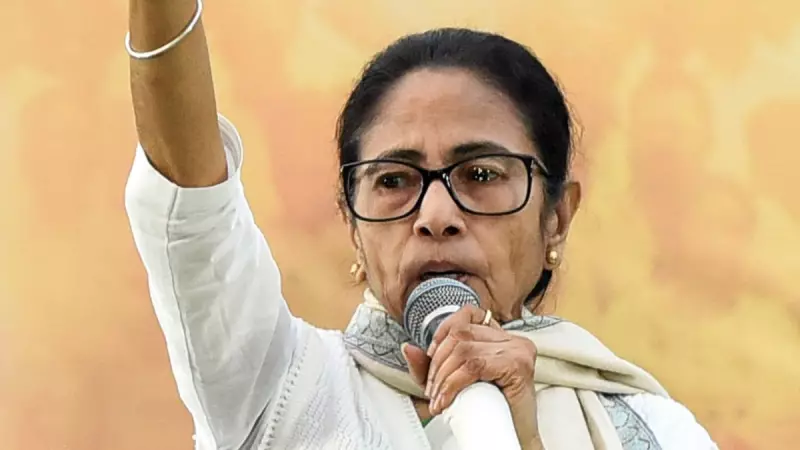
West Bengal Chief Minister Mamata Banerjee has launched a scathing attack on Chief Election Commissioner (CEC) Gyanesh Kumar, accusing the poll body of using the honorific 'Sir' as a tool for intimidation and exclusion. The controversy erupted following a letter Banerjee sent to Kumar, which has now become a major flashpoint in the state's political landscape.
The Contentious Letter and Its Allegations
In her strongly-worded letter dated January 10, 2026, Mamata Banerjee expressed deep concern over the conduct of the Election Commission of India (ECI). The Trinamool Congress (TMC) chief specifically took issue with the use of the term 'Sir' in official communications, which she argued is being leveraged to sideline and threaten certain political voices.
Banerjee's communication suggests that the formal address is not merely a courtesy but a strategic instrument. She implied that it creates an environment of fear and undermines the democratic process by establishing a hierarchical barrier that discourages genuine dialogue and complaint. The letter highlights the ongoing tension between the West Bengal government and the central election authority.

Broader Context of Political Confrontation
This incident is not an isolated one but fits into a pattern of confrontations between the TMC-led state administration and constitutional bodies perceived to be under the influence of the central government. Banerjee has frequently positioned herself as a staunch defender of federal rights and a critic of what she calls overreach by central agencies.
The timing of the letter is crucial, as it comes amidst the simmering political preparations for future electoral battles. By directly challenging CEC Gyanesh Kumar, Banerjee is signaling a combative stance and potentially rallying her political base against a common institutional adversary. The move is seen as part of a larger strategy to frame the narrative ahead of the 2026 state elections.
Potential Repercussions and Political Fallout
The public airing of this grievance has several immediate consequences. Firstly, it escalates the war of words between Kolkata and the ECI, potentially complicating the commission's operational freedom in the state. Secondly, it puts CEC Gyanesh Kumar in a delicate position, requiring a response that upholds the commission's neutrality while addressing the chief minister's concerns.
Political analysts suggest this letter is aimed at galvanizing opposition unity against the ruling BJP at the centre, by portraying constitutional institutions as biased. The choice of attacking a procedural formality like the use of 'Sir' is a calculated move to highlight perceived systemic arrogance. The fallout is likely to influence the political discourse in West Bengal significantly, keeping the issue of central-state relations at the forefront.
As the controversy unfolds, all eyes are on the Election Commission's response. Whether this leads to a formal change in protocol or simply remains a political flashpoint will determine its long-term impact on India's electoral democracy and the already fraught relationship between the West Bengal government and central authorities.