

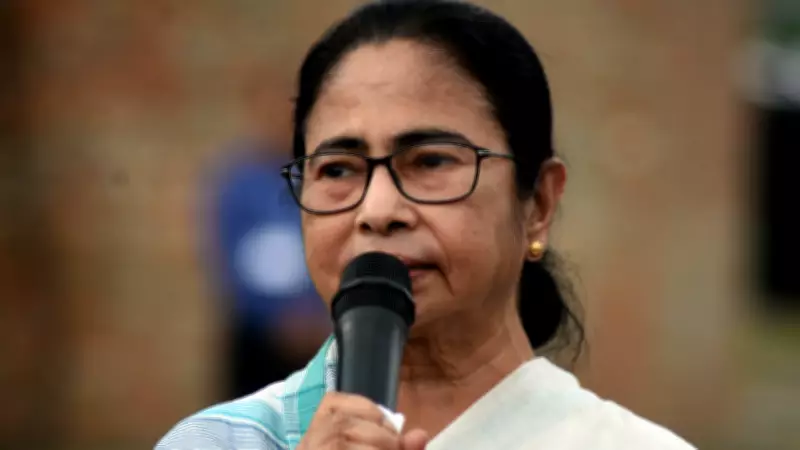
Mamata Banerjee Escalates Dispute with Election Commission Over Bengal's Electoral Process
In a significant development just two days before her scheduled meeting with Chief Election Commissioner Gyanesh Kumar, West Bengal Chief Minister Mamata Banerjee has intensified her confrontation with the Election Commission of India. On Saturday, she dispatched yet another strongly-worded letter to Kumar, marking her sixth communication since the commencement of the Summary Revision of Electoral Rolls on November 4.
Allegations of Illegal Appointments and Data Manipulation
The central focus of Banerjee's latest correspondence revolves around what she describes as the "illegal appointment" of approximately 8,100 micro-observers in West Bengal. The Chief Minister has raised serious concerns about the Election Commission's intent, suggesting that these appointees are actively manipulating voter data to influence the electoral process. She emphasized that Bengal stands alone among the twelve states undergoing the Summary Revision in having such extra-legal personnel involved in the exercise.
Banerjee's letter makes a striking historical claim, asserting that for the first time in India's electoral history, a different set of rules is being applied specifically to West Bengal. This allegation forms the crux of her argument that the state is being subjected to unequal treatment compared to other regions undergoing similar electoral roll revisions.

Legal Battles and Supreme Court Involvement
The Chief Minister's communication comes against the backdrop of escalating legal tensions. Her political party, the Trinamool Congress, has already filed a petition in the Supreme Court accusing the Election Commission of deliberately flouting the apex court's January 19 order. This order specifically mandated the public display of complete voter lists containing 1.5 crore entries, with particular attention to identifying and addressing no-mapping and logical discrepancies.
Trinamool Congress has alleged that the Election Commission is bypassing court directives in its rush to meet the February 7 deadline for concluding Summary Revision hearings. The Election Commission has maintained that Bengal's final voter list will be published on February 14, creating a tight timeline that has become a point of contention between the state government and the constitutional body.
Upcoming Meetings and Political Strategy
Chief Minister Banerjee is expected to travel to Delhi on Sunday in preparation for her Monday afternoon appointment with Chief Election Commissioner Gyanesh Kumar. This meeting, scheduled for 4 pm, represents a crucial opportunity for direct dialogue between the state's political leadership and the election oversight body.
Simultaneously, the Supreme Court is likely to hear Trinamool Congress's plea on February 4, adding another layer of judicial scrutiny to the ongoing dispute. In a revealing development, the party's mouthpiece Jago Bangla quoted Banerjee as expressing her desire to attend the February 4 Supreme Court hearing as a "common person" if permitted. This statement aligns with her previous public declarations about potentially approaching the Supreme Court as a representative of Bengal's people, though the party has not issued any official statement confirming this intention.
Substantive Legal Arguments and Humanitarian Concerns
In her detailed letter to the Chief Election Commissioner, Banerjee has reiterated several substantive arguments against the current electoral process in Bengal. She has highlighted what she describes as 140 lives lost in Bengal due to the Summary Revision process, which she claims has been implemented in "blatant violation of the Act and Rules in force, in total disregard of human rights and basic humanitarian considerations."

The Chief Minister's legal critique focuses particularly on the appointment of micro-observers, arguing that their role, functions, and authority during electoral roll revision are neither defined, contemplated, nor authorized under existing electoral legislation. She specifically references the Representation of the People Act, 1950, and the Registration of Electors Rules, 1960, asserting that no statutory instrument governing electoral roll preparation and revision provides for such appointments.
Banerjee maintains that the exclusive responsibility for including or excluding voters rests with Electoral Registration Officers and Assistant Electoral Registration Officers. She poses a pointed question about whether these statutory authorities are being "rendered helpless, isolated and reduced to mere spectators" by the actions of non-statutory micro-observers. Her letter concludes with the assertion that West Bengal appears to be subject to an entirely different set of rules applied contrary to statutory provisions for reasons that remain unexplained.
Continued Legal Challenges and Political Developments
Adding to the complexity of the situation, Trinamool Congress national general secretary Abhishek Banerjee indicated before departing for Delhi that the party has filed another appeal in the Supreme Court against the Election Commission. He noted that while the Election Commission finally released the list of logical discrepancies following Supreme Court instructions, in many locations, these lists have still not been publicly displayed as required.
This ongoing dispute between the West Bengal government and the Election Commission represents a significant test of India's electoral governance framework. With multiple legal proceedings underway, high-level meetings scheduled, and fundamental questions being raised about electoral procedures, the situation continues to evolve with potential implications for democratic processes in one of India's most politically significant states.





