

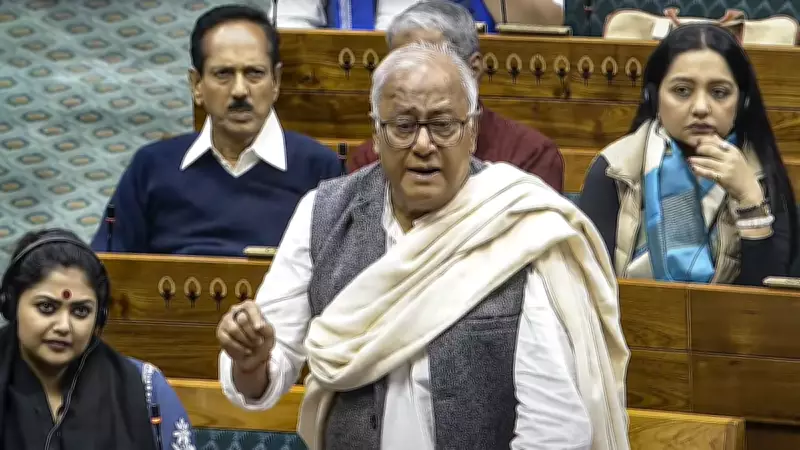
In a significant political development, Trinamool Congress (TMC) Member of Parliament Sougata Roy has advocated for an alliance between West Bengal Chief Minister Mamata Banerjee and the Indian National Congress to counter the Bharatiya Janata Party (BJP) in the upcoming 2026 state assembly elections. Roy's statement comes amid growing discussions about opposition unity to challenge the BJP's electoral dominance.
Call for United Opposition
Speaking to media representatives in Kolkata, Sougata Roy emphasized that only a united opposition front can effectively challenge the BJP's organizational strength and resources. He argued that despite ideological differences, the primary objective should be to prevent the BJP from gaining further ground in West Bengal. The TMC MP noted that the Congress party still maintains a significant vote bank in certain regions of the state, which could prove crucial in tightly contested constituencies.
Strategic Implications
Political analysts view Roy's statement as a potential shift in TMC's strategy, which has traditionally maintained an independent stance. The party has often criticized the Congress for its declining relevance in national politics. However, the changing political landscape, with the BJP making inroads in West Bengal, may necessitate a reassessment of alliances. Roy suggested that a pre-poll pact could help avoid vote splitting among anti-BJP forces, thereby increasing the chances of defeating the saffron party.

Reactions from Political Circles
The Congress party has responded cautiously, with state leaders expressing willingness to discuss seat-sharing arrangements if approached formally. Meanwhile, the BJP has dismissed the proposal as a desperate move by a declining TMC. Senior BJP leaders accused the TMC of corruption and mismanagement, asserting that the people of West Bengal would reject such opportunistic alliances. The Left Front, another key opposition player, has also reacted skeptically, citing past betrayals by both TMC and Congress.
Historical Context
West Bengal has witnessed shifting political equations over the past decade. The TMC's landslide victory in 2011 ended 34 years of Left Front rule, but the party faced a strong challenge from the BJP in the 2019 general elections and 2021 assembly polls. The Congress, once a dominant force in the state, has seen its influence wane but still retains pockets of support. Roy's proposal reflects a broader national trend where opposition parties are exploring alliances to consolidate anti-BJP votes.
Potential Challenges
Implementing such an alliance would require overcoming significant hurdles, including seat-sharing disagreements and ideological conflicts. The TMC and Congress have divergent views on issues like secularism, economic policy, and governance. Additionally, local-level rivalries could complicate negotiations. However, proponents argue that the existential threat posed by the BJP necessitates pragmatism over ideology.
Looking Ahead
As the 2026 elections approach, the political landscape in West Bengal remains fluid. Mamata Banerjee has not publicly responded to Roy's suggestion, but her recent outreach to opposition leaders indicates a willingness to explore collaborative strategies. The coming months will be crucial in determining whether the TMC and Congress can forge a working alliance to challenge the BJP's growing influence in the state.






