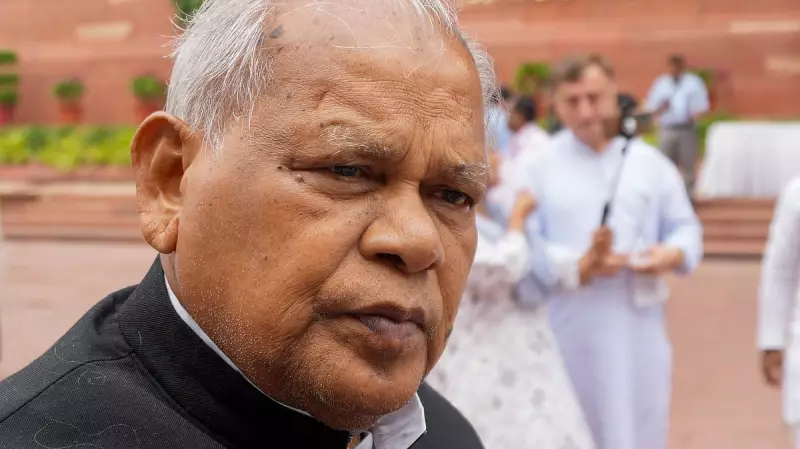
A video statement by former Bihar Chief Minister and Hindustani Awam Morcha (HAM) chief Jitan Ram Manjhi has plunged the state's political landscape into a fresh controversy over electoral malpractice. The veteran leader's comments, referring to alleged 'vote theft' in the Gaya Lok Sabha constituency, have triggered sharp reactions from major political parties and brought the issue of poll integrity back into sharp focus.
The Controversial Allegation and Immediate Fallout
In the now-viral video, Jitan Ram Manjhi is heard making a serious claim about the recent general elections. The HAM president stated that his party's votes were 'stolen' in the Gaya parliamentary seat, a constituency that went to polls during the final phase on June 1. While Manjhi did not explicitly name any rival party or individual responsible for the alleged act, the implication sent shockwaves through Bihar's political circles.
The timing of the statement is particularly sensitive, coming amidst the ongoing process of government formation at the national level. Manjhi's HAM is a constituent of the ruling National Democratic Alliance (NDA) in Bihar, which includes the Bharatiya Janata Party (BJP), Janata Dal (United), and other partners. This internal accusation from an ally has created an awkward situation for the coalition.

Political Reactions and Damage Control
The reaction from other NDA constituents was swift and aimed at containing the damage. JD(U) leader and Bihar Minister Sanjay Kumar Jha addressed the media to counter Manjhi's claims. Jha asserted that the NDA's victory in Bihar was decisive and achieved in a transparent manner. He emphasized that the people's mandate was clear and should be respected, indirectly dismissing the 'vote chori' (vote theft) narrative.
On the other side of the political divide, the opposition Rashtriya Janata Dal (RJD) seized the opportunity to attack the ruling alliance. RJD spokesperson Mrityunjay Tiwari stated that Manjhi's allegation has exposed the true face of the NDA. Tiwari claimed that such statements confirm the opposition's long-held suspicions about the fairness of the electoral process under the current administration.
Context of the Gaya Lok Sabha Seat
The Gaya Lok Sabha constituency, where Manjhi's party contested, is a high-profile seat in Bihar. In the 2024 elections, the seat was won by the BJP's candidate, former Union Minister Ravi Shankar Prasad. The NDA's victory here was part of a larger sweep in the state. Manjhi's HAM, though part of the NDA, did not have a winning candidate in Gaya, which may have fueled the discontent leading to his public outburst.
This is not the first time the term 'vote chori' has been used in Bihar's charged political discourse. It echoes similar allegations made in the past by various parties, often following closely fought elections. However, for a senior leader from within the ruling alliance to use such language is rare and signifies underlying tensions.
Broader Implications for Bihar Politics
This incident highlights the fragile nature of alliance politics in Bihar, where post-poll accusations can strain relationships between partners. While major NDA leaders have moved quickly to downplay Manjhi's remarks, the episode leaves a lingering question about unity within the coalition.
Furthermore, it brings the Electoral Commission's role and the security of the Electronic Voting Machines (EVMs) back into public debate. Despite the Commission's repeated assurances and the Supreme Court's validation of the electoral process, such allegations from a seasoned politician keep the issue alive in the public imagination.
The controversy also puts a spotlight on Jitan Ram Manjhi's own political standing. As a Dalit leader with a significant base, his statements carry weight. Whether this marks a beginning of a distancing from the NDA or is merely a negotiating tactic for a better deal within the alliance remains to be seen. The coming days will reveal if this storm blows over or escalates into a more significant crisis for Bihar's ruling coalition.