RAIPUR: Sukma's once most dreaded Puvarti village — the native place of slain Maoist commander Hidma — has emerged as the district's first to complete the initial phase of census enumeration, and that too in just three days.
Located in the remote Konta block, Puvarti's achievement is being seen not merely as an administrative milestone but as a marker of shifting ground realities in south Bastar, where governance is slowly but steadily reclaiming space once dominated by insurgency.
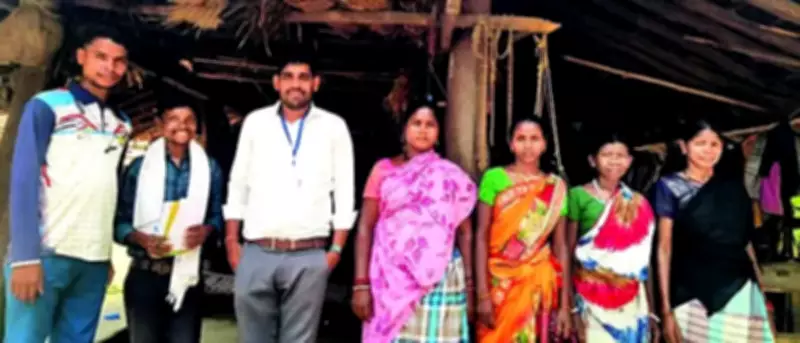
The feat was accomplished by enumerator Jawaram Patel, an assistant teacher, who was felicitated by Sukma collector Amit Kumar at the collectorate for completing the task in record time. Patel covered the entire village — home to over 950 people living in 234 households — ensuring that every family was accounted for in the survey.

For Patel, the assignment came with its own set of challenges. Puvarti, like many villages in the region, is geographically remote and linguistically distinct. "The biggest hurdle was communication," he said, pointing to his limited understanding of the local Gondi dialect. "But I saw this not as a difficulty, but as an opportunity to serve."
Relying on support from local school teachers, Patel worked to bridge the language gap, gradually understanding the social fabric of the village. He went door-to-door, often navigating difficult terrain, to ensure that no household was left out of the enumeration process.
He said that successful completion of census work in such a short span reflects a growing sense of trust among villagers — something that was hard to imagine until a few years ago.
Puvarti was once counted among the most Maoist-affected villages in Sukma, where government presence was almost nil and access to basic services remained limited. However, with intensified security operations and sustained administrative outreach, the village has begun to witness tangible changes. "The completion of census work here is a clear indicator that the gap between administration and people is narrowing," said collector Amit Kumar, adding that Patel's commitment and courage should serve as an inspiration for other field staff working in challenging conditions.
This achievement underscores the transformative impact of persistent government efforts in areas once dominated by left-wing extremism. The successful enumeration not only marks an administrative milestone but also symbolizes the reassertion of state authority and the restoration of faith in governance among local communities.