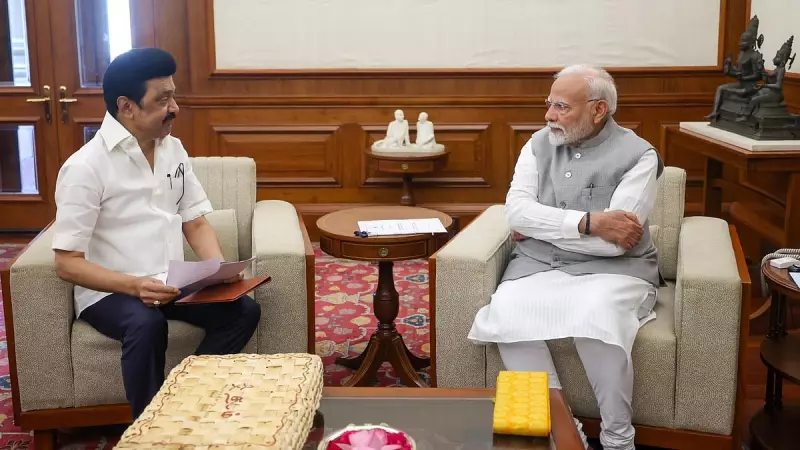
Tamil Nadu Chief Minister M.K. Stalin has made a significant appeal to Prime Minister Narendra Modi, urging the central government to involve all state Chief Ministers in the process of refining the guidelines for a nationwide caste-based enumeration. In a letter dated 10 January 2026, Stalin emphasized that this collaborative approach is crucial to ensure genuine social justice and uphold the principles of federalism in India.
A Call for Collaborative Federalism
Stalin's communication to the Prime Minister centers on the methodology for conducting a caste census. He argued that the active participation of state leaders is essential for creating a framework that is both accurate and sensitive to regional complexities. The Tamil Nadu Chief Minister expressed his confidence that under PM Modi's leadership, this historic opportunity would be seized to strengthen India's foundational commitment to equality and inclusivity.
The core of Stalin's request is to move beyond a unilateral, top-down approach. He believes that since states are at the forefront of implementing social justice policies, their inputs are invaluable for designing an enumeration process that captures the nuanced realities of caste dynamics across different regions.
Strengthening Equality and Inclusivity
In his letter, Stalin framed the caste census not just as a statistical exercise but as a powerful tool for social empowerment. A meticulously conducted enumeration, with robust guidelines, can provide the data necessary to evaluate and enhance the effectiveness of existing reservation policies and welfare schemes aimed at backward classes.
The CM's statement highlighted that this initiative, if done correctly, can be a landmark step in India's journey towards a more equitable society. By ensuring the process is transparent and inclusive from the planning stage, the government can build greater trust and legitimacy around the final data.
Upholding the Spirit of Federal Cooperation
This appeal directly touches upon the ongoing debate about center-state relations in India's federal structure. Stalin's push for involving Chief Ministers is seen as an effort to reinforce cooperative federalism, where major national policies, especially those with deep social implications, are shaped with consensus from states.
The move has put the spotlight on how the Union government will respond to this call for broader consultation. The outcome could set a precedent for how similar large-scale socio-economic surveys are conducted in the future. Political observers note that the demand resonates with several other states that have previously advocated for a caste census to ensure targeted development and justice.
As of now, the ball is in the central government's court to consider this proposal for a more collaborative framework in finalizing the caste enumeration guidelines, a process that millions across the nation are watching closely.