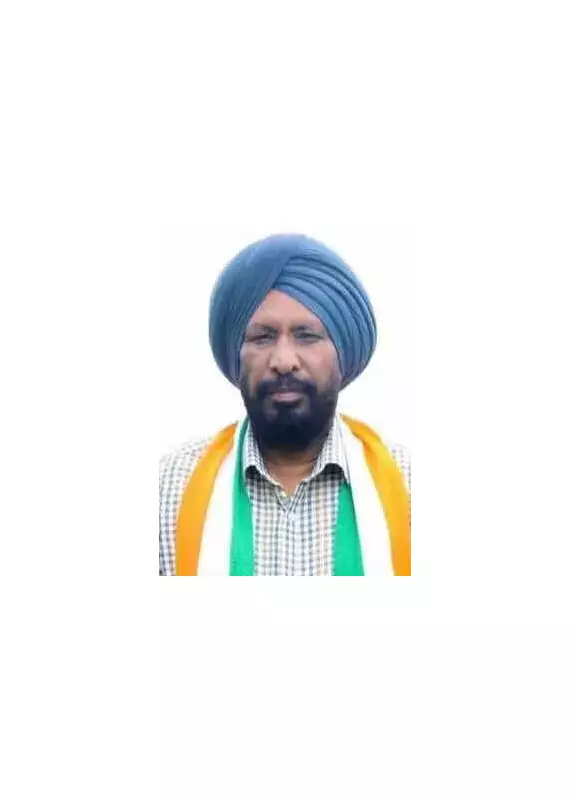
Balwinder Singh Dhaliwal, the Member of Legislative Assembly (MLA) from Phagwara, has raised a strong alarm against the proposed VB–G RAM G Bill, labeling it a severe danger to the foundational principles of the Mahatma Gandhi National Rural Employment Guarantee Act (MGNREGA). He argues that the bill threatens to dismantle a key constitutional commitment to rural dignity and decentralized governance.
An Assault on Legal Entitlement and Federalism
Dhaliwal's primary contention is that the bill fundamentally alters the nature of MGNREGA from a right to a concession. He points to the introduction of state-wise normative allocations as a mechanism that effectively places a ceiling on the legally guaranteed 100 days of work. "When funds run out, work stops. A right that depends on budget availability is no longer a right — it becomes a concession," the MLA stated emphatically.
He further criticized the Central government's proposed shift to a 60:40 cost-sharing model with states. Dhaliwal warned that this would place an unbearable burden on financially strained state governments, forcing them into an impossible choice: reduce employment generation or shoulder the fiscal blame for failures. "The Centre takes the credit, but passes both responsibility and blame to the states. This undermines the very foundation of cooperative federalism," he added.

Social Consequences: Uncertainty and Distress Migration
Highlighting the human impact, Dhaliwal stressed that for millions of India's rural households, MGNREGA has been the sole predictable and legally assured source of income. He asserted that the new framework, with its caps, a proposed 60-day suspension during agricultural seasons, and other restrictive conditions, would plunge workers back into a cycle of uncertainty.
The likely outcomes, according to the MLA, will be increased indebtedness and a resurgence of distress migration from villages to cities, as families lose their economic safety net.
Centralization and "Ideological Erasure"
Dhaliwal also attacked the bill for diminishing the role of local governance bodies. He accused it of sidelining Gram Sabhas and Panchayats, reducing grassroots democracy to a centralized administration managed through dashboards, GIS mapping, and AI-driven audits. "This erodes the democratic voice of the people and turns constitutional institutions into mere implementing agencies," he remarked.
Finally, the MLA condemned the renaming of the Act itself as an "ideological act of erasure." He firmly stated, "Replacing Gandhi's name with ‘RAM' is not reform; it is rewriting history to align with a political narrative that undermines the rights-based framework of MGNREGA." For Dhaliwal, this symbolic change is part of a broader attempt to dilute the Act's original ethos and legal guarantees.