MP Electricity Tariff Hike Highlights Surplus Power Sale at Lower Rates
In a development that has sparked widespread concern, electricity consumers in Madhya Pradesh are set to experience a 4.8% increase in tariffs starting April 1. This hike comes amid revelations that surplus power generated within the state is being sold in the open market at significantly cheaper rates, creating a sharp pricing mismatch that burdens consumers.
Pricing Disparity Exposes Inefficiencies
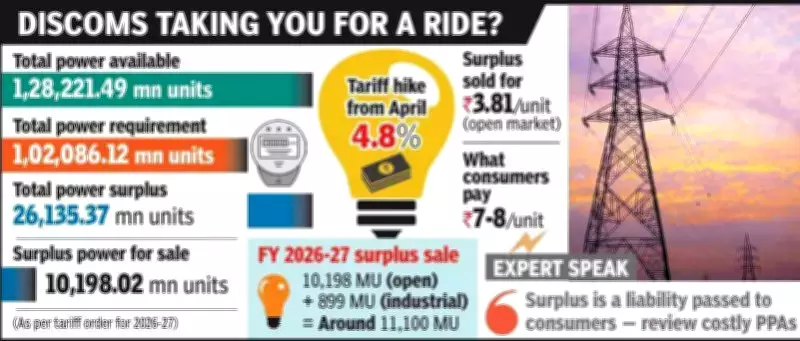
Currently, power distribution companies in Madhya Pradesh supply electricity to consumers at approximately Rs 7–8 per unit. However, surplus electricity is offloaded in the open market at nearly half this price, around Rs 3.81 per unit. This discrepancy highlights critical inefficiencies in the state's power management system, where consumers are forced to pay more for the electricity they use while excess power is sold at a loss.
Surplus Power Sales and Underutilization
According to the latest tariff order, around 10,198 million units (MU) of surplus electricity is projected to be sold in the open market during the 2026-27 period. Additionally, about 899 MU will be supplied to industrial areas, bringing the total planned surplus sale to nearly 11,100 MU. This is despite estimates indicating that the overall surplus power available in the system exceeds 20,000 MU, suggesting a substantial volume of electricity remains underutilized.

Experts have pointed out that this situation reveals significant gaps in power planning and demand assessment. "Power is being purchased at a high cost, but when unused, it has to be sold at cheaper rates. This difference ultimately adds to the financial burden, which is then passed on to consumers," said Rajendra Agarwal, a retired additional chief engineer of MP Genco.
Expert Recommendations and Government Response
Agarwal suggested that authorities review expensive power purchase agreements to reduce surplus, noting that "the surplus power is becoming a liability for consumers." In response, the state government has highlighted that nearly 1.4 crore out of the total 1.9 crore consumers are protected through subsidies, particularly those using up to 150 units per month.
However, experts caution that subsidies are also funded through public money. Agarwal emphasized, "Even if the government pays (for subsidies), it is ultimately the consumer who bears the cost." This underscores the broader issue where inefficiencies in the power system contribute to higher overall expenses for consumers.
Broader Implications for Consumers
With the 4.8% tariff increase and over 11,000 MU of power set to be sold at lower rates, the situation raises a key concern: consumers may end up paying more not only for the electricity they consume but also for systemic inefficiencies. This pricing mismatch and surplus management challenge call for urgent reforms in power planning and procurement strategies to alleviate the financial strain on households and businesses across Madhya Pradesh.