The Madhya Pradesh government is gearing up to present a substantial budget for the fiscal year 2026-27. Officials in Bhopal indicate the outlay will reach approximately Rs 4.80 lakh crore. This marks a significant increase of about Rs 60,000 crore over the previous year's budget of Rs 4.21 lakh crore.
Focus on Agriculture and Welfare Schemes
Chief Minister Mohan Yadav has made clear commitments to channel funds into key areas. The budget will prioritize the development of agriculture, creation of new jobs, and expansion of welfarist schemes. This increased allocation comes at a crucial time for the state's economic growth.
Key Factors Influencing the Budget
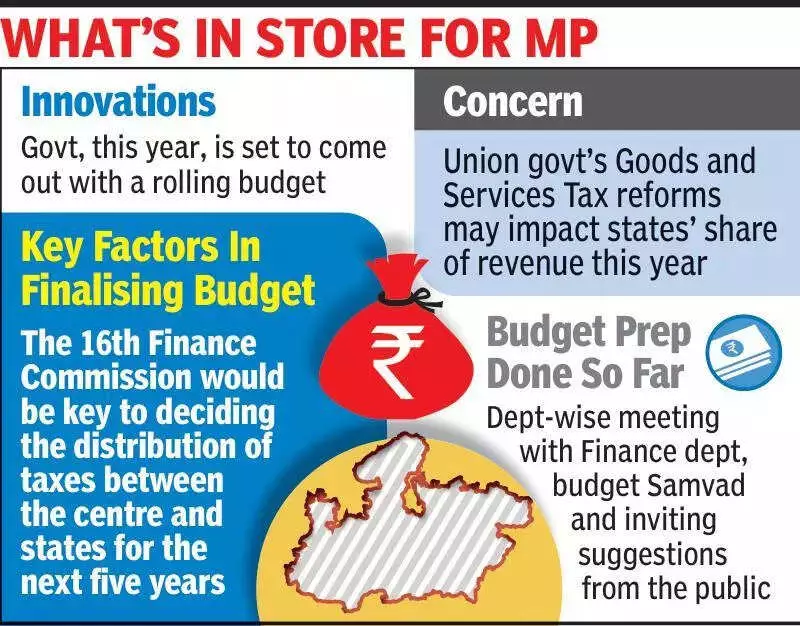
State officials highlight several critical elements shaping this year's financial plan. The report from the 16th Finance Commission will play a pivotal role in finalizing the budget. This commission's recommendations will cover the five-year period from April 1, 2026, to March 31, 2031.

Two primary factors determine the size of the yearly budget. These are the devolution of funds and the grants and aid received from the Central government. The state typically waits for the Finance Commission's recommendations to understand the full scope of financial assistance from the Centre.
Notable Changes in Budget Presentation
This year's budget introduces several innovative changes. It will be presented in a fully digital format. Traditional printed budget booklets are likely to be discontinued, marking a shift towards modern practices.
Additionally, the government plans to adopt a rolling budget approach. This represents a change from the zero-based budgeting process that was introduced just last year. The final shape of the state budget will be determined after the Union budget is presented next month.
Long-Term Financial Goals
Madhya Pradesh has already declared ambitious long-term financial targets. The state aims to increase its budget from the current Rs 4.21 lakh crore to over Rs 7.28 lakh crore by the year 2028. This demonstrates a clear trajectory of growth and expansion in public spending.
Central Funds and Potential Challenges
In the Union budget for 2025-2026, presented on February 1 last year, Madhya Pradesh received over Rs 1.11 lakh crore as devolution. This amount represents the state's share in central taxes.
However, officials express some concerns. They fear that the Centre's Goods and Services Tax reforms might impact the state's share of revenue this year. This potential challenge adds an element of uncertainty to the budget calculations.
Budget Preparation Timeline
The government is currently in the final stages of its yearly budget preparations. The Finance department will complete discussions with all department heads by the third week of this month. Following this, a presentation will be made before the finance minister and subsequently before the chief minister.
Specific Demands and Requests
Earlier, at a pre-budget meeting with state finance ministers in the national capital on January 10, the MP government formally put forward specific requests. They demanded a Rs 20,000 crore outlay for the proposed development of public infrastructure and other expenses for Simhastha 2028.
Deputy Chief Minister Jagdish Devda, who also handles the finance portfolio, made additional appeals. He requested the Centre to increase the state's borrowing limit. Devda pointed out a discrepancy in Gross State Domestic Product calculations.
According to the 15th Finance Commission, the state's GSDP stands at Rs 16,94,477 crore. However, for calculating the borrowing limit, the Union government was using a figure of Rs 15,44,141 crore. Devda urged that the borrowing limit be calculated using the higher GSDP figure, as an increase in GSDP directly translates into a higher borrowing capacity for the state.
Public Consultation Process
The state government has also engaged in public consultation for the budget. On December 22, they conducted a budget Samvad. This discussion involved experts from different sectors and invited suggestions from the public before giving the final shape to the budget.