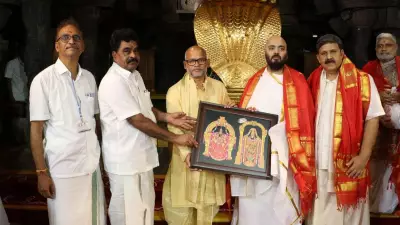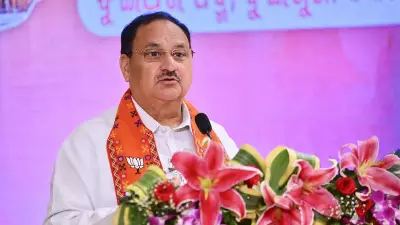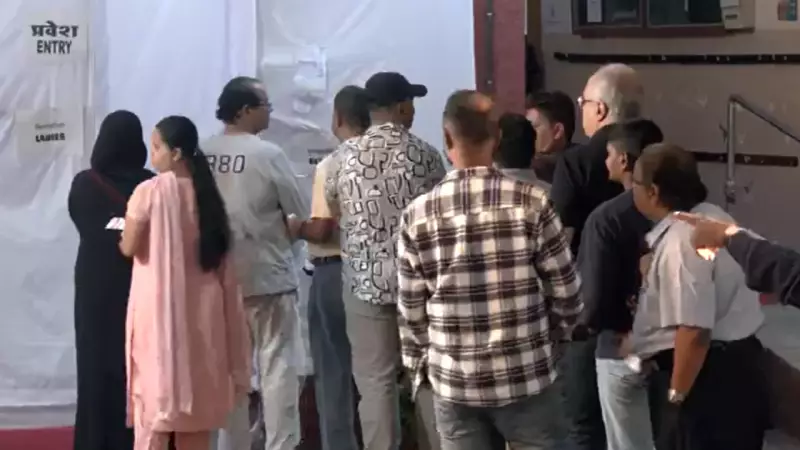
Mumbai's voters are finally heading to the polls this Thursday. They will elect their own corporators to the Brihanmumbai Municipal Corporation (BMC). This comes after an unprecedented gap of nine long years. Delays happened due to the pandemic and a series of court cases.
A Long Wait for Democratic Control
The BMC is India's richest civic body. For the past four years, it has been run by a state-appointed municipal commissioner. This administrator took over after the term of the previous elected house ended. On Thursday, the BMC will vote alongside 28 other municipal corporations. Their terms have also expired similarly.
High-Stakes Political Battle
This election carries enormous weight. The undivided Shiv Sena controlled the BMC for 26 consecutive years. Now, the political landscape has fractured.

For Uddhav Thackeray, this is a battle for survival. His Shiv Sena (UBT) faced a rout in the recent state assembly polls. Mumbai is the city where his party was born. The election has brought Uddhav and his estranged cousin, Raj Thackeray, together. They have formed an alliance after two decades of separation.
They will face off against the Mahayuti alliance. This coalition includes the BJP and Deputy Chief Minister Eknath Shinde's Shiv Sena. The BJP swept the assembly polls. Now, it seeks to annex the last bastion of its former ally-turned-foe. Shinde's party hopes to consolidate its base as the "real Sena," especially in the Mumbai-Thane belt.
Other Players in the Fray
The Congress party once held power in the city. Its hold has weakened considerably. It is contesting in alliance with the Prakash Ambedkar-led Vanchit Bahujan Aghadi. Meanwhile, Ajit Pawar's NCP has little presence in Mumbai. It is contesting the elections solo.
In the 2017 BMC polls, the BJP won 82 corporators. It was only two seats behind the undivided Shiv Sena. A Mahayuti win now would be significant. It would mean a national party controls different layers of governance. This is through its "triple engine sarkar"—from the Centre to the state and now the BMC.
Such an outcome would deal a blow to regional parties in Maharashtra. It would also weaken the Opposition's ability to hold ruling parties accountable.
Campaign Focus: Identity Over Civic Issues
Mumbai faces a host of pressing civic concerns. These range from housing shortages to severe air pollution. Yet, the campaign this time centered heavily around identity politics.
The city has a large migrant population. Despite this, the status of the Marathi manoos (Marathi person) became a key issue. The Thackerays alleged that the sons of the soil were being displaced from Mumbai. Chief Minister Devendra Fadnavis argued consistently. He stated his government has managed to retain the Marathi manoos by providing jobs and housing.
Communal Undertones and Allegations
The campaign even turned communal. City BJP chief Ameet Satam made a controversial statement. He said, "We will not allow any Khan to become mayor." Later, Fadnavis remarked, "the next Mumbai mayor will be Hindu and Marathi."
Allegations of money being used to bribe voters also surfaced. The State Election Commission reported significant seizures. Cash worth Rs 7 crore was seized. This happened while the Model Code of Conduct was in force across the 29 municipal corporations.
Pre-Poll Promises Target Women Voters
Most political parties offered sops in their manifestos. These mainly targeted women voters. Women are credited with powering the Mahayuti victory in the assembly polls.
- The Mahayuti alliance promised a 50% concession on bus travel for women.
- The SS (UBT)-MNS combine promised a Rs 1,500 allowance for women domestic workers.
- They also promised a property tax waiver for homes up to 700 square feet.
The Mahayuti government tried to disburse a double installment of its flagship Ladki Bahin scheme. This was just days before the poll. The Opposition Congress complained of bribery. Following this, the State Election Commission barred the January installment.
Mumbai now stands at a crossroads. The outcome of these long-awaited elections will shape the city's governance and political future for years to come.