

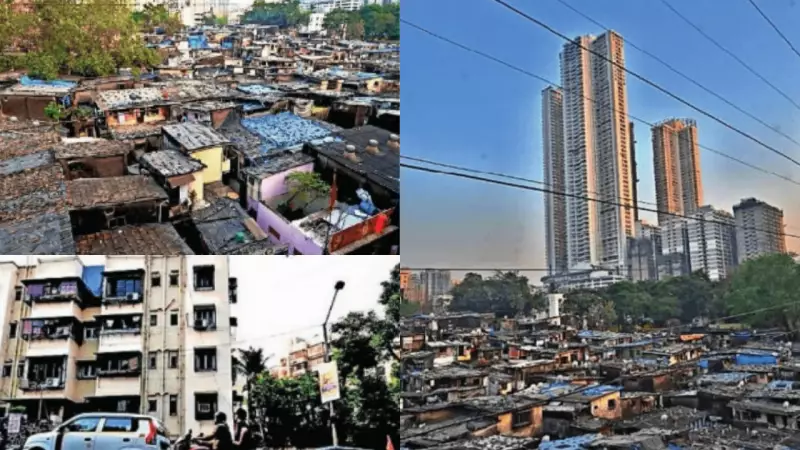
The newly formed P East administrative ward in Mumbai is experiencing significant political and civic turbulence, mirroring broader city-wide challenges. The redrawing of electoral boundaries, coupled with patchy infrastructure and a mixed demographic profile, is shaping a complex contest for the upcoming civic polls.
Boundary Shifts and Voter Discontent
Prashant Mahadik, the MNS-Shiv Sena (UBT) candidate from electoral ward No. 36, highlighted a major concern. Recent alterations in ward boundaries have moved 10,288 Marathi voters out of his Malad (East) area into ward No. 29 in Kandivli (East). Mahadik claims the official reason cited is the Development Control and Promotion Regulation (DCPR) 2034, but he alleges a political motive behind the decision.
"For residents who still receive services from the P North ward, accessing them will now be an uphill task as they have to travel to R South," Mahadik stated. He added that the issues in his poll ward reflect problems across the entire P East administrative ward, including narrow roads, hilly terrain, uneven water supply, and stalled slum rehabilitation projects.

Structural Gaps and Diverse Demographics
Carved out of the larger P North ward, P East is struggling with foundational gaps. It currently lacks a dedicated ward officer, and its ward office does not provide the full suite of civic services. Geographically, the ward spreads across both sides of the Western Express Highway, encompassing large slum clusters alongside planned residential pockets.
The population is notably diverse, with a strong Marathi and Muslim presence, alongside sizable communities from the Hindi belt. Most poll wards fall under the Dindoshi Assembly constituency, except ward No. 36, which is split between Dindoshi and Kandivli (East) constituencies. Both Shiv Sena (UBT) and MNS claim a strong organizational base here.
Candidates Focus on Local Issues and Legacy
In neighbouring ward No. 45, BJP candidate Nirav Barot is leveraging his family's legacy—his late father, Dr. Ram Barot, represented the ward six times—and focusing on hyper-local problems. Barot identified traffic congestion and air pollution as pressing concerns, alongside the perennial issue of hawker management.
"Hawkers are daily wage earners. We need an amicable solution, not eviction," Barot proposed. He suggested using four to five large municipal grounds after 6 pm for markets, where hawkers could pay a fee directly to the BMC instead of unofficial "hafta." Barot also emphasized the need for cluster redevelopment to avoid traffic gridlock from multiple ongoing projects.
Closer to Dindoshi Hills, in the historic Nagari Nivari Housing Complex, ward Nos. 40 and 41 have been traditional Sena (UBT) strongholds, though results have been unpredictable. With ward No. 41 now reserved for the OBC community, former rebel Tulshiram Shinde is contesting from ward No. 40 as the Sena (UBT) candidate.
"I have been in public service for 35 years; interpersonal relations matter," Shinde said, expressing hope that the alliance would help. He listed common problems across the two wards: traffic, hawkers, inadequate water supply in Mhada layouts, and the absence of a civic hospital east of the highway, vowing to resolve these issues.
The creation of the P East ward has set the stage for an election fought on the grounds of civic neglect, administrative teething problems, and the aspirations of a socially diverse electorate seeking better governance.






