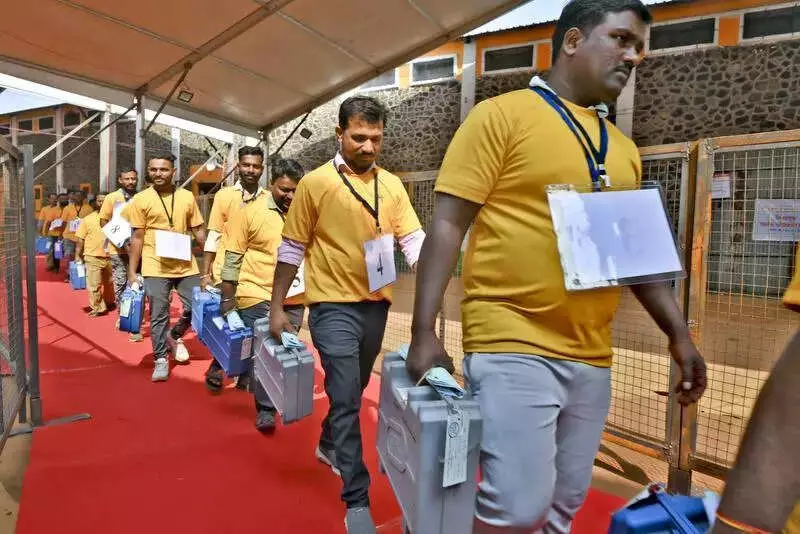
Nagpur witnessed a historic shift in its municipal politics during the recent civic elections. Independent candidates, who once played crucial roles in the Nagpur Municipal Corporation, failed to secure even a single seat. This complete wipeout marks the first time in more than two decades that no Independent candidate managed to win.
The Numbers Tell a Clear Story
Out of 12.75 lakh valid votes cast in the elections, Independent candidates collectively received about 2.22 lakh votes. This translates to a vote share of nearly 17 percent. The results, announced on Friday, revealed a significant gap between electoral presence and actual victories.
Among the 993 candidates contesting for 151 seats, a substantial 227 candidates were Independents. This represents nearly 23 percent of all candidates. However, their widespread participation did not translate into success at the ballot box.

Geographical Distribution of Independent Candidates
The distribution of Independent candidates across Nagpur's electoral landscape showed interesting patterns:
- Six prabhags had more than 10 Independent candidates each
- Three prabhags had only one Independent candidate in the race
- No Independent contested for as many as 47 seats
A Steady Decline Over Two Decades
Political observers note that Independent candidates once held significant influence in Nagpur's municipal politics. For decades, they helped form the general body and influenced the selection of mayors and key administrative positions.
"Independents were once king-makers in NMC," said a political analyst. "However, the dynamics completely changed over the last two elections."
Historical election data clearly shows this steady decline:
- 2002 elections: 233 Independents contested for 136 seats, with five emerging victorious
- 2007 elections: 399 Independents were in the fray, with 11 winning seats and collectively accounting for around 17% vote share
- 2012 elections: About 557 Independents contested, with only 10 winning but securing nearly 18% vote share
- 2017 elections: Out of 325 Independent candidates, only one emerged victorious
The 2017 victory belonged to Abha Pande, who had been expelled from Congress for anti-party activities and chose to contest independently. Her win was widely seen as an exception rather than a trend.
The Changing Dynamics of Local Politics
The recent election results signal a broader transformation in Nagpur's political landscape. Elections have become increasingly party-centric, with organizational strength proving decisive. Financial resources and robust networks of ground-level workers now play crucial roles in electoral success.
Without party backing, Independent candidates struggle to sustain effective campaigns. They find it difficult to mobilize voters or counter well-organized political machinery. The era when Independents could influence municipal governance through strategic alliances appears to be over.
This shift reflects changing voter preferences and the growing importance of party identities in local elections. As political parties strengthen their organizational structures and campaign strategies, Independent candidates face mounting challenges in competing effectively.
Election Data Summary
The following table illustrates the declining fortunes of Independent candidates in Nagpur Municipal Corporation elections:
- 2002: 136 total seats, 233 Independents contested, 5 won
- 2007: 136 total seats, 399 Independents contested, 11 won
- 2012: 145 total seats, 557 Independents contested, 10 won
- 2017: 151 total seats, 325 Independents contested, 1 won
- 2026: 151 total seats, 227 Independents contested, 0 won
The complete absence of Independent winners in the latest elections represents a significant milestone in Nagpur's political evolution. It underscores the growing dominance of established political parties in municipal governance and signals potential changes in how local democracy functions in the city.