

Nagpur Municipal Corporation's Growing Dependence on Contractual Consultants
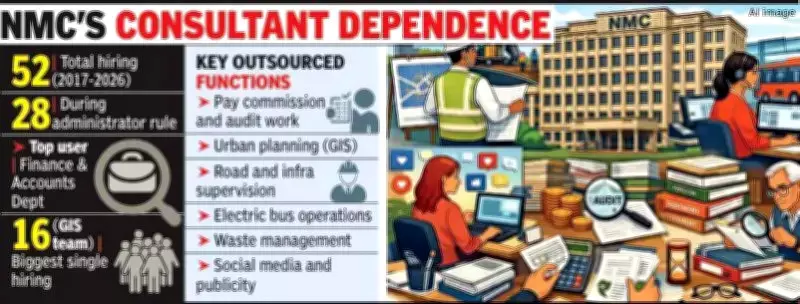
The Nagpur Municipal Corporation (NMC) is experiencing a profound administrative transformation, with critical municipal functions increasingly being managed by contractual consultants rather than permanent staff. An in-depth analysis reveals that at least 28 appointments have been made during the administrator's tenure alone, highlighting a deepening manpower and expertise crisis within the civic body.
Parallel Administrative System Emerges
A comprehensive review of 52 contractual hires between 2017 and 2026 demonstrates that key departments are not using external experts as temporary solutions but rather as a parallel administrative framework. This shift represents a fundamental change in how municipal governance is being conducted in Nagpur.
Finance Department's Outsourcing of Core Responsibilities
The finance and accounts department exemplifies this trend, having repeatedly engaged consultants to handle essential functions that traditionally fall under permanent staff purview. These responsibilities include implementing the Seventh Pay Commission, addressing audit objections, managing pay fixation procedures, and scrutinizing retirement cases. The consistent pattern of hiring indicates a sustained outsourcing of financial governance that goes beyond temporary supplementation.

Urban Planning Functions Completely Outsourced
The town planning department presents an even more dramatic scenario. For its Geographic Information System (GIS)-based planning infrastructure, the NMC hired an entire team of 16 consultants simultaneously. This move effectively outsourced a critical urban planning function that is fundamental to Nagpur's development and growth management.
Engineering Departments Rely on Retired Officials
Engineering divisions, particularly the public works and public health engineering departments, have turned to retired officials to oversee significant projects. These consultants supervise cement road construction and manage high-value initiatives like the Nag River pollution abatement program and air quality management systems. Multiple retired deputy engineers have been brought back on contractual terms, raising serious questions about the in-house technical capacity of these essential municipal departments.
Transport and Waste Management Follow Suit
The transport department has recently witnessed a surge in consultant hiring specifically for managing the rollout of electric buses and ongoing operations. Meanwhile, solid waste management continues to depend on external coordinators for oversight of the Bhandewadi dumping yard and implementation of Swachh Bharat Mission-related work.
Administrative and Communication Roles Also Outsourced
Even administrative and public communication functions have not been spared from this trend. The general administration department has engaged consultants for secretariat work, while social media coordinators and publicity experts have been hired to manage the corporation's public outreach and communication strategies.
Scale of the Consultant Culture
Of the 23 entries officially recorded as appointments during administrator rule, the total headcount reaches 28 individuals when group hires like GIS experts and retired engineers are included. If additional unmarked but contemporaneous entries are considered, this figure rises even further, indicating a more extensive reliance on external expertise than official records might suggest.
Systemic Hollowing Out of Core Departments
Civic activists and former officials warn that the expanding consultant culture points to a systemic hollowing out of NMC's core departments, many of which are struggling with vacancy rates approaching 50%. "Consultants are meant to supplement governance, not substitute it," cautioned a former senior official, who emphasized that prolonged dependence risks eroding accountability and institutional memory.

Critical Example of Institutional Vulnerability
The official cited a particularly concerning example involving the public health engineering department, which has relied heavily on retired deputy engineer Mohammed Israil for monitoring the Rs 1,926 crore Nag River Pollution Abatement project for over a decade. "If he discontinues, the department would be virtually blank on the project," the official added, highlighting the vulnerability created by such deep dependence on individual consultants.
Broader Implications for Municipal Governance
This growing reliance on contractual consultants raises fundamental questions about:
- The long-term sustainability of municipal operations
- Knowledge retention and institutional memory
- Accountability mechanisms in outsourced governance
- The capacity building of permanent municipal staff
- The financial implications of sustained consultant hiring
The situation at Nagpur Municipal Corporation serves as a case study in how urban local bodies are adapting to manpower shortages, but also highlights the potential risks of creating parallel administrative systems that may undermine the very institutions they are meant to support.





