Nagpur Voters Endure Grueling Walks to Cast Votes
Polling day in Nagpur turned into a test of endurance for many citizens. Voters across the city struggled to reach their designated polling centers. The centers were often tucked away in congested neighborhoods, narrow bylanes, and isolated pockets. This poor accessibility created significant hurdles, especially for senior citizens, persons with disabilities, and first-time voters.
Long Distances and Narrow Roads Hinder Movement
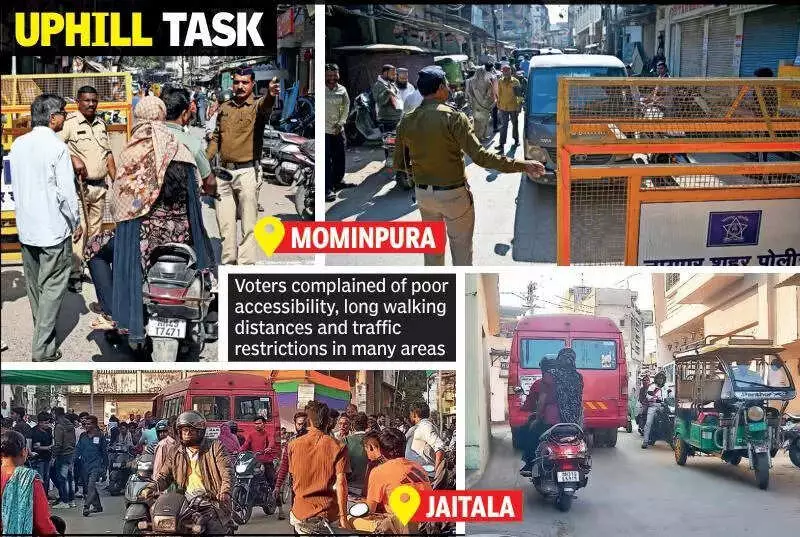
In areas like Jaitala, Dhantoli, and Bajeria, the situation was particularly challenging. Voters had to park their vehicles far away from the polling booths. They then faced walks of up to one or two kilometers to reach their destinations. Many approach roads were so narrow that only one vehicle could pass at a time. Two-wheelers barely managed to navigate these tight spaces. Four-wheelers were completely barred from entering several residential stretches. Families had little choice but to proceed on foot, regardless of age or physical condition.
Uphill Battles in Jaitala and Other Areas
The problem intensified in areas with uphill terrain, such as Jaitala in Ward 38. Residential clusters and slum pockets sit on steep gradients here. Police personnel reported an incident where an elderly voter required a wheelchair. Family members had to push the wheelchair uphill after their car could not access the lane. The main road leading to the NMC school, which housed a polling center, remained heavily congested throughout the day. Alternative routes were barely wide enough for motorcycles, offering little relief.

A visit to these areas revealed uneven road surfaces and sharp bends. There was no provision for parking or vehicle turnaround. Residents expressed frustration over the lack of basic access planning. This forced many voters, including women and elderly persons, to walk long distances under difficult conditions.
Congestion and Confusion Worsen the Situation
Congestion was visible from early morning at several polling points. Voters, pedestrians, and two-wheelers competed for limited space near booth entrances. Motorcycles were parked haphazardly at distant points, creating bottlenecks and slowing pedestrian movement. Despite the presence of police, traffic flow remained slow and disorganised, adding to the chaos.
In Bajeria, the situation worsened due to road closures imposed for security reasons. Voters from Prabhag 8 were redirected to polling booths in Prabhag 19. Restricted vehicular movement and inadequate prior communication led to confusion and inconvenience. Elderly citizens, patients, and persons with disabilities were among the worst affected. They struggled to reach booths because of the long walking distances imposed by these changes.
Political Workers Highlight Systemic Issues
Political worker Atique Qureshi pointed out that around eight polling booths were located close to roads that were shut. This forced voters to trek long distances to cast their votes. He added that traffic diversions choked internal lanes, further complicating access to booths situated inside narrow bylanes. These issues highlighted a lack of foresight in booth placement and traffic management.
Sustained Traffic Snarls in Dhantoli
In Dhantoli's Ward 15, traffic arrangements near the polling booth at Sule High School in Gaddigodam caused sustained congestion throughout the day. Vehicles parked on both sides of the narrow road left little space for movement. This resulted in frequent traffic snarls that disrupted the flow of voters and residents alike. Locals said the recurring problems underscored the urgent need for better booth planning, improved access routes, and clearer communication ahead of future polling days.
Residents across Nagpur voiced their concerns, calling for authorities to address these accessibility issues. They emphasized that voting should not be such an arduous task, especially for vulnerable groups. The day's events served as a stark reminder of the importance of inclusive urban planning during elections.