Netaji's 129th Birth Anniversary Becomes Political Flashpoint in West Bengal
The commemoration of Netaji Subhas Chandra Bose's 129th birth anniversary on January 23, 2026, transformed into a heated political arena in West Bengal, with the ruling Trinamool Congress (TMC) and the opposition Bharatiya Janata Party (BJP) engaging in a fierce contest over the legacy of the iconic freedom fighter.
Official Events and Opposition Rallies Create Divided Observances
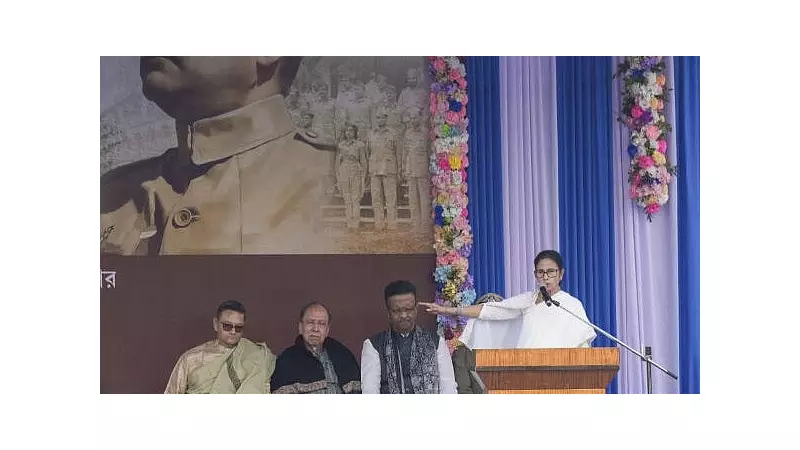
From the state government's official program held in central Kolkata to multiple BJP-organized rallies and marches across the southern parts of the city, Netaji's name and his birth anniversary became a deeply contested political terrain. The day witnessed parallel celebrations that highlighted the stark political divisions within the state.
The TMC-led state government organized formal ceremonies to honor Netaji, emphasizing his connection to Bengal's cultural and historical identity. Meanwhile, the BJP countered with its own series of events, mobilizing supporters through rallies that critiqued the state government's approach and sought to reclaim Netaji's legacy as a national icon.

SIR Emerges as New Fault Line in Polarized Electoral Discourse
At the heart of this political confrontation was the SIR (Subhas Chandra Bose International Recognition) issue, which emerged as the newest fault line in West Bengal's already polarized electoral landscape. Both parties leveraged the SIR framework to advance their political narratives, turning what is traditionally a day of national reverence into a platform for partisan mobilization.
The BJP accused the TMC of regionalizing Netaji's legacy, while the TMC countered by alleging that the BJP was attempting to appropriate a Bengali hero for national political gains. This exchange underscored how historical figures like Netaji are increasingly being instrumentalized in contemporary political battles.
Kolkata Witnesses Widespread Political Activity
The city of Kolkata became the epicenter of this political storm, with activities spanning from official state functions to grassroots opposition marches. Key locations across the city saw heightened political activity, reflecting the intense competition between the two major parties ahead of crucial electoral cycles.
- Central Kolkata: Hosted the state government's official birth anniversary program, attended by senior TMC leaders and government officials.
- Southern Kolkata: Became the focal point for BJP rallies and processions, drawing significant crowds and media attention.
- Public Spaces: Various parks, squares, and cultural centers across the city witnessed smaller gatherings and commemorative events organized by both political factions and civil society groups.
This division in how Netaji's birth anniversary was observed highlights the deepening political polarization in West Bengal, where even historical commemorations are not immune to partisan interpretation and contestation. The SIR issue, in particular, has added a new dimension to this ongoing political rivalry, suggesting that such symbolic battles will likely intensify as state and national elections approach.