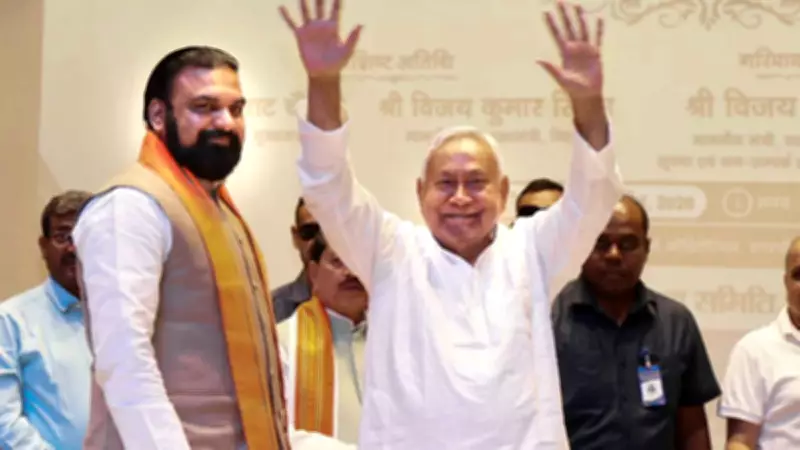
Nitish Kumar Steps Down as Bihar Chief Minister, Sworn in as Rajya Sabha MP
In a dramatic turn of events that has sent shockwaves through the political landscape of Bihar, veteran leader Nitish Kumar has officially resigned from his role as the Chief Minister of the state. This pivotal move, confirmed on April 14, 2026, coincides with his formal swearing-in as a member of the Rajya Sabha, India's upper house of Parliament. The resignation marks the conclusion of a lengthy and influential tenure at the helm of Bihar's government, a period characterized by significant administrative reforms and developmental initiatives under Kumar's leadership.
A Strategic Transition to National Politics
The decision to step down from the chief ministerial position and assume a role in the Rajya Sabha is widely interpreted as a strategic maneuver aimed at bolstering Kumar's influence on the national stage. By transitioning to the upper house, Nitish Kumar is poised to engage more directly with central government policies and legislative processes, potentially amplifying his political clout beyond the confines of state politics. This shift underscores a calculated effort to navigate the complex dynamics of Indian federalism, where regional leaders often seek broader platforms to advocate for their states and political agendas.
Implications for Bihar's Political Future
Nitish Kumar's resignation has immediately triggered a period of uncertainty and speculation regarding the future governance of Bihar. The vacuum left by his departure raises critical questions about succession and the stability of the ruling coalition. Key considerations include:

- Leadership Succession: The process of selecting a new Chief Minister is expected to involve intense negotiations among coalition partners, with potential candidates vying for the top position.
- Administrative Continuity: There are concerns about whether ongoing development projects and policy initiatives launched under Kumar's administration will be sustained or face disruptions.
- Electoral Dynamics: The reshuffling of leadership could influence voter sentiment and alter the political equations ahead of future state and national elections.
This development is likely to reshape alliances and rivalries within Bihar's political arena, as various factions maneuver to consolidate power or capitalize on the transition.
Historical Context and Kumar's Legacy
Nitish Kumar's tenure as Chief Minister, spanning multiple terms, has been marked by a focus on governance reforms, infrastructure development, and social welfare schemes. His administration earned praise for efforts to improve law and order, enhance educational outcomes, and promote economic growth in Bihar, a state historically plagued by underdevelopment and political instability. However, his rule also faced criticism over issues such as bureaucratic inefficiencies and unmet promises in areas like job creation and agricultural support.
As he embarks on his new role in the Rajya Sabha, Kumar's legacy in Bihar will be a subject of ongoing debate, with supporters highlighting his transformative impact and detractors pointing to persistent challenges. His move to the national Parliament reflects a broader trend among regional stalwarts seeking to influence central policymaking, a strategy that could redefine his political career in the years to come.