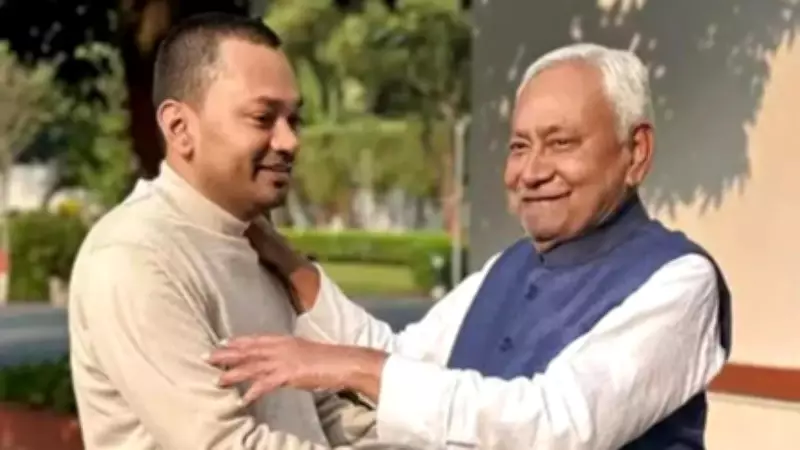
Nitish Kumar's Two-Decade Legacy in Bihar: From Lawlessness to Governance
As Nitish Kumar prepares to step away from the Chief Minister's chair and transition to the Rajya Sabha, Bihar finds itself reflecting on a political journey that has fundamentally shaped the state's trajectory for two full decades. Love him or criticize him, few would deny that since 2005, Kumar has been central to Bihar's story of governance, stability, and incremental development.
The Foundation: Restoring Order and Rebuilding Basics
When Kumar first took office in November 2005, Bihar was battling a deeply entrenched reputation for lawlessness, crumbling infrastructure, and administrative paralysis. Investors stayed away, roads were broken, and public faith in institutions was fragile. Kumar's early years were marked by a clear, almost austere focus: restore order and rebuild the basics.
His government moved rapidly on policing and justice system reforms. Fast-track courts were strengthened, convictions in criminal cases rose significantly, and a powerful message was sent that impunity would no longer be tolerated. The phrase "sushasan" – meaning good governance – became not merely a slogan but a genuine benchmark against which his administration wished to be judged. While crime did not disappear entirely, the pervasive sense of fear that had once defined everyday life in many districts visibly receded.
Infrastructure Transformation and Social Reforms
Infrastructure development became the second pillar of Kumar's tenure. Thousands of kilometers of roads were built or repaired, reconnecting remote villages to district headquarters and markets. Bridges that had been promised for decades finally materialized. Rural electrification accelerated dramatically, and by the late 2010s, near-universal household electrification was achieved. For a state long accustomed to darkness and isolation, the sight of lit homes and motorable roads proved genuinely transformative.
Kumar also placed unusual emphasis on social reform initiatives. His controversial 2016 decision to impose prohibition, while economically costly, was guided by long-standing personal conviction about the social harm caused by liquor consumption. Supporters argue it empowered women and reduced domestic violence, while critics point to enforcement challenges and illicit trade proliferation. Regardless of perspective, this move highlighted a defining trait of Kumar's leadership: a willingness to take politically risky decisions grounded in his reading of social welfare.
Women's Empowerment and Educational Progress
On women's empowerment, Kumar's record is often cited as one of his most significant contributions. The 50% reservation for women in panchayats fundamentally reshaped grassroots politics, bringing lakhs of women into public life for the first time. The bicycle scheme for schoolgirls – a simple yet effective intervention that provided cycles to encourage secondary education – became emblematic of his governance style. Female enrollment in schools rose sharply, and an entire generation of young women gained mobility, both literal and symbolic.
Education and health indicators, while still lagging behind national averages, showed measurable improvement during his tenure. New medical colleges were sanctioned, primary health centers were revived, and recruitment drives sought to plug critical gaps in teaching and healthcare staffing. Critics rightly cite persistent deficiencies in teacher quality and hospital infrastructure, yet the direction of change since 2005 has been markedly different from the stagnation of the preceding decade.
Development Model and Political Journey
Kumar's development model has been less about headline-grabbing industrialization and more about steady state-building. Bihar did not witness an IT boom akin to Bengaluru or large-scale manufacturing clusters like Gujarat. Instead, the focus remained consistently on roads, schools, health centers, law and order, and welfare schemes. In a state starting from an exceptionally low base, this incrementalism mattered profoundly.
Personally, Kumar has cultivated an image of restraint and administrative discipline. Soft-spoken and rarely flamboyant, he has often appeared more comfortable in review meetings than on mass stages. Bureaucrats speak of his meticulous attention to detail and insistence on regular monitoring. Political opponents accuse him of excessive reliance on officials, yet even they concede his reputation for personal integrity remains largely intact.
His political journey has not been linear. Alliance shifts between the NDA and the Mahagathbandhan have led to charges of opportunism. These maneuvers have sometimes overshadowed his governance record, feeding a narrative of survival over ideology. Still, one could argue these shifts also demonstrated his instinct to keep Bihar at the center of his calculations, balancing national political currents to retain space for state priorities.
Economic Growth and Persistent Challenges
Under Kumar's leadership, Bihar's economic growth rate periodically outpaced the national average, albeit from a modest starting point. Migration remains a defining reality, and employment generation continues to present formidable challenges. No serious assessment of his legacy can ignore the lakhs who still leave the state annually in search of work. Development in Bihar has been real but uneven, visible yet incomplete.
The Transition and Enduring Questions
As he transitions to the Rajya Sabha, the question extends beyond mere succession to what will persist of his administrative ethos. Can the emphasis on basic infrastructure, women's participation, and law and order survive the churn of coalition politics? Will the next leadership deepen industrial growth while preserving hard-won social gains?
For many in Bihar, Kumar represents a crucial bridge between two distinct eras – from a time when governance seemed virtually absent to a period when the state re-entered national conversations about progress. His legacy will continue to be debated regarding prohibition, alliance shifts, and bureaucratic centralization. Yet the physical and social infrastructure built since 2005 forms a substantial and undeniable chapter in Bihar's modern history, marking a definitive departure from the paralysis that preceded his tenure.