Nitish Kumar's Rajya Sabha Ambition Triggers Political Earthquake in Bihar
In a dramatic political development that has sent shockwaves through Bihar's corridors of power, Chief Minister Nitish Kumar has officially confirmed his decision to step down from the state's top executive position. The veteran leader announced his intention to seek a seat in the Rajya Sabha, completing what he described as a personal political journey spanning both Houses of Parliament and both Houses of the state legislature.
Emotional Outpouring and Angry Protests Rock JD(U) Ranks
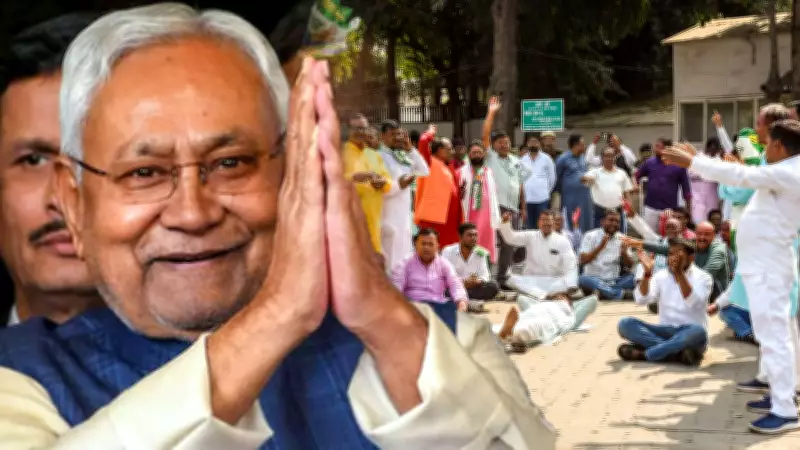
The announcement triggered immediate and emotional reactions from Janata Dal (United) supporters, who gathered in significant numbers outside the Chief Minister's residence in Patna. Party workers expressed visible distress, with some breaking down in tears while others voiced anger at what they perceived as their leader abandoning the mandate delivered in the 2025 Bihar Assembly elections.
"This feels like a betrayal of the trust placed in him by the people of Bihar," one protester was heard shouting, capturing the sentiment of many gathered JD(U) members who had campaigned vigorously during the state elections just months earlier.

Completing a Political Journey: From Lok Sabha to Rajya Sabha
Nitish Kumar explained his decision by referencing his desire to serve in every possible legislative capacity. "I have always wished to experience service in both Houses of Parliament and both Houses of the state legislature," Kumar stated. With previous stints as a Lok Sabha MP, MLA, and MLC already accomplished, the Rajya Sabha seat represents the final piece of this comprehensive political portfolio.
The Chief Minister's extensive political resume includes multiple terms in various legislative bodies, making this move toward the Upper House of Parliament a logical next step in his distinguished career. However, the timing has raised eyebrows across political circles.
Leadership Succession and Political Landscape Reshaping
The sudden announcement has ignited intense debate about leadership succession within Bihar's ruling party and the broader implications for the state's political landscape. Political analysts are questioning whether Kumar's departure from the Chief Minister's office might create a power vacuum that could reshape alliances and political equations in one of India's most politically significant states.
The move comes at a particularly sensitive time, following closely on the heels of the 2025 Assembly elections where JD(U) secured its mandate. Many within the party are now grappling with questions about who might succeed Kumar and whether the transition will be smooth or contentious.
Observers note that Kumar's decision to pursue a Rajya Sabha seat rather than continue as Chief Minister represents a significant shift in Bihar's political dynamics. The veteran leader has been a dominant figure in the state's politics for decades, and his potential exit from active state governance marks the end of an era.
As protests continue and political calculations intensify, all eyes remain on Patna to see how this unfolding drama will impact Bihar's future governance and the stability of its ruling coalition. The emotional response from party workers underscores the deep personal connections many have formed with their leader over years of political struggle and electoral battles.