Bihar Chief Minister Nitish Kumar Announces Resignation and Rajya Sabha Candidacy
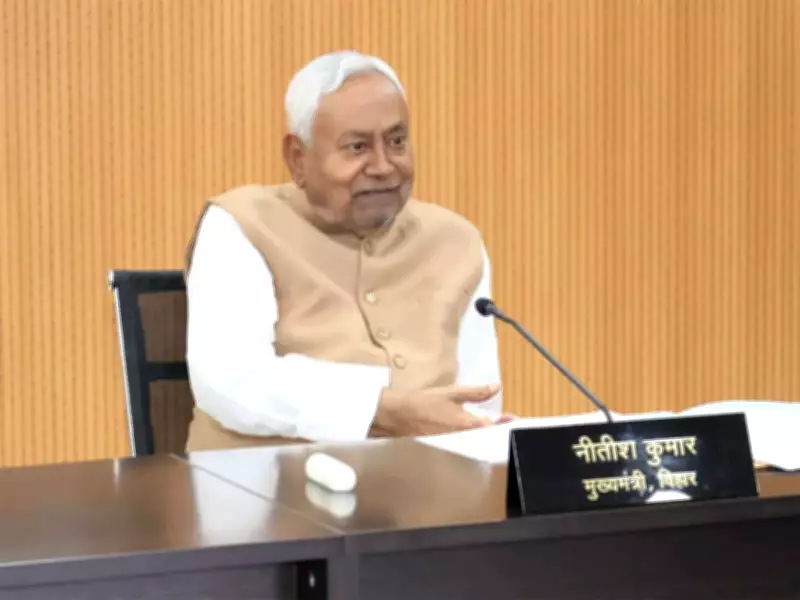
The political landscape of Bihar is set for a significant transformation following the announcement that Chief Minister Nitish Kumar will resign from his position and contest for a seat in the Rajya Sabha. This move has elicited a wide array of reactions from individuals across various fields, including industry leaders, socio-political analysts, economists, law-makers, business circles, and local residents, each offering unique perspectives on the implications for the state's future.
Industry Leaders Express Cautious Optimism
Industry voices, particularly those focused on Bihar's economic growth, have offered a cautiously optimistic take on the leadership change within the ongoing NDA coalition. Ram Lal Khetan, President of the Bihar Industries Association (BIA), welcomed the continuity of the coalition government, which has already secured a majority. He emphasised that the administration would remain coalition-led, with the central government's "double-engine" model intact.
In his view, if a BJP chief minister assumes office, it could accelerate Bihar's development. He highlighted the growing momentum in the industrial sector, noting that the state's current priorities centre heavily on industry promotion. "Investors are arriving, and we recently hosted an event where many expressed keen interest in investing here—some proposing commitments of Rs 2,000 crore or more," Khetan said. Overall, he believes this political transition will have a strongly positive impact, further boosting industrial expansion, attracting more capital, and driving sustained economic progress in the state.
Economists Highlight Leadership Void and Developmental Challenges
Sudhanshu Kumar, an economist and assistant professor at Bihar Institute of Public Finance and Policy, said that as Nitish prepares to transition from state to national politics, Bihar's political landscape is poised for a significant shift. "His departure leaves a considerable leadership void that will be challenging for any successor to fill. To effectively lead the state forward, the incoming leadership will need more than just political acumen; they will require a clear and compelling vision for Bihar's future development," he said.
"Bihar stands at a critical juncture, facing a pressing need for a robust developmental push to build on the foundations laid by previous initiatives. The next leadership must address the development gaps with pragmatic, forward-thinking policies that can deliver tangible results. While political transitions often bring uncertainty, they also present opportunities for new ideas and fresh perspectives. The challenge for the next government will be to not only maintain the momentum of past successes but also to catalyse growth in emerging sectors," Kumar added.
Ground-Level Perspectives Reflect Uncertainty and Concern
Adding to the ground-level perspective, Usha Jha, an entrepreneur and President of Bihar Mahila Udyog Sangh, voiced a sense of prevailing uncertainty about the leadership transition. She observed that no clear frontrunner stands out as the ideal successor, leaving the public without a definitive "face" for the chief minister's role. "It is hard to say anything for sure right now—there's this feeling of ambiguity," she noted. "No one person comes to mind where you'd think, 'Yes, if they become CM, it will be perfect,'" she added.
Further echoing dismay among many Biharis, Anshuman Singh, an advocate at Patna Civil Court, lamented the move as a profound setback for the state's progress. He asserted that for the people of Bihar, true development has long been synonymous with Nitish Kumar's leadership, describing him as the second such CM after Krishna Sinha in whom the entire public reposed unwavering trust. He criticised the decision to shift Nitish to the Rajya Sabha as unjust, arguing that a leader with such an impeccable reputation should remain longer to steer Bihar forward.
Local Residents Share Mixed Sentiments
A local businessman, Amit Tripathi, said the change in leadership will surely have some impact. "People are also upset with this as they voted for NDA on Nitish's face, and his journey of leadership is remarkable," he said.
Sweta Sinha, a resident of Kankerbagh and a home-maker, said Nitish's leadership, his decisions, schemes, and all the work he did as the CM will be remembered always. "Commenting on the next leader will be difficult until we see his or her work. But I am sure the NDA government will bring more development in Bihar," she said.
In summary, Nitish Kumar's resignation and move to the Rajya Sabha have sparked a complex mix of reactions, ranging from optimism about economic growth to concerns over leadership continuity and developmental gaps. As Bihar navigates this political transition, the focus remains on how the incoming leadership will address these challenges and seize opportunities for progress.