Nagpur Municipal Corporation Grapples with Vehicle Crisis for Elected Representatives
The Nagpur Municipal Corporation (NMC) is currently facing an urgent logistical challenge as it scrambles to arrange official vehicles for newly elected political office-bearers. This sudden predicament is the direct consequence of nearly four years of administrator rule, during which the civic body operated without elected representatives.
Four Years of Administrator Rule and Vehicle Repurposing
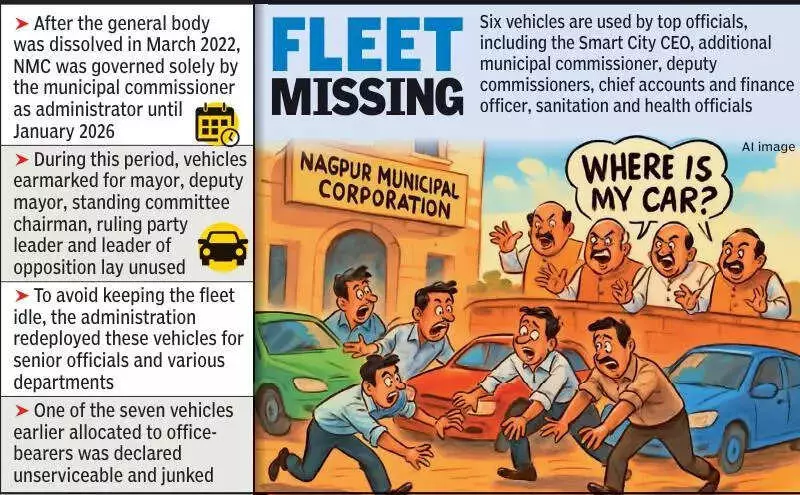
Following the dissolution of the NMC general body in March 2022, the municipal corporation remained without elected representatives until January 2026. During this extended period, the civic house was governed solely by the municipal commissioner acting as administrator. The official vehicles originally earmarked for key political positions including the mayor, deputy mayor, standing committee chairman, ruling party leader, and leader of opposition remained unused and idle.
To prevent the fleet from lying dormant, the administration made the strategic decision to redeploy these vehicles for operational purposes. Senior officials and various municipal departments began utilizing the cars that were originally intended for elected representatives. This repurposing seemed practical during the administrator phase but has created significant complications with the return of democratic governance.

Current Vehicle Status and Administrative Challenges
Over the course of the administrator rule, one of the seven vehicles previously allocated to office-bearers was declared unserviceable and subsequently junked. The remaining six vehicles continue to be actively used by top NMC officials including the Smart City CEO, additional municipal commissioner, deputy commissioners, chief accounts and finance officer, and sanitation and health department officials.
With the restoration of an elected general body, the NMC now finds itself without a ready fleet for political functionaries who require daily mobility to perform their duties effectively. These representatives are expected to be constantly on the ground, inspecting municipal works, attending public meetings, and addressing civic complaints across Nagpur's extensive urban landscape.
Immediate Administrative Response and Proposed Solutions
The vehicle shortage forced the administration to revisit its vehicle policy almost immediately after the new elected body assumed charge. Acknowledging the pressing issue, the deputy commissioner (administration) directed the executive engineer (mechanical) on January 21 to submit a comprehensive proposal regarding vehicle arrangements for elected representatives.
The forthcoming proposal is expected to explore multiple potential solutions:
- Recalling vehicles currently assigned to municipal officials
- Hiring vehicles on a monthly rental basis
- Procuring new four-wheelers through official channels
Existing Provisions and Expanded Requirements
According to an existing government resolution, the NMC is authorized to purchase a four-wheeler costing up to Rs 30 lakh specifically for the mayor's use. Similar provisions exist for other key positions including the deputy mayor, standing committee chairman, ruling party leader, leader of opposition, and chairman of the Durbal Ghatak panel.
The requirement expands significantly when considering that zonal chairmen, zonal women chairpersons, and heads of various consultative committees are also entitled to official vehicles. This creates a substantial logistical and financial challenge for the municipal corporation as it transitions back to elected governance.
Financial and Political Considerations
Municipal sources indicate that vehicle hiring is being seriously considered as a temporary stopgap arrangement. This approach would help avoid immediate capital expenditure and potential public backlash over fresh vehicle purchases during a period of strained civic finances. However, hiring vehicles for multiple representatives would introduce recurring costs that could further burden the NMC's already tight budget.

The situation has sparked political debate within Nagpur's civic circles. While corporators insist that official vehicles are essential for effective governance and public service delivery, critics argue that the current vehicle crunch reflects the long-term consequences of prolonged administrator rule and ad hoc asset utilization policies.
Broader Implications for Municipal Governance
As the NMC carefully weighs the options of recalling existing vehicles, renting temporary transportation, or purchasing new vehicles, this episode underscores how years without an elected body have left the civic administration grappling with transition challenges. These logistical issues emerge even before governance has fully shifted back to political leadership, highlighting the complex legacy of extended administrator rule in urban local bodies.
The vehicle shortage represents more than just a transportation problem—it symbolizes the broader challenges municipal corporations face when transitioning between different governance models. The situation in Nagpur serves as a case study in how asset management decisions made during administrator periods can create significant operational hurdles when democratic processes are restored.