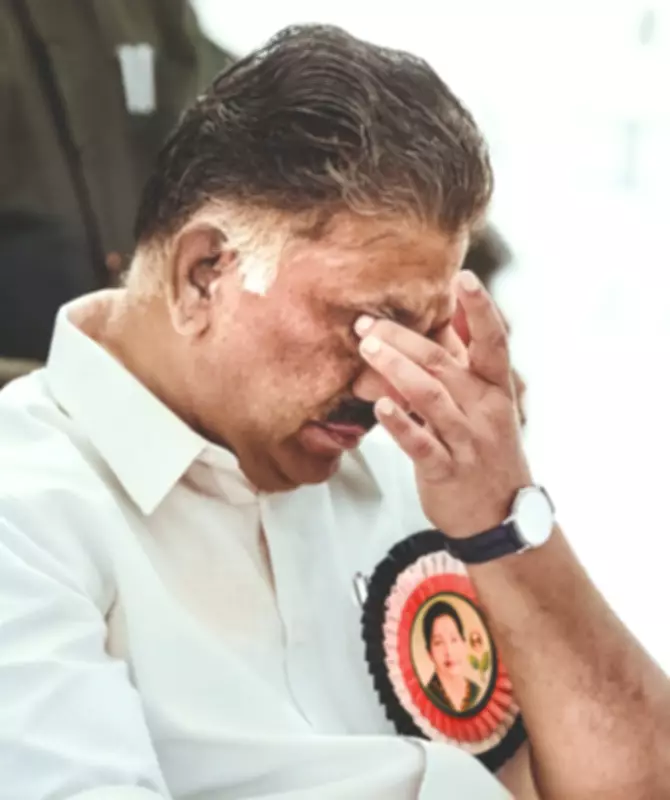
The Rise and Fall of O Panneerselvam: A Political Case Study
Tamil Nadu has long valued loyalty in its political landscape, but it has never allowed loyalty alone to sustain power indefinitely. The journey of O Panneerselvam, commonly known as OPS, serves as a compelling and practical lesson in how politics operates once a dominant era concludes, rather than merely a sentimental narrative of ascent and decline.
From Trusted Deputy to Uncertain Leader
OPS ascended within a system where trust and dependability were paramount. He was widely perceived as a disciplined, safe, and reliable figure during times of uncertainty, qualities that propelled him to leadership positions multiple times. In a political culture dominated by charismatic personalities, OPS distinguished himself precisely by not attempting to overshadow the leader, which initially served as his greatest strength.
However, the political dynamics underwent a seismic shift following the death of J Jayalalithaa in December 2016. The environment no longer rewarded steadfastness alone; it began to demand speed, ownership, and the ability to construct an independent power structure. This is where OPS encountered significant challenges.

The Perils of Indecision and Waiting
While it is easy to attribute OPS's decline to indecisiveness, this explanation is incomplete. The deeper issue lay in his apparent expectation that politics would become fair. At critical junctures, he seemed to believe that his loyalty, seniority, and accumulated goodwill would inevitably yield favorable outcomes. He operated under the assumption that holding his ground would eventually shift circumstances in his favor or that external forces would intervene on his behalf.
Politics, however, does not reward passive waiting; it favors those who take decisive action while others remain hopeful. This is the foremost lesson from OPS's trajectory for emerging leaders: legitimacy is merely a starting point, and failure to capitalize on it swiftly transforms it into a distant memory.
Missed Opportunities and Political Control
OPS experienced moments that many politicians can only aspire to, including public sympathy, recognizable stature, and a moral claim within a charged political atmosphere. At one point, he possessed both emotional momentum and high visibility, a rare combination in Tamil Nadu politics. Yet, a political moment is distinct from political control, and this distinction often determines the fate of political careers.
A moment can garner attention, spark public discourse, and energize supporters, but the subsequent challenge involves building the machinery to sustain and expand that advantage. This requires robust district networks, loyal second-tier leaders, clear internal messaging, consistent directional signals, and a perception among supporters that the leader has a definitive path forward. Without these elements, even genuine goodwill begins to dissipate.
The Consequences of Ambiguity
In OPS's case, a familiar pattern emerged: a strong emotional surge followed by uncertainty, a powerful political signal succeeded by drift, and a visible opening that led to no decisive consolidation. Supporters and followers may forgive defeat, but they struggle with ambiguity. A leader who calls for rallying support must demonstrate a willingness to bear the full burden of the fight, making tough decisions early rather than after the landscape has shifted.
This entails taking ownership of consequences, not awaiting more favorable alignments, and understanding that once one steps forward as a claimant, the caution of a caretaker is no longer viable. OPS often appeared trapped between two roles—no longer just the loyal deputy but not fully transformed into a commanding challenger. This intermediate position proved politically fatal, fostering doubt among cadre, allies, and fence-sitters.
Post-Charismatic Succession and Its Brutality
It is essential to acknowledge that this is not solely a matter of personality. Succession battles following charismatic leadership are inherently brutal, marked by systemic instability, sharpened ambitions, and organizational conflicts masquerading as moral debates. Every action is scrutinized, interpreted, and countered, and not every leader is equipped for such intense conflict.

OPS was adept at loyalty politics but inadequately prepared for the warfare of succession. There is no disrespect in this observation; rather, it holds valuable insights. Younger politicians must recognize that the qualities facilitating rise under one leadership style may be insufficient for survival after its demise.
Relevance in Tamil Nadu's Evolving Politics
As Tamil Nadu politics enters a new phase, this lesson gains heightened significance. More leaders will navigate transitions, more parties will grapple with issues of succession, legitimacy, and control, and more politicians will realize that public affection does not equate to organizational power. Thus, OPS remains a relevant political case study, irrespective of his current role.
His journey illustrates both the strengths and limitations of personal credibility in contemporary politics. It demonstrates how far dignity can propel a leader and where dignity alone becomes inadequate. It reveals that political capital can be eroded not only through betrayal or defeat but also through delay.
Ultimately, the OPS story imparts a straightforward rule for every ambitious politician: goodwill provides an opening, symbolism offers a moment, but only decisive action secures a future.