Patna Faces LPG Delivery Crisis Amid Conflicting Claims
In Patna, a growing wave of complaints from residents regarding delayed LPG cylinder deliveries and instances of cylinders marked as delivered but never received has prompted the district administration to intensify monitoring efforts. The administration has initiated frequent review meetings aimed at preventing hoarding and the illegal sale of cooking gas within the city.
Official Stance Versus Ground Reality
District Magistrate Thiyagarajan S M has firmly stated that there is no shortage of LPG in Patna. He emphasized that all distributors and gas companies are maintaining adequate supply levels. According to the administration, consumers should not face any difficulties in booking or receiving cylinders and are advised to avoid panic booking, which could exacerbate the situation.
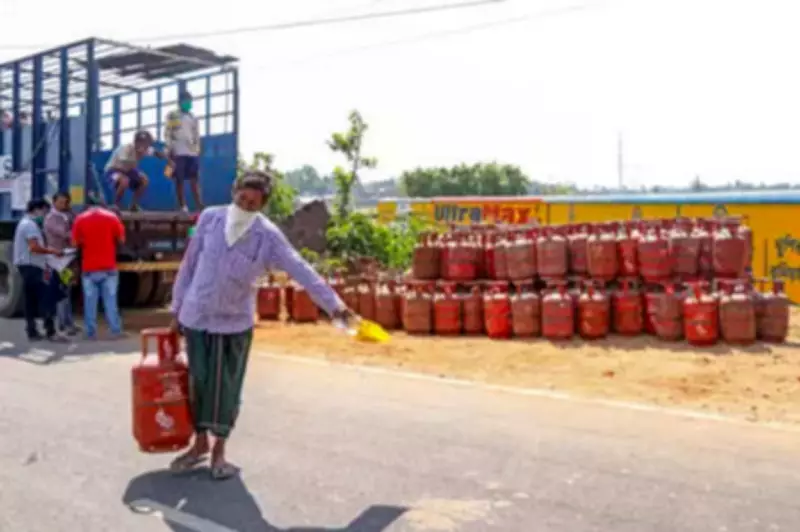
However, residents paint a starkly different picture. On Boring Canal Road, a delivery person with a fully loaded cart was surrounded by anxious citizens seeking clarity on the supply chain. One resident urgently inquired, "When will my cylinder finally be delivered?" while another questioned, "Is there really a lack of supply at the godown?" The delivery person's response was telling: "It is best to shift to a coal stove for the time being."

The delivery person explained that he could only provide cylinders to designated addresses based on existing orders, noting that deliveries are occurring at a staggered pace. This has led to widespread frustration, with many taking to social media platform X to voice their grievances.
Consumer Complaints and Administrative Response
Abhishek Ranjan shared his experience, stating, "I booked my LPG refill on March 4, 2026. The order is still open, and the customer service number 18002333555 isn’t working. The agency is very crowded. Please update the delivery status." Another consumer, Vikas Kumar, reported, "My Indane LPG booking from March 11 shows delivered in the app and subsidy is credited, but I have not received the cylinder."
To address these issues, the Patna district administration has established a district-level control room equipped with a dedicated phone number and five hunting lines. Complaints and information are being systematically recorded in a register to facilitate coordination with gas companies for consumer assistance.
Officials have deployed enforcement squads, block supply officers, and sub-divisional officers in shifts to ensure prompt action on consumer reports. Additionally, all sub-divisional officers have been directed to keep local control rooms active to maintain transparency in the supply chain.
Political Protests Escalate
Despite these administrative measures, political tensions have risen. The RJD women’s wing, along with Patna district and metropolitan units and Chhatra RJD, organized a protest march from the party’s state office to the Income-Tax Roundabout on Tuesday. The demonstration targeted the alleged shortage and price rise of both domestic and commercial gas.
Party spokesperson Ejaz Ahmed stated that protesters marched while raising slogans against the "double engine" government. He claimed the public is demanding answers from Prime Minister Narendra Modi regarding the LPG shortage and accused the state government of supporting black marketing of cooking gas.
Kanti Singh, national president of the RJD’s women’s wing, asserted, "The policies of the Modi government have forced women onto the streets, with current LPG prices crushing students, youth and women alike. Hostels are being vacated, and migrant workers are forced to return home. This government is fundamentally anti-poor and anti-woman."
Ranvijay Sahu, state general secretary, added, "The PM used to talk about extracting gas from gutters, and he should now tell the public where that gas is." He further criticized the government, saying it remembers people only during elections, while in reality, it has forced the poor and the youth to endure long queues.
The situation in Patna highlights a significant disconnect between official assurances and the lived experiences of residents, with political actors capitalizing on the crisis to challenge the government's efficacy and commitment to public welfare.