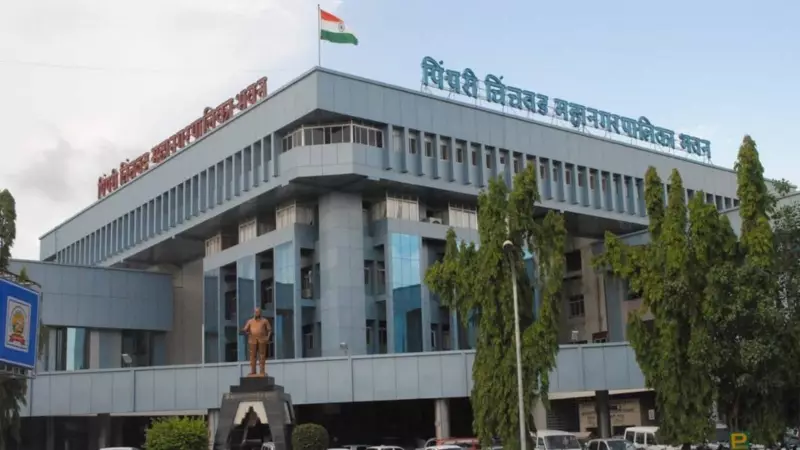
The Pimpri-Chinchwad Municipal Corporation (PCMC) has ignited a political storm after it approved and issued tenders worth a staggering Rs 250 crore mere hours before the Model Code of Conduct (MCC) for municipal corporation elections came into force in Maharashtra. The move has drawn sharp criticism from opposition parties, who allege it amounts to indirect campaigning for the ruling alliance.
Opposition Alleges Poll Code Violation and Favoritism
The controversy erupted on Monday, December 17, 2025, shortly after the State Election Commission announced the poll schedule for 29 municipal corporations, including Pimpri-Chinchwad. Opposition leaders were quick to question the timing and intent behind the flurry of tender approvals.
Aam Aadmi Party (AAP) spokesperson Mukund Kirdat led the charge, demanding clarity from the Election Commission. "Just a few hours before the poll code came into effect, PCMC Commissioner Shravan Hardikar approved tenders worth Rs 250 crore. Of these, Rs 154 crore tenders are for security staff," Kirdat stated. He questioned the urgency of the approvals in the absence of elected corporators and raised concerns that ruling party candidates could use these announcements in their campaign, potentially violating the MCC.

"The PCMC commissioner was behaving as if he were a pawn in the ruling parties' hands. We strongly condemn his action, which is clearly favouring the ruling parties at the time of the elections," Kirdat alleged.
Congress spokesperson Gopal Tiwari echoed similar sentiments, probing why these tenders were not issued earlier. "Why were the tenders not issued last week or a month ago? How did the PCMC administration realise that work worth crores of rupees is pending?" he asked, emphasizing the public's right to know if the poll code was breached.
Activist Maruti Bhapkar criticized the administration's actions and the perceived silence of the State Election Commission. "They have no regard for the poll code. They can break the norms with impunity. What is surprising is the silence from the State Election Commission," Bhapkar said, urging the EC to provide transparent guidelines on such matters.
Municipal Commissioner's Defense: Routine and Necessary Works
In response to the allegations, PCMC Municipal Commissioner Shravan Hardikar firmly dismissed any wrongdoing or violation of the election code. He characterized the tendering process as a routine administrative function.
"It was a mundane standing committee. No major projects were sanctioned, and no policy decisions were made," Hardikar explained to The Indian Express. He clarified that the tenders were for various small-scale, pending works essential for civic maintenance.
The approved works primarily include repairs and improvements such as nullah (drain) repairs, road patchworks, and drainage system enhancements. Hardikar stressed that no new projects were initiated and all the works were necessary for the city's upkeep.
On the critical issue of timing, the Commissioner stated that the decision was taken without prior knowledge of the MCC's imminent implementation. "Our decision was taken when no one had an idea that poll code would come into play. After we made the decision, the poll code took effect. There was no information that the Election Commission was slated to hold a press conference," he asserted.
Election Context and Lingering Questions
The Maharashtra State Election Commission announced that voting for the 29 municipal corporations, including Mumbai, Pune, and Pimpri-Chinchwad, is scheduled for January 15, with the counting of votes set for January 16.
Despite the Commissioner's explanations, the incident has raised significant questions about administrative conduct in the sensitive period preceding elections. The core debate revolves around the distinction between routine, essential civic work and approvals that could be leveraged for political mileage.

The opposition's demand for the State Election Commission to investigate and clarify whether such bulk tender issuances fall within the legal framework of the Model Code of Conduct remains a pivotal point. The controversy underscores the heightened scrutiny on government actions during election seasons and the constant tension between administrative necessity and electoral propriety.