

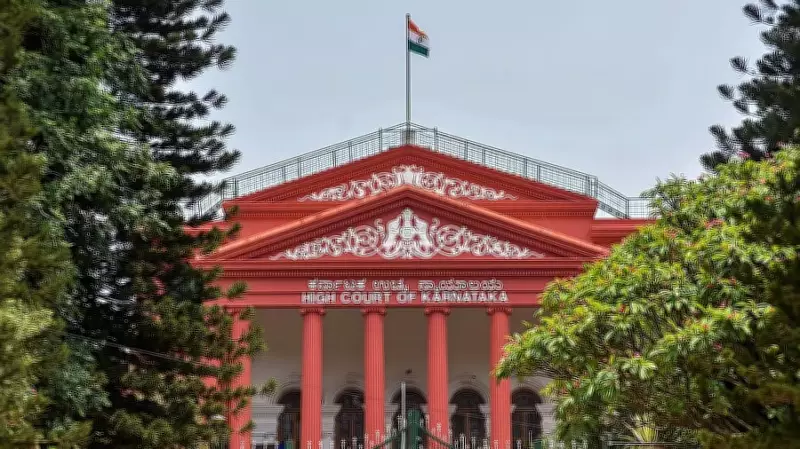
Public Interest Litigation Filed Against Karnataka Government's Land Grant to Congress Bhavan
A significant legal challenge has emerged in Karnataka, as a Public Interest Litigation (PIL) has been filed in the High Court, contesting the state government's decision to allocate 2 acres of land to the Congress Bhavan in Tumakuru. The petition alleges that this grant was made at a drastically reduced rate of only 5% of the guidance value, raising serious concerns about procedural irregularities and potential misuse of public resources.
Details of the Land Grant and Allegations
The PIL, submitted by a concerned citizen, highlights that the land in question is located in Tumakuru, a city in Karnataka, and was transferred to the Congress party for the construction of their party office, known as Congress Bhavan. According to the petition, the market guidance value for this 2-acre plot is substantially higher, but it was granted at a mere fraction—specifically 5%—of that value. This action is claimed to have resulted in a significant loss of public revenue, estimated to be in the crores of rupees, which could have otherwise been utilized for developmental projects or public welfare initiatives.
The petitioner argues that this grant violates principles of public trust and transparency, as it appears to favor a political party without adequate justification or competitive bidding. Furthermore, the PIL points out potential breaches of statutory regulations and land allocation policies that govern such transactions in Karnataka. The state government, led by the Congress party at the time of the grant, is accused of acting in a manner that undermines fair practices and equitable distribution of public assets.

Legal and Political Implications
This case has sparked widespread debate, with legal experts noting that if the allegations are proven, it could set a precedent for stricter scrutiny of land grants to political entities across India. The Karnataka High Court is expected to hear the PIL soon, and its outcome may influence future policies regarding the allocation of government land, especially to non-governmental organizations or political bodies.
From a political perspective, this development adds to the ongoing tensions between the ruling party and opposition groups in Karnataka. Critics argue that such grants, if made without proper oversight, could be perceived as partisan favors, eroding public confidence in governance. Supporters of the grant, however, may contend that it was a legitimate decision aimed at facilitating political activities, which are essential in a democracy.
Broader Context and Public Reaction
Land allocation controversies are not uncommon in India, but this particular case stands out due to the explicit mention of the guidance value discrepancy. The guidance value, set by the government, serves as a benchmark for property transactions, and deviations from it often raise red flags regarding fairness and legality.
- The PIL seeks a thorough investigation into the grant process, including the roles of officials involved.
- It demands the cancellation of the land grant and recovery of the differential amount from the Congress party.
- Public interest groups have expressed support for the petition, emphasizing the need for accountability in public asset management.
As the legal proceedings unfold, this case is likely to remain in the spotlight, highlighting issues of governance, transparency, and the ethical use of public land in Karnataka. The High Court's decision could have far-reaching consequences, not just for the parties involved, but for the broader framework of land administration in the state.






