

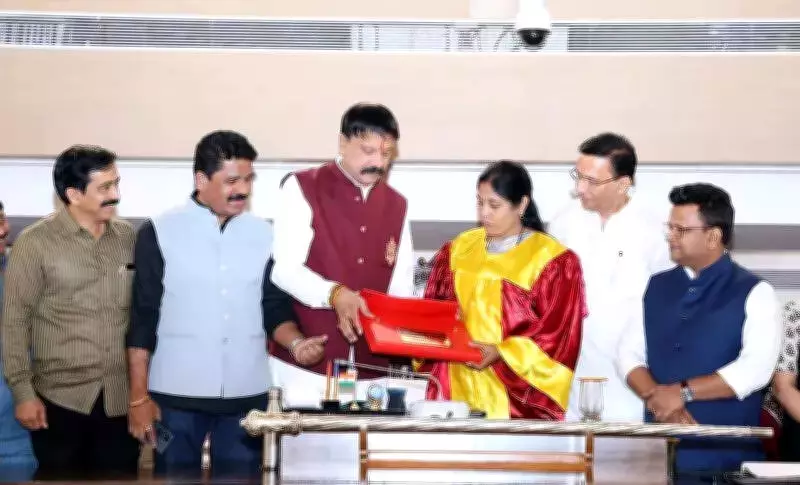
Pune Municipal Corporation Announces Major Rs 15,669 Crore Budget for 2026-27 Fiscal Year
The Pune Municipal Corporation (PMC) has taken a significant step forward in urban planning and development with the presentation of its civic budget for the 2026-27 financial year. On Tuesday, the standing committee unveiled a comprehensive outlay of Rs 15,669 crore, marking a historic milestone as it surpasses the Rs 15,000-crore threshold for the first time. This budget heavily relies on traditional tax-based revenue sources to fund its ambitious initiatives.
Substantial Increase Over Previous Draft Budget
This newly presented budget represents a substantial increase of Rs 1,674 crore compared to the draft budget of Rs 13,995 crore that was submitted by municipal commissioner Naval Kishore Ram on March 9. Furthermore, it continues an upward trend from the 2025-26 budget of Rs 12,618 crore, reflecting the city's growing needs and development aspirations.
Key Highlights and Progressive Proposals
Among the most notable features of this budget is a progressive 50% property tax waiver specifically designed for women who own homes up to 500 square feet. This initiative aims to provide financial relief and promote homeownership among women in the city.

Another major proposal that has captured public attention is the 'Pune Riverfront Experience Park'. This project is planned to be developed through a public-private partnership model. Standing committee chairman Shrinath Bhimale elaborated that the park will include amusement features comparable to 'The London Eye', referencing the iconic cantilevered observation wheel on the bank of the Thames River in London. This ambitious project seeks to transform Pune's riverfront into a major tourist and recreational attraction.
Additional initiatives outlined in the budget include:
- Establishing 'pink rooms' in civic schools to provide counseling and support specifically for girls.
- Developing Palika Bazaar-style street markets, inspired by the popular markets in Delhi, to boost local commerce and urban vibrancy.
- Strengthening the Corporate Social Responsibility (CSR) cell to attract additional funding for infrastructure and social development projects.
- Revamping the city's hoarding policy to increase revenue and eliminate illegal advertisements.
- Phased shifting of overhead cables underground, which is expected to create additional revenue opportunities while improving urban aesthetics.
- Formulating a policy to lease out municipal-owned amenity spaces and generating income from underused properties through mapping and financial planning.
Political Context and Governance Focus
This budget holds particular significance as it is the first presented by the BJP-dominated standing committee following the January civic polls, where the party secured a clear majority. Of the 16 committee members, BJP holds 12 seats, while NCP has three and Congress one.
Chairman Shrinath Bhimale emphasized that the budget is focused on overall development of Pune. 'We have proposed stricter monitoring of income-generation efforts, including weekly reviews of tax collection and arrears recovery. A dedicated cell will work on securing higher central and state funding, while a separate desk will pursue pending dues and subsidies from government departments,' he stated, highlighting the administration's commitment to financial discipline and resource optimization.
Revenue Sources and Financial Strategy
According to the detailed budget statement, property tax remains the largest revenue source at Rs 3,882.40 crore. This is followed by building permissions, development charges, and related fees at Rs 3,069.02 crore. The goods and services tax is expected to contribute Rs 2,917.95 crore, while other key sources include government grants (Rs 1,434.34 crore), local body tax (Rs 845.32 crore), and water charges (Rs 741.52 crore).
Capital receipts are projected to include Rs 500 crore via loans and debentures, along with Rs 93 crore under the Pradhan Mantri Awas Yojana, demonstrating a diversified approach to funding the city's growth.

The budget's comprehensive approach, combining social welfare measures like the property tax waiver with large-scale infrastructure projects like the riverfront park, positions Pune for significant urban transformation in the coming years.





