State Urban Development Department Questions Pune Municipal Corporation's Ward Office Reorganization
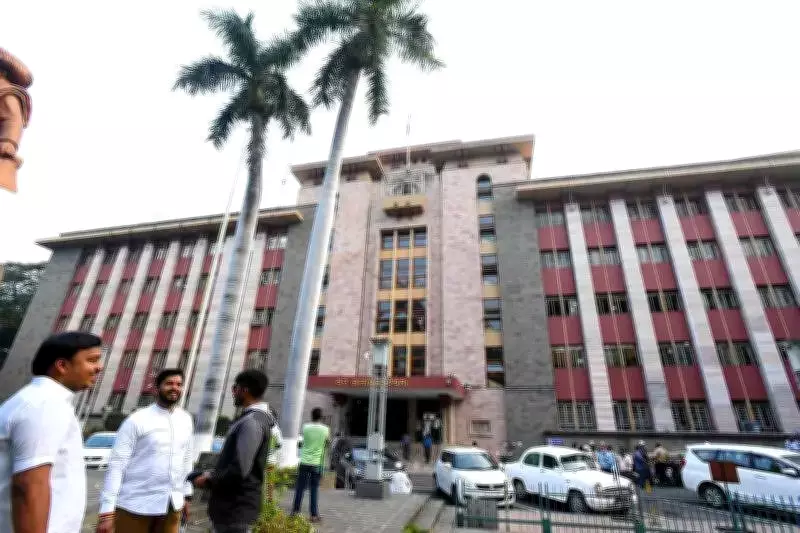
The Maharashtra state urban development department (UDD) has formally raised serious questions regarding alleged discrepancies in the recent reorganization of ward offices and committees within the Pune Municipal Corporation (PMC). In a significant development, the department has directed the civic body to submit a comprehensive report addressing these concerns.
Deputy Chief Minister's Intervention Triggers State Action
This administrative scrutiny follows a letter sent by Deputy Chief Minister Sunetra Pawar to Chief Minister Devendra Fadnavis on March 5, highlighting problematic aspects of the PMC's restructuring efforts. The UDD directives, issued last week, specifically pointed out that the municipal corporation's recent reorganization of its 15 ward offices contained several administrative and geographical inconsistencies that require immediate clarification and justification.
On Monday, senior official of PMC's general administration department Vijay Thorat confirmed, "We have received the letter from the state urban development department. The reply with the necessary clarification will be sent to the state authorities soon. We will thoroughly explain the logic and reasoning behind the ward restructuring decisions."

Geographical and Administrative Concerns in Ward Assignments
The PMC implemented the division of civic areas under 15 ward offices after the newly elected municipal body assumed office. These ward offices are crucial administrative units that handle hyperlocal civic issues and support decentralized local governance across Pune's urban landscape.
However, specific ward assignments have raised eyebrows among both residents and state officials. The Vishrantwadi and Dhanori areas, designated as wards 1 and 2, were assigned to the Nagar Road office despite their geographical proximity to the Yerawada office. Meanwhile, residents of Kharadi-Wagholi, falling under ward 4, face the inconvenience of traveling approximately 3 kilometers past the Nagar Road office to reach their designated Yerawada office for civic matters.
In her detailed letter, Deputy Chief Minister Sunetra Pawar specifically suggested that wards 1, 2, and 6 should be logically linked to the Yerawada office based on geographical continuity, while wards 3, 4, and 5 should be reassigned to the Nagar Road office to create more coherent administrative boundaries.
Impact on Residents and Political Implications
Sunetra Pawar noted critically in her communication: "The current arrangement lacks geographical continuity and fails to properly account for population distribution patterns. This administrative oversight results in unnecessary travel burdens for senior citizens, women, and people with disabilities who must navigate these inconvenient ward office assignments." Consequently, the Chief Minister's office directed the urban development department to conduct a thorough review of the entire matter.
The restructuring of ward offices carries significant importance beyond mere administrative convenience. Local corporators form committees under each ward office to decide on ward-level funds and development works. The Bharatiya Janata Party (BJP), currently the largest party in the PMC, dominates these ward committees, while the Nationalist Congress Party (NCP), as the second-largest party, has minimal representation in these crucial decision-making bodies. This political imbalance has reportedly created unrest among local party members and raised questions about equitable governance.
The state's intervention underscores the importance of transparent, logical administrative restructuring that prioritizes citizen convenience and geographical coherence over potential political considerations. As Pune continues to expand and evolve as a major urban center, efficient local governance structures become increasingly vital for addressing civic needs and ensuring responsive administration.