Saraswati Puja Pandals in Bengal Witness Political Tussle Over Sir Row
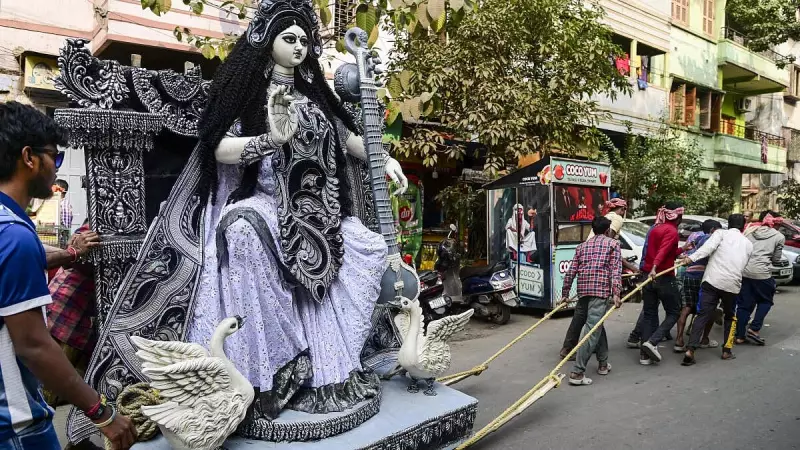
The vibrant celebrations of Saraswati Puja in West Bengal have taken an unexpected political turn this year, as the ongoing controversy over the use of the honorific 'Sir' has spilled over into the festive pandals. Traditionally a time for cultural reverence and community gatherings, the puja has now become a focal point for political debates, highlighting the deep-seated tensions between different factions in the state.
Cultural Festivities Marred by Political Symbolism
In recent days, several Saraswati Puja pandals across West Bengal have witnessed the display of banners and placards referencing the 'Sir' row, a contentious issue that has been simmering in the political landscape. This development has transformed the religious event into a platform for political expression, with supporters and opponents using the occasion to voice their opinions on the matter.
The 'Sir' controversy, which initially emerged in political circles, revolves around the use of the title in official contexts and its perceived implications for cultural identity and respect. By entering the puja pandals, the issue has gained a broader audience, drawing attention from devotees and the general public alike.

Reactions from Political Parties and Devotees
Political parties in West Bengal have been quick to respond to the situation. Some have condemned the politicization of the religious festival, arguing that it detracts from the spiritual essence of Saraswati Puja. Others, however, have defended the inclusion of political messages, stating that it reflects the interconnectedness of culture and politics in contemporary society.
Devotees attending the puja have expressed mixed feelings. While many are focused on the traditional rituals and prayers to Goddess Saraswati, the goddess of knowledge and arts, others have found themselves caught in the crossfire of political discourse. This has led to discussions within communities about the appropriate boundaries between religion and politics.
Historical Context and Broader Implications
West Bengal has a long history of political activism intertwined with cultural events, but the intrusion of the 'Sir' row into Saraswati Puja pandals marks a new chapter in this dynamic. Analysts suggest that this could set a precedent for future festivals, potentially leading to more such incidents as political tensions continue to rise.
The situation also raises questions about the role of religious spaces in public discourse. As pandals serve as temporary community hubs during pujas, their use for political messaging challenges traditional norms and could influence public opinion in subtle ways.
Looking Ahead: Potential Outcomes and Resolutions
As the Saraswati Puja celebrations progress, it remains to be seen how the political tussle will evolve. Authorities and community leaders may attempt to mediate and restore the festive spirit, but the underlying issues are likely to persist beyond the puja period.
This incident underscores the complex relationship between culture and politics in India, particularly in states like West Bengal where both domains are deeply intertwined. It serves as a reminder of how even the most sacred occasions can become arenas for broader societal debates.