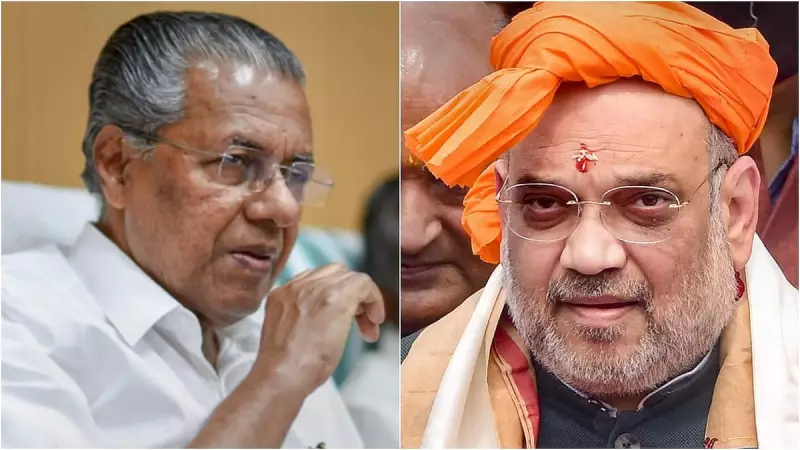
A fierce political confrontation has erupted between the ruling Left Democratic Front (LDF) government in Kerala and the Bharatiya Janata Party (BJP)-led central government, with both sides trading serious allegations over the state's precarious financial situation. The war of words, which has dominated political discourse in the state, centers on accusations of deliberate financial suffocation from the Centre and counter-charges of fiscal mismanagement by the state.
The Core of the Controversy: Allegations of Financial Strangulation
The conflict reached a new peak following sharp remarks made by Union Minister of State for External Affairs, V Muraleedharan. The BJP leader alleged that the financial crisis in Kerala was a direct result of the state government's "financial mismanagement and corruption." He specifically pointed to the state's high debt burden and accused the Pinarayi Vijayan-led administration of failing to utilize central funds effectively for public welfare.
In a swift and forceful rebuttal, Kerala's Finance Minister, K N Balagopal, dismissed the Union Minister's claims as baseless. Balagopal presented a detailed counter-narrative, arguing that the state's financial woes are primarily due to the Centre's restrictive and unfair fiscal policies. He highlighted several key issues, including the alleged reduction in Kerala's borrowing limit, delays in the release of GST compensation, and the imposition of off-budget borrowing constraints that have severely hampered the state's ability to fund its development and welfare commitments.

Political Titans Clash in Public Arena
The debate quickly escalated beyond government spokespersons, drawing in senior political figures. Congress MP K Muralidharan entered the fray, launching a scathing attack on both the state and central governments. He accused the Centre of engaging in "financial terrorism" against non-BJP ruled states like Kerala, systematically choking their resources. Simultaneously, he criticized the state LDF government for its alleged failure to mount a strong, united opposition with other southern states against these policies, suggesting internal political compromises.
This multi-cornered attack underscores the complex political dynamics at play. While the LDF and the opposition Congress-led UDF are arch-rivals in Kerala, they find common ground in criticizing the BJP-led Centre's fiscal federalism. However, they also continue to blame each other for the current predicament, making the issue a potent political weapon for all parties involved.
Broader Implications for Fiscal Federalism
This ongoing slugfest transcends a mere political blame game. It touches upon the fundamental principles of Centre-State financial relations in India. The Kerala government's consistent argument is that the Centre's policies violate the spirit of cooperative federalism enshrined in the Constitution. The state contends that its high social development indices and welfare model are being undermined by a lack of financial autonomy and support from New Delhi.
The controversy also brings to the fore the long-standing issue of GST compensation and the states' rights to borrow. Kerala has been at the forefront of states demanding the extension of the GST compensation period and greater flexibility in managing their fiscal deficits, especially in the wake of the COVID-19 pandemic which strained resources immensely.
The immediate consequence of this deadlock is a deepening financial crunch for Kerala, potentially affecting salary payments, pension disbursals, and funding for crucial infrastructure and social sector schemes. As the rhetoric intensifies, the people of Kerala are caught in the crossfire, awaiting a resolution that ensures the state's financial stability and its continued ability to deliver on its renowned social welfare promises.